UK Rejects US Iran Blockade as Macron Pushes Multinational Talks to Reopen Vital Strait of Hormuz
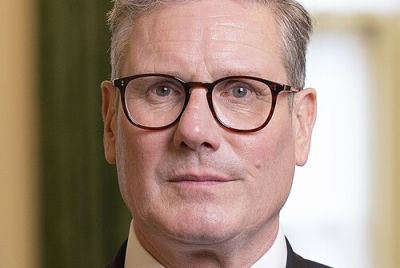
LONDON — Britain declared Monday it will not support or participate in the U.S. naval blockade of Iranian ports in the Strait of Hormuz, with Prime Minister Keir Starmer insisting the U.K. has no intention of being "dragged in" to the escalating conflict with Iran even as President Donald Trump ordered American forces to begin enforcing restrictions on shipping.

Starmer told BBC Radio that Britain's focus remains on diplomacy aimed at restoring full freedom of navigation through the strategic waterway, which carries roughly one-fifth of global oil supplies. "We are not supporting the blockade," he said, adding that U.K. efforts are "all focused, from our point of view, on getting the Strait fully open."
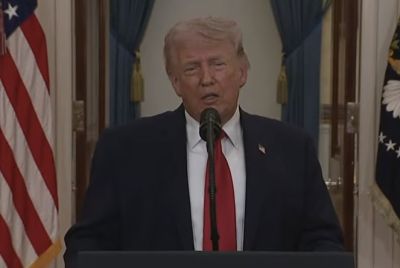
The statement came hours after the U.S. military's Central Command announced the blockade of all vessels entering or exiting Iranian ports and coastal areas would take effect at 10 a.m. EDT. While the operation stops short of a total closure of the Strait of Hormuz — allowing traffic between non-Iranian ports to continue — it marks a sharp escalation following the collapse of weekend ceasefire talks between the United States and Iran in Pakistan.
French President Emmanuel Macron responded by confirming that France and the United Kingdom will co-host a conference in the coming days with willing partners to establish a "peaceful multinational mission" aimed at restoring safe passage. Macron described the planned effort as "strictly defensive" and separate from any belligerents, emphasizing a diplomatic rather than confrontational approach.
The diverging responses from two of America's closest European allies highlight growing transatlantic tensions over how to handle Iran's effective control of the narrow chokepoint amid the broader U.S.-Israel conflict with Tehran. Iran has throttled shipping through the Strait in retaliation, sending oil prices surging above $100 a barrel and threatening global energy security and inflation pressures worldwide.
Starmer's government made clear that British naval assets will not join the American operation. A government spokesperson reiterated support for freedom of navigation but stressed the need for a broad coalition to keep the Strait "open, not shut." Earlier reports that Trump claimed the U.K. would contribute minesweepers went unanswered by Downing Street.
The U.K. position aligns with broader European skepticism. France, Spain and Turkey have also voiced criticism of the U.S. move, while China condemned the blockade plan. Macron has repeatedly described a full military operation to force open the Strait as "unrealistic," arguing it would expose vessels to coastal threats from Iran's Islamic Revolutionary Guard Corps, including ballistic missiles.
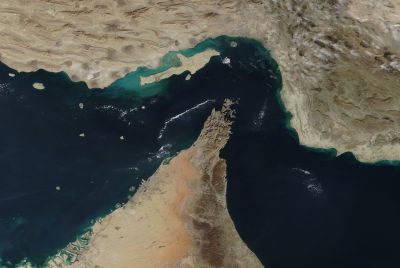
The Strait of Hormuz, just 21 miles wide at its narrowest point, serves as the primary export route for oil from Saudi Arabia, Iraq, the United Arab Emirates and other Gulf producers. Iran's actions have already stalled most commercial traffic, with Lloyd's List Intelligence reporting that "all traffic" through the waterway had effectively stopped in recent days. Tankers have been racing to exit the area ahead of the U.S. enforcement deadline.
Economists warn that prolonged disruption could push oil prices toward $150 a barrel, hammering consumer energy costs, airline fares and manufacturing supply chains at a time when many economies are still recovering from earlier shocks. Developing nations heavily dependent on imported fuel face particular risk of renewed inflation and potential food price spikes tied to higher transport costs.
Starmer's stance reflects domestic political realities in Britain, where public appetite for military entanglement in Middle East conflicts remains low following years of involvement in Iraq and Afghanistan. The Labour prime minister has faced pressure from both pro-Israel and pro-Palestinian factions but has sought to position the U.K. as a diplomatic bridge-builder rather than a combat participant.
In a conversation with Macron, Starmer highlighted the importance of working with a wide coalition to protect navigation rights without escalating into direct confrontation. The upcoming Franco-British conference aims to build on earlier virtual summits involving more than 40 countries that discussed sanctions and other pressure tactics to persuade Iran to reopen the route unconditionally.
Those earlier talks, hosted by Britain, produced calls for "immediate and unconditional" reopening but yielded no breakthrough. Macron's latest proposal for a "strictly defensive" escort mission would involve coordinated naval presence to safeguard commercial vessels once a more stable ceasefire takes hold, potentially including deconfliction mechanisms with Iranian forces.
Iran has reacted defiantly to the U.S. blockade, with its military labeling the plan "an act of piracy" and warning that "ports in the Persian Gulf and Gulf of Oman are either for everyone or for no one." Tehran has threatened retaliation against regional ports if its own facilities are targeted, raising fears of a wider maritime conflict that could draw in U.S. allies in the Gulf.
The U.S. move follows the breakdown of direct talks aimed at extending or solidifying a fragile two-week ceasefire. Trump expressed frustration with Iranian negotiators, stating he was prepared to maintain pressure until Tehran agrees to terms addressing its nuclear program, regional proxies and other security concerns. The president has at times suggested the blockade could be temporary if Iran returns to the table.
Yet European leaders appear wary of measures they believe could harden Iranian resolve or risk miscalculation at sea. Macron has stressed the need for good-faith negotiations and warned against actions that might prolong the conflict.
Analysts say the split within the Western alliance complicates efforts to present a united front. While the U.S. possesses the overwhelming naval power to enforce a blockade, sustained international legitimacy and burden-sharing would strengthen its effectiveness and reduce the risk of escalation. Without European naval support, the operation relies more heavily on American assets already stretched across multiple theaters.
For global markets, the immediate impact was evident Monday. Oil futures jumped on news of the blockade's implementation, while shipping stocks and insurance rates for Gulf transits soared. Stock markets in Europe and Asia opened lower amid broader risk-off sentiment tied to energy uncertainty and geopolitical headlines.
Longer-term, the crisis underscores the vulnerability of global energy chokepoints and the limits of unilateral action in an interconnected world. The Strait of Hormuz has been a flashpoint before — during the 1980s "Tanker War" and amid earlier U.S.-Iran tensions — but never in the context of a broader active conflict involving direct U.S. and Israeli operations against Iranian targets.
British and French officials hope their diplomatic initiative can gain traction among Gulf states, Asian energy importers such as Japan, South Korea and India, and other concerned nations. Success would require delicate balancing: sufficient naval presence to deter Iranian interference without provoking Tehran into more aggressive mine-laying or missile strikes.
Starmer faces questions in Parliament this week on whether Britain might still contribute non-combat assets or intelligence support. Government sources insist the priority is de-escalation and reopening the Strait through multilateral pressure rather than military confrontation.
As the U.S. blockade took effect Monday afternoon London time, shipping firms reported heightened caution, with many vessels diverting or delaying voyages. Insurance premiums for war-risk coverage in the region have multiplied in recent weeks.
The episode marks a rare public divergence between the U.S. and key NATO partners at a moment of high tension. It also tests the post-Brexit U.K.'s ability to chart an independent foreign policy while maintaining close security ties with Washington.
For now, London and Paris are betting that coordinated diplomacy, backed by the threat of broader sanctions and a defensive multinational presence, offers a more sustainable path than escalation. Whether Iran responds to such overtures — or views them as weakness — will likely determine if the Strait reopens peacefully or remains a dangerous flashpoint for weeks or months to come.
The coming conference will serve as an early test of European leverage. With global economies watching anxiously and oil markets on edge, the stakes for successful navigation of both the literal Strait and the diplomatic one could hardly be higher.
© Copyright 2026 IBTimes AU. All rights reserved.
- Recommended For You