Trump's 10 Key 2026 Comments on Australia: From Ally Praise to Iran War Criticism
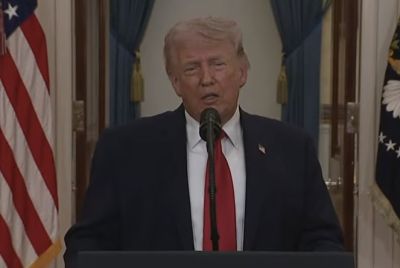
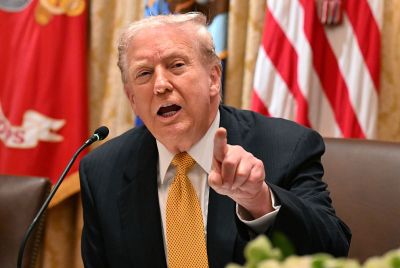
President Donald Trump made several notable remarks about Australia throughout 2026, ranging from praise for bilateral trade and defense deals to pointed criticism over Canberra's level of support during the U.S.-led military operation against Iran.

As the year unfolded amid escalating tensions in the Middle East and ongoing efforts to counter China's influence, Trump's comments highlighted both the strength of the U.S.-Australia alliance and occasional friction points. Here are 10 significant statements or references Trump made regarding Australia in 2026, drawn from public speeches, Truth Social posts, cabinet meetings and interviews.
- Praise for the Critical Minerals Deal (October 2025, referenced into 2026) Trump hailed the $8.5 billion critical minerals agreement signed with Prime Minister Anthony Albanese as a major step to reduce dependence on China. "In about a year from now we'll have so much critical mineral and rare earth that you won't know what to do with them," he said, calling the pact a model for supply-chain security.
- Endorsement of AUKUS Submarine Partnership During the same October 2025 White House meeting that carried into 2026 discussions, Trump strongly backed the AUKUS pact. He assured Albanese that the nuclear submarine deal was "full steam ahead" and described Australia as one of America's closest allies in the Indo-Pacific.
- Australia Pays "Very Low Tariffs" When asked about potential tariff relief, Trump noted that Australia already enjoys favorable trade terms. "Australia pays very low tariffs, very, very low tariffs. Australia pays among the lowest tariffs," he said, contrasting it with other trading partners.
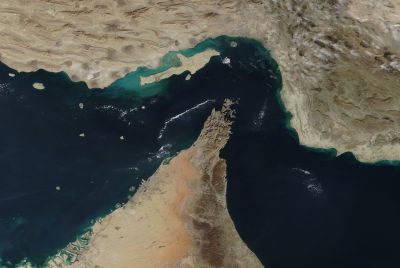
- "Australia Was Not Great" on Iran Support (March 2026) In a lengthy cabinet meeting, Trump singled out Australia for criticism over its reluctance to assist with securing the Strait of Hormuz. "Australia was not great. I was a little surprised by Australia," he stated, expressing disappointment in a long-standing ally.
- "We Do Not Need the Help of Anyone" – Including Australia In a Truth Social post and follow-up remarks in mid-March 2026, Trump declared the U.S. did not require assistance from allies for operations against Iran. He explicitly included Australia alongside Japan and South Korea: "Likewise, Japan, Australia, or South Korea ... WE DO NOT NEED THE HELP OF ANYONE!"
- Surprise at Australia's Refusal to Get Involved Trump reiterated his surprise during public comments, saying he expected more from Australia given the "longest bond" between the two nations. "They should get involved. I was a little bit surprised that they said no, because we always say yes to them," he remarked.
- Call for Allies to "Build Up Some Delayed Courage" In broader remarks urging allies to secure the Strait of Hormuz themselves, Trump told countries struggling with oil supplies — implicitly including Australia — to either buy from the U.S. or take direct action rather than relying on American forces.
- Positive Comments on Australian Leadership Earlier in the year, Trump referred to Albanese as a "great leader" during discussions on defense and trade cooperation, underscoring the personal rapport between the two leaders despite policy differences.
- Emphasis on Shared Defense Against China Trump repeatedly framed Australia as a key partner in countering Chinese influence in the Indo-Pacific, particularly through critical minerals and AUKUS. He described joint efforts as essential for regional stability and supply-chain resilience.
- Acknowledgment of Australia's Contributions to U.S. Submarine Industry Trump noted Australia's $1 billion (with another $1 billion pledged) contribution to expanding the U.S. submarine industrial base, calling it a strong demonstration of alliance commitment even as he pushed for more direct involvement in current operations.
These comments reflect the complex dynamics of the U.S.-Australia relationship in 2026. While Trump frequently praised Australia as a valued ally in trade, critical minerals and defense technology, he expressed clear frustration when Canberra did not align with his expectations on the Iran conflict and Strait of Hormuz security.
Australian Prime Minister Anthony Albanese responded to the criticism by noting that Australia had not received a formal request for military assistance and emphasized independent decision-making. "Australia wasn't consulted before this action was undertaken," Albanese stated, underscoring Canberra's sovereign approach.
The remarks on Iran support drew significant attention in Australia, sparking debate about the future of the alliance under Trump's "America First" framework. Some analysts suggested the criticism was partly rhetorical pressure to encourage greater burden-sharing among allies, while others viewed it as a genuine expression of disappointment.
Despite the friction, cooperation on critical minerals and AUKUS progressed steadily. The October 2025 deal continued to yield positive developments into 2026, with joint investments aimed at challenging China's dominance in rare earth processing.
Trump's statements also occurred against the backdrop of global energy volatility caused by the Iran conflict, which pushed Australian petrol prices higher and prompted domestic relief measures from the Albanese government.
Foreign policy experts noted that while Trump's tone toward Australia was occasionally blunt, the underlying strategic partnership remained robust, rooted in shared democratic values, intelligence cooperation and mutual interests in the Indo-Pacific.
As 2026 progressed, Trump's comments on Australia served as a reminder of the transactional elements in his foreign policy approach. Allies were expected to contribute more actively when U.S. interests were directly engaged, even as longstanding bonds were publicly affirmed.
The list of remarks illustrates how Trump balanced praise for economic and defense initiatives with pointed calls for greater military alignment during crises. Australian officials maintained that Canberra remained a reliable partner while reserving the right to assess each request on its merits.
Public reaction in Australia was mixed. Some viewed Trump's criticism as unfair given Australia's historical support for U.S.-led operations, while others argued that strategic autonomy should guide decisions on involvement in Middle East conflicts.
As the Iran situation evolved following Trump's April 1 national address, questions lingered about whether further requests for Australian assistance might emerge and how Canberra would respond.
Overall, Trump's 2026 comments on Australia captured the enduring strength of the alliance alongside the occasional tensions that arise when expectations on burden-sharing diverge. The relationship continues to navigate these dynamics amid shifting global challenges.
© Copyright 2026 IBTimes AU. All rights reserved.
- Recommended For You