Beyond the Horizon: Will the ADF be Drawn into a Middle Eastern Ground War in 2026?
MELBOURNE — As geopolitical fault lines deepen across the Persian Gulf, a haunting question has returned to the corridors of Parliament House in Canberra: Is Australia prepared for another protracted conflict in the Middle East?

With the 2026 security landscape defined by a volatile "tit-for-tat" cycle between Washington and Tehran, the Australian Defence Force (ADF) finds itself at a strategic crossroads. While the federal government maintains a policy of "calculated restraint," military analysts and regional experts warn that the threshold for Australian involvement is shifting from "if" to "how."
The ANZUS Factor: A Century of Commitment
The bedrock of Australia's military involvement remains the ANZUS Treaty. Historically, Australia has been the only ally to join the United States in every major conflict of the last century. However, 2026 is not 2003.
Unlike the lead-up to the Iraq War, the current Australian government faces a more skeptical public and a Defense Force currently undergoing a massive "Pivot to the North." Under the 2024 National Defence Strategy, the ADF has been restructured to prioritize the Indo-Pacific—specifically the maritime approaches to Australia's north—rather than desert warfare in the Levant.
"The appetite for a ground war is at an all-time low," says Dr. Elena Vance, a senior fellow at the Australian Strategic Policy Institute (ASPI). "But the pressure to support our primary sovereign ally, the United States, in maintaining the 'rules-based order' remains the gravity that pulls our foreign policy."
Chokepoints and Coalitions: The Maritime Trigger
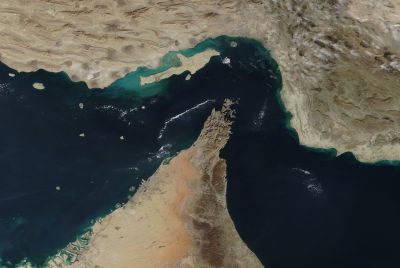
If Australia is drawn in, it likely won't start with boots on the ground, but with hulls in the water. The Strait of Hormuz, a narrow waterway through which 20% of the world's petroleum passes, is the most probable "tripwire."
In early 2026, Iranian-backed "swarm" tactics involving unmanned surface vessels (USVs) have increasingly harassed commercial shipping. For Australia, this isn't just a distant military concern—it is an economic one. Australia's national fuel reserve remains famously thin, often cited at less than 30 days of commercial supply. A total blockage of the Strait would send Sydney and Melbourne petrol prices soaring toward $3.50 per liter within a fortnight.
Historically, Australia has contributed a Hobart-class destroyer or a Anzac-class frigate to international maritime security operations in the Gulf. In 2026, the ADF's contribution would likely be focused on Project Sea 1905, utilizing autonomous mine-countermeasure systems to keep trade lanes open without risking high-value manned assets.
The Ground War Dilemma: Special Forces vs. Infantry
The term "Ground War" in 2026 looks vastly different than the invasions of the past. If the U.S. requests Australian assistance in a conflict with Iran, military planners suggest the ADF would offer a "niche and scalable" force rather than a brigade-strength infantry deployment.
1. The SASR and Commando Role
Australia's Special Air Service Regiment (SASR) and the 2nd Commando Regiment remain the "preferred" contribution for Canberra. Their role would likely focus on:
- CSAR (Combat Search and Rescue): Retrieving downed Allied pilots.
- Target Acquisition: Identifying mobile missile launchers in the Iranian interior.
- Advisory Roles: Working with regional partners like the UAE or Saudi Arabia.
2. The Cyber and Space Front
For the first time in an Australian conflict, the Joint Capabilities Group would lead. Iranian state-sponsored actors have already demonstrated the ability to target "soft" infrastructure. A 2026 conflict would see the ADF's cyber-warriors engaged in defensive operations to protect Australian banks and power grids from retaliatory strikes—a "ground war" fought in servers rather than trenches.
The China Constraint: Why 2026 is Different
The most significant deterrent to an Australian ground presence in the Middle East is the "Two-Front" nightmare.
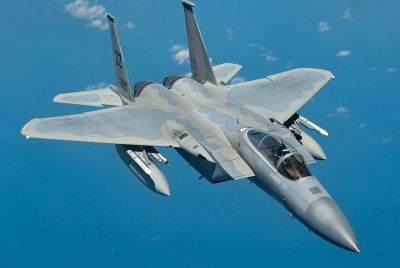
Department of Defence officials are acutely aware that any significant depletion of ADF resources in the Middle East creates a "strategic vacuum" in the South China Sea. Beijing's increasing assertiveness near the Second Thomas Shoal and the Taiwan Strait means Australia's premium assets—such as the F-35A Lightning II fleet and the new Hunter-class frigates—are required closer to home.
"Every soldier we send to the Gulf is a soldier we don't have for the Pacific," notes a retired ADF Brigadier, speaking on condition of anonymity. "In 2026, the Middle East is a distraction we can ill-afford, yet a catastrophe we cannot ignore."
Public Sentiment and the "Cost of Living" Conflict
Domestic politics will play a decisive role. Unlike the 1990s, the 2026 Australian public is hyper-aware of the correlation between Middle Eastern stability and the cost of living.
A recent poll suggests that while 65% of Australians oppose "combat troop" deployment, nearly 55% support "defensive naval action" to protect fuel prices. The government's challenge will be threading the needle: supporting the U.S. enough to maintain the alliance, but not so much that it triggers a domestic backlash during an election year.
Conclusion: A Support Role, Not a Lead Role
As it stands in March 2026, the likelihood of a massive ADF ground deployment to Iran or its neighbors is low. However, the probability of "Integrated Support"—comprising maritime patrol, cyber defense, and elite special forces—is at its highest point in a decade.
Australia's role will be that of a "Force Multiplier." By providing specialized high-tech capabilities, Canberra can fulfill its ANZUS obligations while keeping the bulk of its conventional forces stationed in the Indo-Pacific.
The "War of 2026" may not be defined by the number of boots on the ground, but by the number of bits in the cloud and drones in the strait. For the ADF, the mission is no longer just about winning a battle; it's about managing a global ripple effect that threatens the Australian way of life.
© Copyright 2026 IBTimes AU. All rights reserved.
- MOST POPULAR IN Politics & Policy