Samsung, SK Hynix Test Chinese Chip Equipment as a Hedge Against Tighter US Export Controls
South Korean chip giants evaluate AMEC tools to mitigate risks from U.S. export restrictions
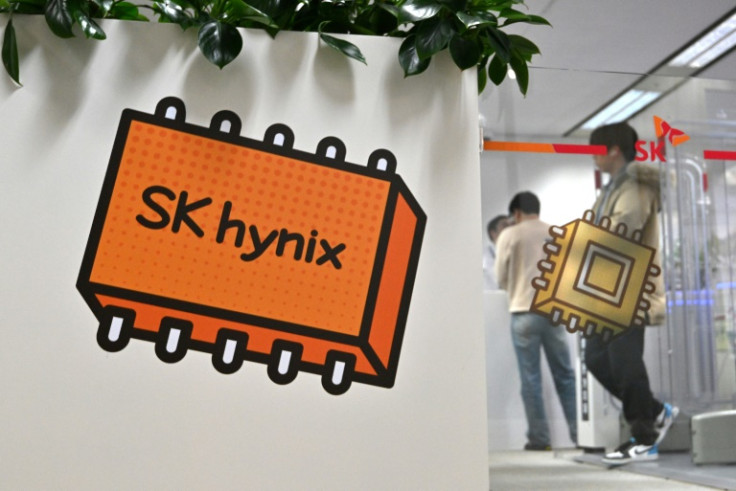
SEOUL — Samsung Electronics and SK Hynix, the world's two largest memory chipmakers, have been evaluating chipmaking equipment from China's Advanced Micro-Fabrication Equipment Co., known as AMEC, for possible use at their Chinese factories, according to three people familiar with the matter, as the South Korean companies hedge against the risk of tightening U.S. export controls.
According to the sources, the memory chipmakers began testing AMEC etching equipment roughly two years ago, at a time when uncertainty was mounting over whether Washington would continue allowing them to import U.S.-made chipmaking tools into their Chinese facilities. Samsung told Reuters it has not tested AMEC equipment for use at its China factory and had not considered doing so. SK Hynix similarly said it has not tested AMEC tools for use in China, while separate reporting from TrendForce indicated the company declined to comment further on whether it was evaluating the Chinese supplier's equipment.
A Rare Validation Opportunity for a Chinese Supplier
While the evaluations have not yet resulted in decisions on wider deployment, they offer AMEC, based in Shanghai, a rare opportunity to secure validation from two of the world's leading chipmakers. More broadly, the trials illustrate a paradox at the center of U.S. technology policy: measures designed to constrain China's semiconductor ambitions have, in this case, created an opening for Chinese equipment suppliers to gain a foothold inside foreign-owned chip factories operating within China.
AMEC and the U.S. Bureau of Industry and Security, the Commerce Department agency responsible for enforcing American export controls, did not immediately respond to requests for comment on the reported evaluations, according to Reuters. All sources for the original report declined to be identified given the sensitivity of the matter.
A Shifting Regulatory Landscape
The evaluations trace back to a series of regulatory changes affecting how Samsung and SK Hynix are permitted to supply their Chinese manufacturing facilities. The U.S. Commerce Department designated both companies' Chinese factories as "validated end users," or VEU, in 2023, a status that allowed them to import certain controlled American chipmaking equipment without obtaining individual export licenses for each shipment.
Washington revoked that VEU authorization in 2025, before later granting the two companies annual licenses permitting continued imports of chip manufacturing equipment into their Chinese facilities specifically for 2026. Even with that temporary license in place, both companies remain concerned that future restrictions could extend beyond the import of new equipment to cover the servicing, repair or replacement of Western tools already installed at their Chinese plants, according to the sources. As a result, the companies are reportedly keeping Chinese suppliers in reserve as a potential way to maintain and upgrade their existing production lines, rather than as a means to expand overall manufacturing capacity within China.
Samsung operates a NAND flash memory chip plant in Xian, China, while SK Hynix runs NAND facilities in Dalian along with a DRAM memory chip plant in Wuxi. Both companies' Chinese operations rely heavily on etching equipment supplied by American firms including Applied Materials and Lam Research, underscoring the scale of exposure either company would face if servicing access to that Western equipment were further restricted.
A Chinese Equipment Maker Closing the Gap
For AMEC and China's broader emerging semiconductor equipment industry, winning even preliminary approval from Samsung or SK Hynix would represent a significant commercial endorsement. While Chinese equipment makers continue to trail their overseas rivals in advanced lithography and certain inspection systems, they have narrowed the competitive gap in areas including etching, deposition, cleaning and planarization, often while offering meaningfully lower prices.
Dan Hutcheson, vice chair of research firm TechInsights, said Chinese chipmaking tools can cost 20% to 30% less than comparable equipment from established foreign suppliers. AMEC's equipment is already in use at other leading Chinese chipmakers, including NAND flash producer Yangtze Memory Technologies Co., a track record that has given Samsung and SK Hynix greater confidence that certain AMEC systems are mature enough to warrant testing, according to the sources. Separate reporting by the South China Morning Post cited AMEC Chief Executive Gerald Yin Zhiyao describing the company's etching technology as supporting chip production processes ranging from older 65-nanometer nodes to more advanced 5-nanometer and 3-nanometer nodes, with some of its products already adopted by Taiwan Semiconductor Manufacturing Co.
A Longer-Term Challenge for Established Suppliers
The growing capability of Chinese equipment suppliers could pose a longer-term competitive challenge to dominant Western toolmakers including Applied Materials, Lam Research and KLA, along with established Japanese and European rivals that have historically controlled key segments of the global wafer-fabrication equipment market. China remains a significant revenue source for those companies even amid the tightening regulatory environment; Applied Materials reported $8.53 billion in China revenue during fiscal 2025, equal to roughly 30% of its total global sales.
Any meaningful breakthrough for Chinese equipment suppliers in facilities operated by foreign chipmakers would still face significant hurdles, including lengthy technical qualification processes, comparatively smaller service networks, ongoing intellectual property concerns, and the potential for political pressure from Washington. It also remains unclear whether either Korean chipmaker would ultimately consider installing Chinese-made equipment at their domestic factories in South Korea, given separate security and intellectual property considerations that would apply outside of China.
A Fertile Opening Despite the Restrictions
Even so, analysts say U.S. export controls have helped create a meaningfully more favorable environment for China's domestic semiconductor equipment industry to grow. Deutsche Bank has estimated that four Chinese equipment makers, Naura Technology, AMEC, Piotech and ACM Research, will each generate more than $1 billion in revenue during 2026. Together, the bank estimated those companies could capture between 25% and 30% of China's projected $28 billion wafer-fabrication equipment market this year. Excluding the lithography and metrology segments, where Western and Japanese suppliers maintain a stronger technological lead, Chinese suppliers' collective market share within China could approach 40%, according to Deutsche Bank's estimate.
With Samsung and SK Hynix's current annual license to import U.S. chipmaking equipment into China set to apply through 2026, both companies are likely to continue closely monitoring how Washington's export control policy evolves in the months ahead, particularly regarding servicing and maintenance access for equipment already installed at their Chinese facilities. Whether either company ultimately moves beyond preliminary testing toward broader deployment of Chinese-made equipment remains uncertain, but the reported evaluations underscore how directly U.S. policy decisions continue to shape strategic planning across the global semiconductor supply chain, even among some of the industry's most established players.
© Copyright 2026 IBTimes AU. All rights reserved.
- Recommended For You