CXMT Shares Drop 4.3% as Post-IPO Rally Cools Amid Global Memory Chip Pressures
CXMT Faces Market Volatility and Competitive Pressures After Record IPO

SHANGHAI — Shares of CXMT Corp fell 4.31% on Thursday, closing at 51.96 yuan after a session of steady selling that extended a pullback from the stock's dramatic post-listing gains. The decline of 2.34 yuan came as investors continued to digest the memory chipmaker's blockbuster initial public offering and the competitive realities of the global DRAM market.
Trading on the Shanghai Stock Exchange's STAR Market under the ticker 688825, the stock opened near 52.90 yuan and ranged between 51.13 yuan and 53.23 yuan before settling lower. Volume remained elevated, reflecting ongoing interest in one of China's most closely watched new listings. The move followed a 1.27% drop the previous session and continued a pattern of volatility after the shares more than quintupled from their IPO price in late July.
CXMT, formally known as ChangXin Memory Technologies, debuted on July 27 with an offering price of 8.66 yuan. Shares opened at 49.50 yuan, surged as high as 55.03 yuan and closed the first day at 49 yuan, a gain of roughly 466%. That performance briefly lifted the company's market capitalization above 3.2 trillion yuan and made it the largest company by value on mainland China's exchanges, overtaking long-time leader Industrial and Commercial Bank of China.
The IPO raised approximately 57.9 billion yuan, ranking as Asia's largest listing of 2026 and the biggest semiconductor offering in STAR Market history. Only a small portion of shares, about 6.73% of the enlarged capital, was freely tradable at launch, contributing to sharp price swings. Subsequent sessions saw the stock climb further at times before profit-taking set in.
Company filings and market reports show strong recent operating momentum. First-quarter 2026 revenue reached 50.8 billion yuan, up more than 700% from a year earlier, with gross margin expanding to 79.16% and net profit attributable to shareholders of 24.76 billion yuan. Management has guided for first-half revenue of 110 billion to 120 billion yuan and net profit of 50 billion to 57 billion yuan, reflecting the sharp recovery in DRAM pricing driven by tight supply and robust demand from artificial intelligence applications.
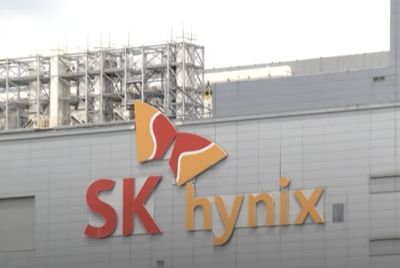
CXMT ranks as the world's fourth-largest DRAM producer by volume, behind Samsung Electronics, SK Hynix and Micron Technology. The company has expanded its customer base among Chinese technology firms and has begun supplying limited volumes of memory chips for budget notebooks sold by brands including HP, Asus and Acer outside the United States. Reports also indicate ongoing discussions with major domestic internet companies for server DRAM supply.
Despite the growth, technological and geopolitical constraints remain central to the investment debate. CXMT lacks access to extreme ultraviolet lithography tools under existing export controls, limiting its ability to advance to the most cutting-edge process nodes used by its Korean and U.S. rivals. Analysts have noted that this gap is particularly relevant for high-bandwidth memory used in advanced AI accelerators, an area where the company lags by several years.
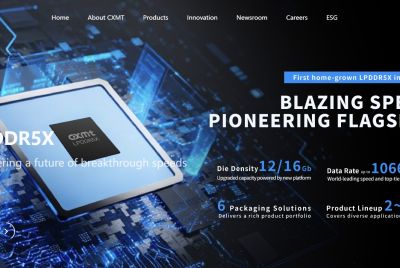
Market attention this week also focused on reports that Apple's efforts to secure more favorable pricing from CXMT for mobile DRAM products such as LPDDR5X encountered resistance. The Chinese manufacturer reportedly declined to undercut the pricing of Samsung and SK Hynix, underscoring a shift in bargaining power toward memory suppliers amid shortages. Separate coverage highlighted CXMT's absence from the exhibitor list at the Flash Memory Summit in Santa Clara, where Samsung, SK Hynix and Micron showcased AI-related memory roadmaps.
Additional industry updates pointed to CXMT preparing limited production of LPDDR6 smartphone memory around the end of 2026, a step that would narrow the technology gap with global leaders. The company is also said to be evaluating plans for a second 12-inch DRAM fabrication plant in Beijing's Yizhuang district as Chinese localities compete to attract semiconductor investment.
Thursday's decline occurred against a backdrop of broader pressure on memory-related stocks and profit-taking after the exceptional first-week performance. Main force funds had recorded net outflows in the prior session, according to market data trackers. The stock's free-float constraints and high valuation multiples relative to historical earnings continue to amplify daily moves.
CXMT's prospectus had cautioned that the memory market could weaken if artificial intelligence investment slowed or if rivals expanded capacity aggressively. At the same time, the company has benefited from customers seeking to diversify supply chains away from traditional dominant suppliers. Its ability to maintain elevated margins while scaling advanced products will remain a key focus for investors in the coming quarters.
The shares remain substantially above the IPO price even after the latest retreat. Trading continues to attract significant retail and institutional attention given the company's position as China's leading domestic DRAM producer and the strategic importance of semiconductor self-reliance policies.
As the memory industry navigates a period of elevated prices and capacity constraints, CXMT's performance will serve as a closely watched barometer of both China's progress in advanced chip manufacturing and the durability of the current upcycle. Thursday's session underscored that the transition from private to public company brings new scrutiny of valuation, technology roadmap and competitive positioning alongside the celebration of a record-breaking listing.
© Copyright 2026 IBTimes AU. All rights reserved.
- Recommended For You