

Samsung vs SK Hynix: Which Korean Chip Stock Is Riskier After Record Profits Failed to Stop a Brutal Selloff
SK Hynix offers greater exposure to high-bandwidth memory and AI demand, while Samsung's diversified business may provide more protection if the boom slows.
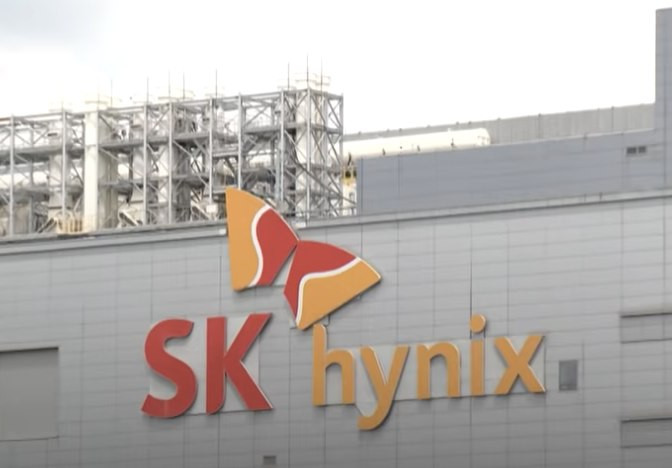
SEOUL, South Korea — South Korea's two memory chip giants just posted the most profitable quarters in the country's corporate history, yet their shares have been among the hardest hit in the global selloff in artificial intelligence stocks. For investors weighing Samsung Electronics against SK Hynix, the question is less about which company is making more money and more about which one carries more risk if the AI boom cools.
Record profits, falling shares
Both companies are earning at an unprecedented pace. Samsung Electronics' third-quarter operating profit reached 107.4 trillion won, nearly eight times higher than last year, as revenue increased 127% to 195 trillion won. It became the first South Korean company to surpass 100 trillion won in quarterly operating profit.
SK Hynix was even more profitable relative to its size. The company recorded 104.6 trillion won in revenue and 83.3 trillion won in operating profit in the third quarter, an operating margin of 80%. That margin was the second-highest among global tech giants after Micron's 80.7%.
The stock market has not rewarded either. As of the close on Oct. 23, Samsung and SK Hynix shares had declined 36% and 52% respectively since the end of June. Shares of both companies fell despite record chip earnings as investors questioned whether Big Tech's massive AI spending can deliver sustainable returns.
The case for SK Hynix
SK Hynix is the purer bet on AI. It has emerged as one of the biggest winners from the surge in AI infrastructure spending as the leading supplier of high-bandwidth memory, or HBM, chips used in Nvidia's AI accelerators.
That position helped it overtake its larger rival. SK Hynix surpassed Samsung as South Korea's most valuable listed company earlier this year, ending Samsung's nearly 26-year reign. Analysts at the time said SK Hynix "may have further to run."
The company is also returning large sums to shareholders. Its board approved a third-quarter cash dividend of 14 trillion won and a share repurchase of 20 trillion won.
The case for Samsung
Samsung offers a more diversified business. Supporters argue it provides broader exposure to Korean technology with more downside protection from diversification and a more resilient business model across different scenarios.
It is also catching up in HBM. Barclays noted that Samsung "has reportedly already shipped $1 billion of HBM4." UBS forecast Samsung would edge ahead of SK Hynix in HBM bit shipments next year, at 41% versus 39%.
Some analysts now favor Samsung. Susquehanna's Mehdi Hosseini reiterated a neutral rating on SK Hynix after its earnings, saying he preferred Micron and Samsung Electronics.
Which is riskier?
By most measures, SK Hynix carries more concentrated risk. LS Securities noted that HBM accounts for more than twice as large a share of SK Hynix's intrinsic value as it does for Samsung's, leaving SK Hynix's valuation relatively more sensitive to changes in HBM profitability.
Its market share is already slipping. SK Hynix's own Nasdaq listing filing showed its HBM share at 56.4%, down from 63.2% in 2025.
Margins may not stay this high. LS Securities lowered its estimate for SK Hynix's HBM operating margin next year to about 60% from about 80%. Observers have noted that a margin of this size is historically exceptional and its durability depends on sustained AI hardware demand and Nvidia's continued reliance on a single primary HBM partner.
That sensitivity shows up in the share price. SK Hynix's 52% decline from the end of June through late October was considerably steeper than Samsung's 36%, consistent with its higher exposure to AI sentiment.
Samsung has its own risks. It has higher exposure to cyclical consumer markets than SK Hynix. Investors were also disappointed by its capital return plans. Samsung deferred the execution plan for its remaining return funding of 55 trillion to 75 trillion won to January.
What brokers expect
Korean brokerages remain bullish on both. Hana Securities raised its 2027 operating profit forecast for Samsung to 624 trillion won and for SK Hynix to 465 trillion won. KB Securities described both stocks as being at the second bottom of a W-shaped recovery, with a rally expected from November.
Bottom line
SK Hynix offers more direct exposure to AI memory demand but also more risk if HBM prices or market share fall. Samsung offers a broader, cheaper business with less sensitivity to any single product, but it still trails in the most profitable part of the memory market. Which fits better depends on an investor's tolerance for volatility and conviction in continued AI spending.
This article is for informational purposes only and is not investment advice. Investors should consult a licensed financial adviser before making decisions.
© Copyright 2026 IBTimes AU. All rights reserved.