China's CXMT Stock Surges Nearly 6% After DDR5 Yield Hits 90% and Reports of Apple Testing Its Memory Chips
CXMT Corp's DDR5 yield improvements and strategic partnerships drive stock gains in a tight DRAM market.

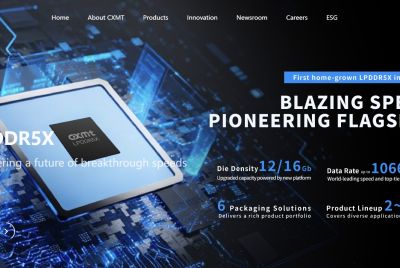
SHANGHAI — Shares of CXMT Corp climbed 6.19% to close at 53.52 yuan on Wednesday, adding 3.12 yuan, as investors responded to reports that the Chinese memory chipmaker had pushed yields on its 17-nanometer-class DDR5 products above 90% and that major technology companies continued testing or adopting its chips amid a persistent global shortage of dynamic random-access memory.
Trading volume remained elevated on the Shanghai Stock Exchange's STAR Market, where CXMT, formerly known as ChangXin Memory Technologies, has been one of the most closely watched stocks since its blockbuster debut in late July. The move lifted the company's market capitalization to roughly 3.4 trillion yuan, reinforcing its position among the most valuable listed firms on China's mainland exchanges.
Chinese technology outlet MyDrivers reported that CXMT's DDR5 manufacturing yield had surpassed 90%, a level said to sit only a few percentage points behind comparable Samsung Electronics products of a similar generation. The report, which has not been independently verified by major international outlets, linked the improvement to better overall supply conditions. Higher yields typically allow producers to ship more usable chips from each wafer, an important factor when industry capacity remains tight.
At the same time, reports indicated that Apple has been testing CXMT memory chips for products including iPhones and MacBooks. Laptop makers HP and Acer have already begun using limited volumes of CXMT DRAM in devices sold outside the United States, primarily in mainland China and some emerging markets, according to multiple media accounts citing industry sources. ASUS has also incorporated the chips selectively, while Dell has reportedly maintained a ban. Adoption volumes remain modest, and CXMT's output for the year is largely committed to existing customers.
The developments come less than three weeks after CXMT's shares soared 466% on their first day of trading on July 27. The company raised about 57.92 billion yuan ($8.6 billion) in Asia's largest initial public offering of 2026 and the biggest mainland Chinese semiconductor listing on record. Shares opened at 49.50 yuan against an offer price of 8.66 yuan, touched an intraday high of 55.03 yuan, and closed at 49 yuan. Market capitalization briefly exceeded 3.3 trillion yuan, briefly making CXMT the most valuable company listed onshore in China.
Only about 6.73% of the enlarged share capital was freely tradable at listing because of lock-up restrictions, a factor that amplified price swings and turnover. First-day trading volume exceeded 141 billion yuan, setting a record for an A-share company.
CXMT ranks as the world's fourth-largest DRAM producer by market share, trailing Samsung Electronics, SK Hynix and Micron Technology. Industry estimates place its share in the high single digits to around 8% as of late 2025 and early 2026. The company operates 12-inch wafer fabrication plants in Hefei and Beijing with combined capacity near 300,000 wafers per month. Expansion projects already under way in Shanghai and Hefei, along with discussions about a possible second facility in Beijing's Yizhuang area, are expected to more than double output toward 600,000 wafers per month once fully ramped.
In its prospectus and subsequent guidance, CXMT projected first-half 2026 revenue of 110 billion to 120 billion yuan, more than seven times the year-earlier figure, and net profit attributable to shareholders of 50 billion to 57 billion yuan, reversing prior losses. First-quarter revenue alone reached approximately 50.8 billion yuan, up more than 700% year on year, driven by higher DRAM prices, increased shipments and an improved product mix. Gross margins expanded sharply as the industry moved into a strong upcycle fueled by artificial-intelligence data-center demand.
The AI-driven shortage has redirected significant capacity at the three dominant producers toward high-bandwidth memory, leaving conventional DDR5 and related products constrained. CXMT has secured multi-year supply agreements with major Chinese customers, including a long-term deal with Tencent valued at more than 20 billion yuan for server DRAM, according to people familiar with the matter reported by Reuters in June. The company also counts Alibaba Cloud, ByteDance, Lenovo and Xiaomi among its customers.
Geopolitical factors continue to shape the outlook. CXMT has faced U.S. export-control restrictions and placement on certain blacklists, limiting access to advanced equipment such as extreme-ultraviolet lithography tools. Its process technology trails the densest nodes used by Samsung, SK Hynix and Micron. Still, progress on yields and selective adoption by global brands have drawn attention as companies seek to diversify supply chains.
Apple's reported testing has attracted particular scrutiny in Washington. A bipartisan group of U.S. senators has urged the company to rule out Chinese memory suppliers, with a response deadline in late August. Apple Chief Executive Tim Cook has publicly noted "very significant constraints" and limited flexibility in the memory supply chain. CXMT, for its part, has reportedly quoted prices comparable to or above those of the established suppliers and has limited additional capacity available for new international customers after prioritizing domestic demand.
Analysts have pointed to CXMT's capacity expansion plans and the broader DRAM supercycle as potential supports for further earnings growth, while cautioning that valuations after the IPO surge appear elevated relative to historical peers. The company intends to allocate IPO proceeds toward process upgrades, research into next-generation DRAM including high-bandwidth memory, and additional production lines. HBM production remains several years behind the industry leaders, though CXMT has indicated early efforts in that area.
Local governments in China are competing to host further expansion. Reuters reported in early August that CXMT was in early-stage talks with the Beijing Economic-Technological Development Area for a possible second plant in Yizhuang, seeking at least 60 million yuan in support, with other state-linked entities also expressing interest. Building a modern advanced DRAM fab typically requires investment well above $10 billion.
The stock's performance since listing has been volatile. After the debut close near 49 yuan, shares climbed higher in subsequent sessions, briefly approaching 60 yuan, before settling into a range that included the 53.52 yuan close on August 12. Inclusion in the MSCI China All Shares Index, effective in early August, has been cited as a potential source of additional passive investment flows.
Market participants continue to weigh CXMT's ability to convert technical progress and domestic policy support into sustained global competitiveness. While the company has narrowed some production gaps and benefited from the current tight supply environment, it still operates without access to the most advanced lithography tools and remains focused primarily on the Chinese market and selective export opportunities. Higher yields on mainstream DDR5 products, combined with ongoing interest from international device makers, provided the immediate backdrop for Wednesday's gain.
As the global memory industry navigates elevated prices and constrained supply into the second half of 2026, CXMT's trajectory will remain a key indicator of China's progress in building a more self-reliant semiconductor sector and of the broader reshaping of supply chains under geopolitical pressure.
© Copyright 2026 IBTimes AU. All rights reserved.
- Recommended For You