Kospi Soars 4.5% Past 6,600, Triggering Trading Halt As Chip Stocks Surge On Record Export Data
Semiconductor stocks drive Kospi's sharp rise, triggering trading halt
SEOUL — South Korea's benchmark Kospi index surged sharply Wednesday, climbing more than 4.5% and briefly triggering an automatic trading halt as investors piled into semiconductor stocks following a blowout report on the country's chip export performance.
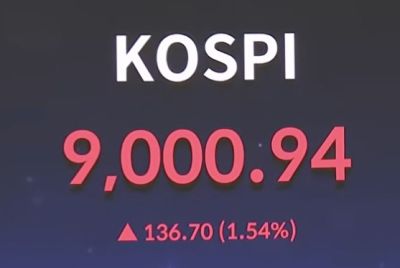
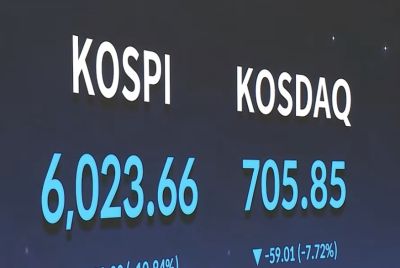
The Kospi stood at 6,633.43 as of 12:46 p.m. local time, up 287.90 points, or 4.54%, extending a rally that has now pushed the index well past the 6,600 mark. The gains proved sharp enough to trigger a buy-side sidecar, a circuit-breaker-style mechanism used by the Korea Exchange that temporarily halts program trading when the market moves rapidly in one direction, underscoring the intensity of Wednesday's advance.
The index opened the session 92.97 points, or 1.47%, higher at 6,438.50, building on Tuesday's close of 6,345.53, before extending its gains sharply through the morning. The Kospi briefly touched an intraday high above 6,509 in early trading, marking the first time the index had crossed the 6,500 threshold in four trading sessions, before continuing to climb even further as the session progressed.
The rally was driven overwhelmingly by strength in South Korea's semiconductor sector, after government data showed the country's chip export value surged 155.4% year-over-year in the first 10 days of August, reaching $9.95 billion. The figures reinforced investor confidence that global demand for memory chips tied to artificial intelligence infrastructure remains robust, even as broader questions about AI-related spending have periodically weighed on technology stocks elsewhere in the world.
Samsung Electronics extended its winning streak to a third consecutive session, with shares climbing in a range of roughly 2.5% to 4%, supported directly by the strong export data. SK Hynix also posted substantial gains, rising in the range of 3% to 4% locally after its American depositary receipt surged 4.7% overnight in New York trading. The rally in both chip giants was further reinforced by a 0.87% overnight gain in the Philadelphia Semiconductor Index, signaling broad-based strength across the global chip sector rather than a narrowly domestic phenomenon.
Foreign investors played a significant role in driving Wednesday's gains, with net purchases of roughly 361.6 billion won recorded by mid-morning, according to data from the Korea Exchange. Institutional investors also added modest net buying, while retail investors were net sellers during the same period, a pattern that has become increasingly common during the market's sharpest rally sessions this year.
Wednesday's surge came despite a weak overnight session on Wall Street and renewed pessimism over prospects for a resolution to tensions surrounding the Strait of Hormuz. Iran's newly appointed security council secretary said the strait would remain closed as long as Washington does not accept Tehran's conditions for ending the broader conflict, a statement that further dimmed hopes for a near-term diplomatic breakthrough. Despite that geopolitical backdrop and losses on major U.S. indexes overnight, the strength of the domestic chip sector proved more than enough to lift Korean shares sharply higher for the session.
Wednesday's rally adds to what has already been one of the most extraordinary years in the Kospi's history. The index roughly doubled in the first half of 2026, climbing from around 5,000 points to more than 8,000 at its peak, a run that drew comparisons to historic market surges including the Nasdaq's rally before the dot-com crash of the late 1990s. That explosive advance was followed by a punishing correction in July, when the index suffered a roughly 22% decline, its worst monthly performance since 2008, driven in part by forced liquidations tied to leveraged exchange-traded funds linked to Samsung Electronics and SK Hynix.
Market analysts have said the most severe phase of that unwind now appears to have passed. Bloomberg has reported that Korea's volatility index, known as the VKOSPI, has fallen from levels above 90 to the mid-70s in August, a decline attributed to a sharp reduction in margin loan balances following forced selling and tighter regulatory restrictions on leveraged ETF products. Some analysts have also pointed to valuation metrics suggesting Korean equities may now be undervalued, with the Kospi's 12-month forward price-to-earnings ratio recently falling to around 5.1 times, near record-low territory.
Despite last month's turbulence, Wall Street strategists have remained bullish on Korea's longer-term outlook. Goldman Sachs recently raised its 12-month Kospi target to 9,000 points, up from a previous target of 8,000, citing what its analysts have called a memory chip supercycle driven by record shortfalls in global chip supply, sustained demand from hyperscale data center operators, and continued growth in AI computing needs. Goldman's Asia Pacific equity strategists have described Korea as their highest-conviction market in the region, forecasting 2026 earnings growth of roughly 300%, which the firm has called the strongest annual profit expansion of any major Asian market since the recovery following the 1999 Asian financial crisis.
With Wednesday's sharp gains reinforcing that bullish narrative, investors are likely to continue watching closely for further updates on chip export data, developments in the Strait of Hormuz standoff, and any additional signs of stabilization following last month's dramatic leverage-driven selloff, as the Kospi works to build on its latest push back toward record territory.
© Copyright 2026 IBTimes AU. All rights reserved.
- Recommended For You