KOSPI Plunges Nearly 5% as Chip Stock Selloff Triggers Trading Halt as SK Hynix and Samsung Tumble
South Korea's KOSPI index experiences significant decline due to semiconductor selloff, impacting global markets.
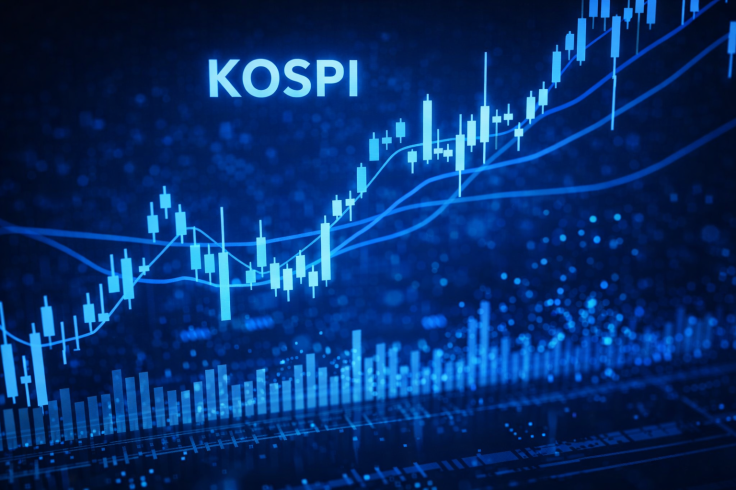
SEOUL — South Korea's benchmark KOSPI index plunged 4.58% Thursday, falling 301.88 points to close at 6,296.38, as a sharp selloff in the country's dominant memory chipmakers triggered an automatic trading halt and rattled a market that has been one of the world's most volatile in 2026.
The decline came during a turbulent Asian trading session in which the KOSPI briefly plunged as much as 5%, activating the exchange's "sidecar" mechanism, an automatic circuit breaker that temporarily suspends programmatic sell orders once futures fall a set threshold within a short window. Thursday's drop marked the latest in a string of sharp single-session swings that have defined trading on the Korea Exchange throughout the year.
Chipmakers Lead the Losses
The decline was driven overwhelmingly by South Korea's two largest semiconductor companies, which together account for roughly half of the KOSPI's total market capitalization. SK Hynix plunged 10.37% to close at 1,495,000 won, or approximately $1,049, while Samsung Electronics fell 6.30% to 230,500 won. The weakness in both stocks weighed heavily on the broader index given their outsized influence on its overall performance.
The selloff extended beyond Korea's borders. Japan's Nikkei 225 fell 617.18 points, or 0.93%, to close at 65,683.26, with Japanese memory chipmaker Kioxia slumping 10.24% to 48,740 yen, or roughly $309. SoftBank Group shares fell 4.41% to 5,695 yen even after the company reported a first-quarter net profit of 347.33 billion yen, far exceeding the market's estimate of 165.83 billion yen, illustrating how thoroughly sector-wide pessimism overshadowed individual company results during the session.
A Global Memory Chip Reassessment
Analysts pointed to weakness in U.S. memory chip companies SanDisk and Western Digital as a key trigger behind the broader Asian selloff, with the decline in those American stocks feeding directly into the pessimism surrounding SK Hynix, Samsung and Kioxia during Thursday's session. Other Korean companies with significant technology and industrial exposure also posted steep losses, including SK Square, down 10.2%, and SK Inc, down 9.1%, while Hyundai Motor fell 1.6%, HD Hyundai Heavy Industries slid 1.2%, and LS Electric dropped 3.8%.
Market analysts have described the pullback as reflecting renewed caution around the memory chip industry's cyclical outlook rather than a broader systemic risk-off event across markets. Frank Benzimra, head of Asia equity strategy at Societe Generale in Hong Kong, has previously characterized similar episodes of sector-specific selling in the Korean market by noting that the stocks experiencing the steepest declines tend to be those in which investors are carrying the most leverage, adding that it remains difficult to predict when such selloffs will run their course.
A Bright Spot Amid the Selloff
Not every part of the Korean market moved in tandem with Thursday's decline. The tech-heavy KOSDAQ index bucked the broader trend, rising a modest 0.26% even as the main KOSPI board tumbled, suggesting the selloff was concentrated primarily among the large-cap semiconductor names that dominate the KOSPI rather than reflecting broad-based selling across smaller and mid-cap Korean equities.
South Korea's underlying economic fundamentals also offered some counterbalance to Thursday's stock market weakness. The country reported a record current account surplus of $49.73 billion in June, driven by strong semiconductor exports, a figure that reinforced the broader strength of Korea's export sector even as chip stock valuations came under renewed pressure. Separately, reports of progress toward an interim transit arrangement between Iran and Oman helped ease broader concerns over potential disruptions to shipping through the Strait of Hormuz, providing some support to global risk sentiment that helped limit the scale of Thursday's losses relative to some of the market's sharper declines earlier this year.
A Year Defined by Extreme Volatility
Thursday's plunge is only the latest chapter in what has been an extraordinarily volatile year for Korean equities. The KOSPI reached an all-time high of 9,385.59 in June, a level that reflected a structural re-rating of Korean technology stocks amid surging global demand for AI infrastructure and memory chips. That rally was symbolically capped in late June when SK Hynix's market capitalization briefly overtook Samsung Electronics, marking the first time in more than 25 years that any Korean company had claimed the top spot on the exchange.
Since that peak, however, the index has experienced repeated sharp reversals, including multiple single-session declines of 5% to 10% and numerous circuit breaker and sidecar activations throughout the year, a pace of volatility that market commentators have said has already exceeded the frequency seen during the 2008 global financial crisis. Despite the scale of these swings, the KOSPI has remained among the world's best-performing major indexes for 2026 on a cumulative basis, reflecting just how dramatic the market's earlier rally had been before this year's series of sharp pullbacks began eroding those gains.
Retail Investors Feel the Strain
South Korea's famously risk-tolerant retail investor base has been particularly exposed to the market's swings, with many traders having built concentrated positions in AI-linked technology stocks using margin financing during the earlier rally. As prices have periodically reversed sharply, some investors have described a growing sense of frustration with the market's extreme volatility, with public criticism at times directed toward government economic policy amid the repeated boom-and-bust cycles.
What Comes Next
With Thursday's decline once again concentrated heavily in the semiconductor sector that has both driven the KOSPI's remarkable gains and fueled its sharpest reversals this year, investors are likely to continue watching global memory chip demand signals closely in the sessions ahead. The interplay between Korea's export-driven economic strength, reflected in its record current account surplus, and the continued volatility surrounding its dominant technology stocks is expected to remain the central tension shaping the direction of the Korean market for the remainder of 2026.
© Copyright 2026 IBTimes AU. All rights reserved.
- Recommended For You