Samsung vs SK Hynix Stock in 2026: Which Korean Chip Giant Should Investors Buy as AI Memory Demand Soars
A deep dive into the contrasting strategies of Samsung and SK Hynix amid the AI memory chip boom.

SEOUL — Two of South Korea's biggest companies have delivered some of the most dramatic stock rallies anywhere in global markets this year, and both have done it by riding the same wave: an unprecedented boom in demand for the memory chips that power artificial intelligence. But Samsung Electronics and SK Hynix have taken very different paths to get there, leaving investors with a genuine choice rather than an obvious winner.
Samsung shares have climbed roughly 158% to 163% so far in 2026, depending on when the calculation is made, while SK Hynix has surged anywhere from 258% to more than 300% over the same stretch, according to multiple market trackers. That outperformance briefly produced a historic moment on June 22, when SK Hynix's market capitalization surpassed Samsung's, ending a 25-to-26-year run in which Samsung had stood as South Korea's most valuable publicly traded company. Samsung disputes the ranking, arguing that its market value should include preferred shares, a calculation that would restore its lead. The following day, both stocks fell roughly 12% in tandem, a sharp pullback that, by some measures, returned Samsung to the top spot regardless of which counting method is used.
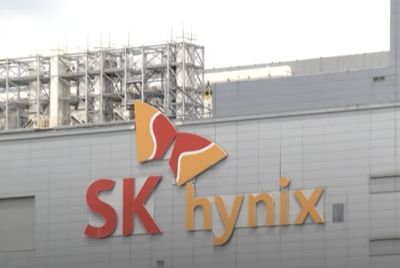
The divergence between the two companies traces directly to their business structures. SK Hynix operates as a pure-play memory chipmaker, meaning essentially every dollar of revenue and every improvement in profit margin flows straight from memory chip sales, with no other business lines diluting the impact. That focus has paid off spectacularly during the current boom in High Bandwidth Memory, or HBM, the specialized memory chips that pair with AI accelerators from companies like Nvidia. SK Hynix's first-quarter 2026 results, reported in April, set records across nearly every financial metric: revenue of roughly 52.6 trillion won, up 198% from a year earlier; operating profit of about 37.6 trillion won, up 405% year-over-year; and an operating margin of 72%, a figure that reportedly exceeded Nvidia's own margin of around 65% over the same period and stood as a new all-time high for the global semiconductor manufacturing industry.
Samsung, by contrast, is a sprawling conglomerate whose memory chip business sits alongside foundry services, smartphones, displays and home appliances. That diversification gives Samsung considerably larger absolute revenue, with first-quarter 2026 sales of roughly 133.9 trillion won and operating profit of about 57.2 trillion won, both well above SK Hynix's figures in raw dollar terms. But the strength of Samsung's memory business gets diluted in its overall results by the more modest performance of its other divisions, which helps explain why the stock has lagged its smaller, more focused rival on a percentage basis even as its underlying memory operations have also benefited from the same AI-driven boom.
Market share in the HBM segment specifically has favored SK Hynix throughout the current cycle, though the gap has narrowed somewhat as Samsung has invested heavily to catch up. Estimates place SK Hynix's share of the global HBM market in the range of 52% to 61%, depending on the period measured, against roughly 17% to 39% for Samsung, with Micron Technology holding most of the remainder. SK Hynix built that advantage in part by continuing to invest in HBM production through a difficult 2023 downturn, when a broader memory price collapse pushed the company to an annual operating loss of more than 7.7 trillion won. Samsung, meanwhile, reportedly encountered yield and product qualification delays on its earlier-generation HBM3E chips, a setback that slowed major orders from key customers including Nvidia and allowed SK Hynix to cement its lead.
The competitive picture is expected to shift again later this year. Samsung has accelerated development of its next-generation HBM4 chips, with mass production targeted for the fourth quarter of 2026. Some analysts have suggested that if Samsung's HBM4 ramp succeeds on schedule, the company could see a so-called double play in both earnings growth and valuation re-rating, narrowing the performance gap with SK Hynix. SK Hynix, for its part, has reportedly chosen in recent weeks to slow its own HBM4 production ramp in order to harvest elevated profit margins on conventional DDR5 memory instead, a category where supply has contracted sharply after manufacturers across the industry redirected capacity toward HBM production over the past two years. Some analysts, including those at Morgan Stanley, have characterized that DDR5 pivot as strategically sound, arguing that broad-based memory price appreciation across all chip categories, rather than HBM market-share battles alone, is the primary driver of profit growth in the current cycle.
Underlying both stocks is an industry-wide supply shortage that analysts describe in historic terms. Goldman Sachs raised its forecast for the 2026 global DRAM supply-demand gap to 4.9% in April, up from an earlier estimate of 3.3%, calling it the most severe memory shortage in 15 years. Some industry watchers have suggested the HBM shortage specifically could persist until 2028, supporting continued pricing power for both Korean memory makers, though others caution that today's record margins could eventually attract enough new manufacturing capacity, from Samsung, SK Hynix, Micron and others, to normalize supply over time, a dynamic that has already weighed on Micron's stock following its own recent earnings reports despite strong underlying results.
For investors weighing access to these companies, SK Hynix is reportedly exploring a U.S. stock exchange listing that would broaden its access to American capital markets and institutional investors. Separately, the world's first dedicated memory-chip exchange-traded fund launched in early April, drawing roughly $6.5 billion in investor inflows within its first 27 trading days, with SK Hynix, Micron and Samsung together representing the bulk of its holdings, offering a diversified alternative for investors who want exposure to the broader memory chip theme rather than picking a single company.
Ultimately, the choice between the two stocks comes down to risk tolerance and investment goals rather than any clear consensus pick. Investors seeking maximum growth exposure to the AI memory boom, along with a willingness to absorb sharper pullbacks if AI spending or HBM demand were to soften, have gravitated toward SK Hynix's pure-play focus and industry-leading margins. Those preferring greater stability and broader diversification, with the added possibility of a valuation catch-up if its HBM4 production ramp succeeds later this year, have leaned toward Samsung's larger, more varied business. As with any individual stock decision, this is not financial advice, and anyone considering an investment in either company should weigh their own financial situation, risk tolerance and time horizon, and consider consulting a financial professional, before making a decision.
© Copyright 2026 IBTimes AU. All rights reserved.
- Recommended For You