Elon Musk Says 'You Will Get Flying Cars' As Tesla's Long-Delayed Roadster Unveil Draws Closer
Musk's recent comments spark renewed interest in Tesla's long-delayed Roadster and its potential flight capabilities.
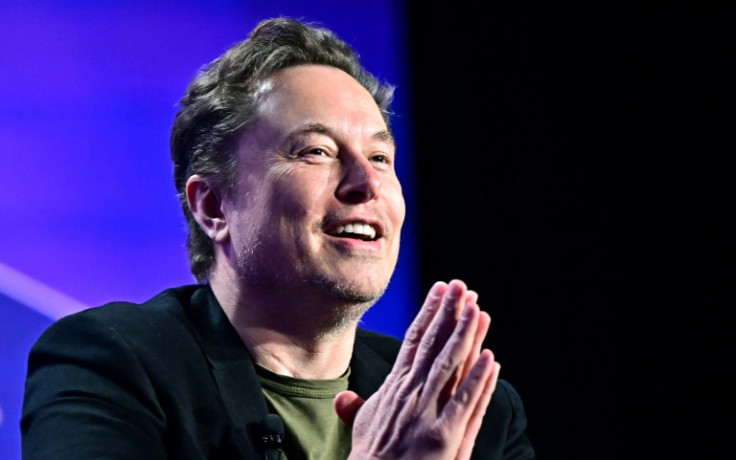
Tesla and SpaceX Chief Executive Elon Musk declared Wednesday that flying cars are on the way, reviving years of speculation that the automaker's long-delayed Roadster sports car could eventually leave the ground.
Musk made the comment on X in response to a post lamenting that society had been promised flying cars but instead received "infinite superintelligence for everyone." Musk replied with a simple, three-word declaration: "You will get flying cars." He did not explicitly name Tesla or the Roadster in the post, though the comment immediately drew widespread attention given Musk's yearslong history of hinting that the next-generation Roadster could incorporate hovering or short-flight capability.
The remark reignited discussion around one of Tesla's most persistently delayed products. The second-generation Roadster was first announced in 2017 with an original production target of 2020, but the vehicle has missed numerous subsequent deadlines as Tesla prioritized other projects, including the Model 3, Cybertruck and, more recently, the Cybercab and Optimus robot. Musk has previously teased that the Roadster's most ambitious feature would come through an optional package developed in partnership with SpaceX, featuring roughly 10 cold-gas thrusters embedded around the vehicle's body. According to reporting on the concept, the thrusters are primarily designed to enhance acceleration, braking and cornering performance by generating additional downforce and lateral thrust, though Musk has suggested the same system could also allow the car to briefly hover or skim above the ground.
Tesla's chief designer, Franz von Holzhausen, addressed the Roadster's status during a recent appearance on "Jay Leno's Garage," telling Leno the long-delayed vehicle is coming "very soon" when pressed on its timeline, though he did not provide a specific date. Tesla's official Roadster marketing materials continue to advertise conventional performance figures, including a 1.9-second zero-to-60 mph time, a top speed exceeding 250 mph and a 620-mile range, without referencing any sustained flight capability.
Musk's history of commentary on flying cars has been notably mixed over the years. During a 2017 TED talk, he expressed skepticism about the concept, citing noise and safety concerns tied to a proliferation of airborne vehicles. "There is a challenge with flying cars in that they'll be quite noisy. The wind force generated will be very high," Musk said at the time, adding that the prospect of numerous flying cars overhead was "not an anxiety-reducing situation" for people below, comparing the worry to wondering whether a passing vehicle's loose hubcap might come off and become a hazard.
Musk later clarified in 2015 that he was not fundamentally opposed to the concept, writing on X that he had simply emphasized the need to weigh both the benefits and drawbacks of flying vehicles. More recently, during an appearance on "The Joe Rogan Experience," Musk struck a considerably more supportive tone, referencing a comment from investor and longtime associate Peter Thiel about society's unmet expectations for flying cars. "My friend Peter Thiel once reflected that the future was supposed to have flying cars, but we don't have flying cars," Musk said, adding that if Thiel wanted one, "we should be able to buy one."
The Roadster's unveiling has faced a long series of postponements. Musk indicated in March that the reveal would likely take place in late April, writing on X at the time that the unveiling would be "a banger next-level" event, though that date, like several before it, ultimately passed without a public demonstration. Tesla has continued filing trademark applications tied to the vehicle in recent months, and job postings for Roadster manufacturing engineers have suggested the project remains active internally even amid the repeated delays. Even once an official unveiling takes place, Tesla has indicated that mass production of the Roadster is unlikely to begin until sometime in 2027 or 2028, extending a production timeline that has already run seven to eight years behind the vehicle's original schedule.
Wednesday's comment arrives at a moment when Musk's public attention has increasingly shifted toward artificial intelligence and computing infrastructure across his companies. Musk told SpaceX employees this week that the company's AI-related revenue is on pace to surpass every other line of its business, including rockets and its Starlink satellite internet service, as soon as September. He has separately emphasized SpaceX's growing compute infrastructure business and Tesla's own investments in autonomous driving and robotics as central to both companies' long-term strategies, even as the Roadster remains one of the more consumer-facing, headline-grabbing projects still awaiting its public debut.
For the tens of thousands of customers who placed $50,000 reservation deposits on the Roadster years ago against a promised price of roughly $250,000, Wednesday's comment offered another small signal that the long-promised vehicle, and whatever flight or hovering capability it may ultimately include, remains part of Musk's plans, even if the exact timeline for its arrival continues to shift. Whether the eventual unveiling delivers genuine flight capability or a more limited hovering demonstration remains to be seen, with Tesla yet to confirm a firm date for the reveal as of Wednesday.
© Copyright 2026 IBTimes AU. All rights reserved.
- Recommended For You