(PHOTOS) From 2004 Warehouse to 2026 Launch Pad: SpaceX Starship Success Highlights Two Decades of Progress
A visual journey through SpaceX's 22-year evolution from early rocket prototypes to the ambitious Starship missions.

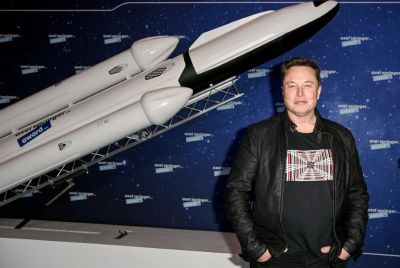
STARBASE, Texas — A pair of photographs circulating widely this week illustrates the rapid evolution of SpaceX over 22 years, juxtaposing a young Elon Musk standing beside an early rocket prototype in 2004 with the company's Starship vehicle launching in flames during its 13th test flight this month.
The side-by-side images, shared on social media, capture Musk in a blue button-down shirt with one hand on the white nose cone of a rocket inside a warehouse, labeled 2004, above a dramatic nighttime image of the stainless-steel Starship rising on a plume of orange exhaust and white smoke, dated 2026. The visual contrast underscores the distance traveled by the company Musk founded in 2002 with the stated goal of making life multiplanetary.
These two photos were taken 22 years apart. pic.twitter.com/wo12CLrbet
— DogeDesigner (@cb_doge) July 27, 2026
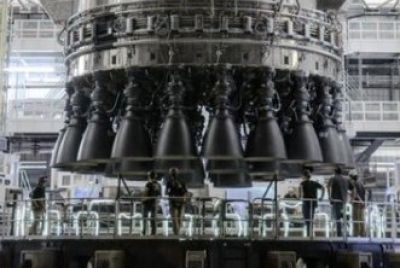
On July 24, SpaceX launched its Super Heavy-Starship stack from the company's Starbase facility near the Texas-Mexico border. The 407-foot vehicle, the most powerful rocket ever flown, lifted off at 5:51 p.m. Central time powered by 33 Raptor engines. It marked the second flight of the Version 3 design and the first Starship mission to carry a payload of next-generation Starlink satellites.
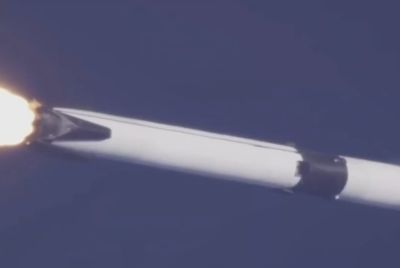
The Super Heavy booster completed its ascent and boostback burn before performing a hard splashdown in the Gulf of Mexico after only a subset of its engines relit for the landing sequence. The Starship upper stage, meanwhile, executed a full-duration ascent with all six Raptor engines, achieved its planned trajectory, and successfully deployed 20 Starlink Version 3 satellites using a Pez-style dispenser.
SpaceX engineers established radio and laser communication with each of the satellites and downloaded telemetry before the satellites followed their planned suborbital path and reentered Earth's atmosphere. The Starship then performed a controlled reentry, flipped upright, and executed a soft splashdown in the Indian Ocean while remaining intact and continuing to transmit data.
"Starship is intact, floating in the ocean and transmitting telemetry!" Musk posted shortly after the landing. Company spokesperson Dan Huot, commenting during the live webcast, said, "I'm losing my mind right now. This is the first time we've put an intact Starship in the water."
The flight represented a clear step forward from earlier tests. Previous missions had ended with explosions or incomplete objectives. Flight 13 demonstrated simultaneous progress on multiple fronts: reliable stage separation, payload deployment of operational Starlink hardware, heat-shield performance during reentry, and an intact ocean recovery of the upper stage.
Musk later indicated the company intends to raise the bar further. "Unless we discover problems after mission data review, SpaceX will attempt to catch the ship with the tower on next flight," he wrote, referring to the mechanical "chopsticks" arms already used to catch returning Super Heavy boosters.
The 2004 photograph dates to the company's earliest days, when SpaceX occupied facilities in El Segundo, California, and was developing the Falcon 1, its first orbital rocket. That vehicle, powered by a single engine, suffered three consecutive failures before achieving orbit in 2008. The image of Musk beside the white composite structure reflects a period when the company employed a small team and faced skepticism about its ability to reach space at all.
Two decades later, SpaceX operates the world's most active launch provider, flies the reusable Falcon 9 routinely, maintains the largest satellite constellation in orbit with Starlink, and is developing Starship as the foundation for both commercial satellite launches and NASA's Artemis lunar program. Starship is also central to Musk's longer-term plans for crewed missions to Mars.
The July 24 flight tested hardware and software upgrades introduced after the May test of the Version 3 vehicle. Those modifications addressed issues seen in earlier flights, including engine performance and thermal protection. Cameras on six of the deployed Starlink satellites provided additional views of the heat shield during the mission.
Industry observers noted that the combination of payload deployment and an intact upper-stage recovery moves Starship closer to operational status. Future flights are expected to attempt orbital insertion, tower catches of the ship, and eventually rapid reusability of both stages. Such capabilities would significantly lower the cost of access to space and increase launch cadence.
SpaceX has not announced a firm date for Flight 14. The company has indicated it aims to fly as frequently as conditions and regulatory approvals allow. Starbase continues to expand production and launch infrastructure to support higher flight rates.
The side-by-side photographs that prompted renewed discussion this week serve as a visual timeline of that trajectory. What began as a private effort to build an inexpensive orbital rocket has become a system designed to carry large payloads, astronauts, and eventually settlers beyond Earth. The 2004 image shows a founder standing next to hardware that had yet to fly successfully. The 2026 image shows a vehicle that has now demonstrated key elements of the architecture required for interplanetary transport.
As SpaceX reviews data from Flight 13 and prepares the next vehicle, the company continues to pursue the original objective articulated at its founding: reducing the cost of spaceflight enough to make humanity a multiplanetary species. The photographic contrast of 22 years captures both how far the effort has come and how much development remains.
© Copyright 2026 IBTimes AU. All rights reserved.
- Recommended For You