SpaceX Shares Edge Lower in Private Trading as Company Advances Starship and Starlink Milestones
Exploring SpaceX's market performance, technological advancements, and future plans in the commercial space sector.

Shares of Space Exploration Technologies Corp., known as SpaceX, traded modestly lower in private markets Wednesday, closing at $154.35 after declining about 1.13 percent.
The move came amid broader market fluctuations as the privately held company continues pushing boundaries in reusable rocketry, satellite internet deployment and ambitious plans for human spaceflight. SpaceX remains one of the most valuable private companies in the world, with its valuation reflecting investor confidence in its technological leadership and government contracts.
While SpaceX does not trade on public exchanges, secondary market transactions and tender offers provide liquidity for employees and early investors. These private valuations often signal broader sentiment around the company's growth trajectory and competitive positioning.
SpaceX's core businesses include its Falcon rocket family, the Starlink satellite constellation and the next-generation Starship vehicle designed for missions to the Moon, Mars and beyond. Recent Starship test flights have demonstrated progress toward full reusability, a key factor in reducing costs for deep space exploration.
The company's Starlink service has expanded rapidly, providing broadband connectivity to remote areas and supporting operations in challenging environments. Government and commercial contracts for Starlink have grown, particularly for maritime, aviation and military applications.
Recent Achievements and Challenges
SpaceX has maintained a high cadence of launches from facilities in Florida, California and Texas. Falcon 9 rockets continue serving as reliable workhorses for NASA cargo missions, commercial satellite deployments and crew rotations to the International Space Station.
Starship development remains a primary focus. Successful integrated flight tests have validated heat shield performance, booster catch attempts and in-orbit refueling concepts critical for future lunar and Martian architectures.
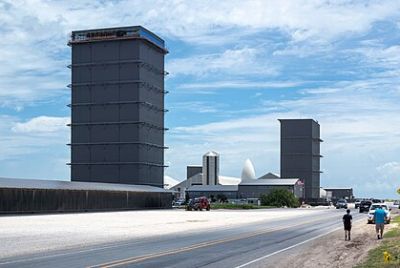
The company also faces regulatory and environmental scrutiny at its Boca Chica, Texas launch site. Coordination with federal agencies ensures compliance while balancing innovation timelines and local community concerns.
Competition in the commercial space sector has intensified with players like Blue Origin, Rocket Lab and international entrants. SpaceX's vertical integration and manufacturing scale provide significant advantages in cost and production speed.
Valuation and Investor Interest
Private valuations for SpaceX have climbed steadily, supported by massive funding rounds and secondary share sales. Tender offers allow employees to realize gains while attracting new capital from institutional investors.
Analysts tracking the space economy project substantial growth in satellite services, launch demand and exploration contracts. SpaceX is positioned to capture significant market share across these segments.
Recent funding activity and partnerships underscore confidence in long-term prospects. The company's ability to execute on ambitious roadmaps while generating revenue from operational services distinguishes it from many peers.
Starlink Expansion
Starlink has emerged as a major revenue driver, with thousands of satellites in low-Earth orbit delivering high-speed internet globally. The service has proven valuable in disaster response, rural connectivity and maritime communications.
International regulatory approvals and spectrum coordination remain ongoing priorities as the constellation grows. Capacity enhancements and user terminal improvements continue expanding addressable markets.
Military and government adoption of Starlink highlights its strategic importance. Secure communications capabilities support operations where traditional infrastructure is limited or compromised.
Future Outlook
SpaceX's long-term vision includes establishing a human presence on Mars and enabling point-to-point Earth transport via Starship. These goals require sustained technical breakthroughs and substantial capital investment.
NASA partnerships for Artemis lunar missions provide both funding and technical validation. Successful crewed Starship flights would mark a significant milestone in commercial human spaceflight.
The company continues hiring across engineering, manufacturing and operations disciplines. Its culture of rapid iteration and acceptance of calculated risks has driven repeated successes in a historically challenging industry.
Challenges include supply chain management for high-volume production, talent retention in a competitive technology landscape and navigating complex international regulations for global services.
Broader Space Industry Context
The commercial space sector has matured rapidly, transitioning from government-dominated activities to vibrant private enterprise. Lower launch costs have democratized access to orbit, spurring innovation in Earth observation, communications and scientific research.
SpaceX's achievements have accelerated this transformation while inspiring new generations of engineers and entrepreneurs. Its reusable rocket technology has fundamentally altered cost structures industry-wide.
Global interest in space capabilities continues rising, with nations and companies investing in sovereign launch capacity and satellite networks. SpaceX benefits from this trend while facing increased competition.
Investment in space infrastructure reflects confidence in multi-decade growth opportunities. Satellite broadband, space tourism, in-orbit manufacturing and resource utilization represent expanding frontiers.
As SpaceX navigates its next phase of development, private market valuations will likely remain closely watched. The company's execution on Starship, Starlink scaling and deep space ambitions will shape its trajectory for years ahead.
The modest decline in secondary trading reflects normal market fluctuations rather than fundamental concerns. SpaceX's operational momentum and contract backlog provide a strong foundation for continued leadership in commercial space.
© Copyright 2026 IBTimes AU. All rights reserved.
- Recommended For You