(VIDEO) SpaceX and Tesla Confirm Texas Site for 'Terafab' AI Chip Complex With Intel, xAI as Demand Soars
Elon Musk's Companies Partner with Intel for Groundbreaking AI Chip Manufacturing Facility
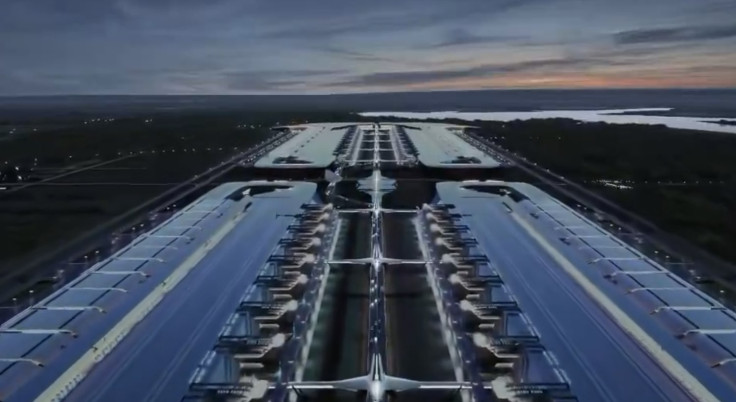
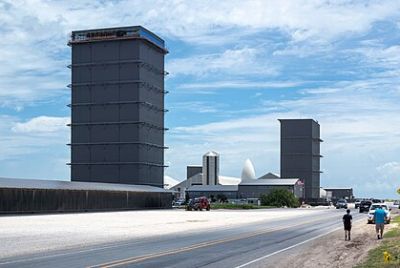
SpaceX and Tesla have formally confirmed the site for Terafab, an enormous artificial intelligence chip manufacturing complex being developed in partnership with Intel and xAI, moving the ambitious project from paperwork toward ground-breaking as Elon Musk's companies contend with a chip supply gap they say existing global manufacturers cannot fill.
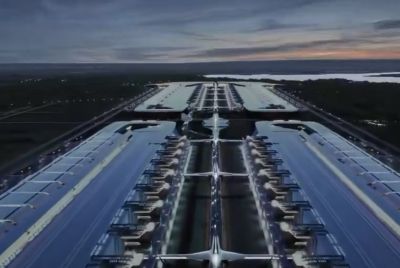
According to a report from Benzinga, the confirmation followed a $10 million payment SpaceX sent to Grimes County, Texas, earlier this week, satisfying a deadline built into a tax abatement agreement the two sides signed in June. Foundation preparation is expected to begin almost immediately, with construction renderings expected within days and physical construction to follow within months, according to Teslarati.
The Terafab is going to become the largest and most valuable building on Earth by a long shot.
— Teslaconomics (@Teslaconomics) August 6, 2026
This is so much more than just another semiconductor fab.
It’s going to be @Tesla, @SpaceX, xAI, and Intel building what will become the most important AI manufacturing complex EVER… pic.twitter.com/NebcmBQOtY
Why This Particular Site
SpaceX selected the Gibbons Creek Reservoir, the former home of the Gibbons Creek Steam Electric Station, as the location for the full-scale facility, citing the site's rainwater storage capacity and its proximity to Houston's labor pool, with more than 15.9 million people living within a three-hour radius of the property. The company plans to power the complex using its own natural gas plants rather than drawing electricity from Texas's ERCOT grid, and it has acquired the Navasota River pumping station it intends to use to divert stormwater into the reservoir for cooling and industrial use.
A Venture Bringing Together Four of Musk's Key Partners
Terafab brings together three companies tied to Musk, SpaceX, Tesla and xAI, alongside chipmaker Intel, which joined the project in April following a meeting between Musk and Intel CEO Lip-Bu Tan at Intel's campus. Musk first unveiled the venture in March at a launch event held at the defunct Seaholm Power Plant in Austin, describing it at the time as, in his words, the most epic chip-building exercise in history.
An initial prototype fabrication facility is already underway at Tesla's Giga Texas campus in Austin, designed to feed into the larger, full-scale Grimes County complex. SpaceX has estimated that the first phase of the Grimes County site could cost approximately $55 billion, with total costs across all planned phases potentially reaching as high as $119 billion.
A Staggering Compute Target
At full scale, Terafab is targeting 1 terawatt of annual AI compute capacity, a figure the project's backers say would roughly double current total U.S. semiconductor output. The plan calls for reaching 1 million wafer starts per month using Intel's advanced 14A manufacturing process, a considerably more ambitious target than the current global AI chip output, which analysts have estimated at roughly 20 gigawatts annually, meaning Terafab's stated goal would represent something on the order of 50 times current worldwide production.
Intel, in a statement posted to social media platform X when it joined the project, said its ability to design, fabricate and package ultra-high-performance chips at scale would help accelerate Terafab's aim of producing 1 terawatt per year of compute to power future advances in AI and robotics. Intel CEO Lip-Bu Tan separately characterized the partnership as representing a step change in how silicon logic, memory and packaging will be built in the future.
The Supply Problem Driving the Project
The scale of the undertaking traces back to a supply constraint SpaceX has described explicitly in its own regulatory filings. In its Form S-1 filed ahead of its recent initial public offering, SpaceX warned that its orbital AI ambitions depend on chip access significantly beyond what is currently available, pointing specifically to capacity constraints at established foundries including TSMC and Samsung Foundry. Musk has repeatedly argued that existing global chip fab output covers only a small fraction of what Tesla and SpaceX will eventually require to power vehicles, Optimus humanoid robots and space-based data centers.
According to Musk's stated division of labor for the project, Tesla is focused on the smaller prototype fab, while SpaceX is taking the lead on the initial phase of the full-scale Grimes County facility. The venture is designed around two primary facilities: one focused on terrestrial AI chip production, manufacturing processors that power Full Self-Driving software and the Optimus robot, and a second, more experimental facility intended to produce chips specifically engineered for use in orbital data centers.
Not Without Skeptics
Despite the scale of the announced investment, some industry analysts have offered a more measured read on what Terafab actually represents. Writing shortly after Intel's involvement was confirmed, one technology publication argued that the venture functions less like an independent Tesla-built chip fab and more like an Intel Foundry expansion project for which Tesla, SpaceX and xAI are serving primarily as anchor customers, rather than a fully vertically integrated manufacturing operation built from scratch by Musk's companies. That analysis noted that leading-edge chip fabrication typically takes established players like TSMC, Samsung and Intel roughly a decade and tens of billions of dollars to stand up, making the idea of an automaker, a rocket company and an AI startup independently building a competitive advanced process node a considerably more difficult proposition than the project's public framing suggests.
SpaceX's own regulatory disclosures have echoed a version of that caution. The company's Form S-1 explicitly warns investors that Terafab "may not be successful" in closing the chip supply gap it was designed to address, an acknowledgment that stands in contrast to the more triumphant framing the project has received in promotional materials and social media commentary surrounding its launch.
Financial Scale Required
Some industry analysts have separately calculated that achieving the full 1-terawatt annual capacity target would require capital expenditures ranging from $5 trillion to $13 trillion over the project's full lifespan, given the roughly 22.4 million advanced logic wafers that scale of output would require processing each year. To help generate additional liquidity for its broader ambitions, SpaceX previously acquired xAI in an all-stock merger, creating a combined entity valued at approximately $1.25 trillion at the time of that transaction.
With site confirmation now finalized and construction expected to begin within months, Terafab moves into a phase where its backers' ambitious timelines will face their first real test. Traditional semiconductor fabs typically take five to seven years to progress from initial groundbreaking to full volume production, meaning even an aggressive construction schedule at Grimes County would likely place meaningful chip output for Tesla, SpaceX and xAI's most demanding AI and robotics applications several years away, even as the underlying chip supply constraints the project is meant to address continue to intensify across the broader technology industry in the meantime.
© Copyright 2026 IBTimes AU. All rights reserved.
- Recommended For You