SpaceX Trajectory Remains Upward Despite Periodic Setbacks as Company Advances Ambitious Goals
Exploring SpaceX's transformative impact on space exploration, innovation, and global connectivity.

CAPE CANAVERAL, Fla. — SpaceX continues demonstrating resilience and momentum in its ambitious space exploration efforts despite occasional launch delays and technical challenges that have marked its rapid growth. The privately held company, founded by Elon Musk, maintains a dominant position in commercial spaceflight while pursuing transformative objectives including Mars colonization and global internet coverage through its Starlink network.
Recent Starship test flights have showcased both progress and the iterative nature of cutting-edge aerospace development. While some missions encountered unexpected outcomes, each test provides valuable data that informs subsequent improvements. SpaceX's approach of rapid prototyping and frequent testing distinguishes it from traditional aerospace programs that emphasize extensive pre-flight validation.
The company's Falcon 9 rocket has established itself as the workhorse of modern space transportation. With hundreds of successful missions, Falcon 9 has significantly reduced launch costs and increased access to orbit for various payloads. This reliability has attracted commercial customers and government contracts, creating a sustainable revenue foundation for more experimental programs.
Starlink satellite deployment represents another major achievement. The constellation provides broadband internet to remote and underserved regions worldwide. Military and humanitarian applications have expanded the system's utility beyond consumer markets. As the network grows, it generates recurring revenue that supports broader company objectives.
SpaceX's relationship with NASA remains crucial to its operations and credibility. Commercial Crew Program missions have successfully transported astronauts to the International Space Station, ending American reliance on Russian spacecraft for crewed flights. These partnerships provide technical validation and financial stability for the company's more speculative initiatives.
Industry observers note that SpaceX's vertically integrated approach enables faster innovation cycles compared to traditional contractors. In-house manufacturing of engines, avionics and other components reduces dependency on external suppliers while allowing rapid design iterations. This model has proven effective in accelerating development timelines.
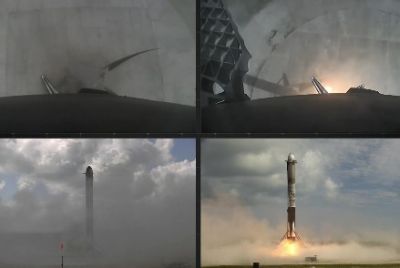
Challenges persist in the company's pursuit of full reusability and deep space capabilities. Starship development has encountered technical hurdles typical of pushing engineering boundaries. However, each test flight contributes to incremental improvements that gradually address previous issues. The iterative methodology prioritizes learning through experience over perfect initial performance.
Financial markets have shown strong interest in SpaceX despite its private status. Valuation estimates have increased substantially as the company demonstrates execution capabilities across multiple programs. Investor enthusiasm reflects confidence in long-term potential rather than immediate profitability.
The company's workforce has expanded dramatically to support growing operational demands. Engineering talent from various disciplines contributes to complex projects spanning orbital mechanics, materials science and software development. This human capital represents a critical competitive advantage in the space industry.
Global interest in space activities has intensified as more nations and private entities pursue orbital capabilities. SpaceX's success has inspired increased competition while establishing new standards for cost and reliability. The company's achievements have broadened participation in space-related activities.
Regulatory considerations remain important for SpaceX operations. Launch licensing, orbital debris management and international coordination require ongoing attention. The company's engagement with regulatory bodies demonstrates commitment to responsible space operations while advocating for streamlined processes that support innovation.
Environmental impact assessments have become more prominent as launch frequency increases. SpaceX has implemented various measures to minimize effects on surrounding ecosystems while maintaining operational tempo. Balancing ambitious schedules with environmental stewardship presents ongoing challenges.
The broader space economy continues expanding as satellite services, space tourism and scientific research create new markets. SpaceX's infrastructure and launch capabilities position it to benefit from this growth while contributing to its development. The company's role extends beyond transportation to enabling entire ecosystems.
Future milestones include more frequent Starship operations and potential crewed missions. Artemis program participation could return humans to the lunar surface using SpaceX hardware. These objectives represent significant technical challenges that will test the company's capabilities.
Competition in the commercial space sector has increased with new entrants pursuing various business models. SpaceX's first-mover advantages and execution track record provide substantial leads, though sustained innovation remains necessary to maintain leadership. The competitive landscape encourages continuous improvement across the industry.
Public interest in space exploration has grown alongside SpaceX's achievements. High-profile launches and successful missions capture global attention while inspiring younger generations to pursue STEM careers. This cultural impact extends the company's influence beyond commercial metrics.
SpaceX's story reflects broader themes of private sector innovation in traditionally government-dominated fields. The company's success demonstrates how entrepreneurial approaches can accelerate technological advancement while reducing costs. This model influences policy discussions about public-private partnerships in space activities.
As SpaceX pursues increasingly ambitious objectives, questions about long-term sustainability and risk management persist. The company's willingness to accept calculated risks has produced remarkable achievements while occasionally resulting in spectacular failures. Balancing innovation with safety remains a core challenge.
The coming years will likely bring continued progress toward reusable deep space transportation and large-scale satellite deployment. SpaceX's trajectory suggests sustained momentum despite inevitable setbacks inherent to frontier technology development. The company's ability to learn from experience and maintain ambitious goals positions it favorably for future success.
© Copyright 2026 IBTimes AU. All rights reserved.
- Recommended For You