SpaceX Beats Earnings Forecasts as Musk Warns Memory Chip Prices Will Keep Rising on AI Demand This Week
Elon Musk outlines bold plans amid investor concerns over AI spending and chip shortages

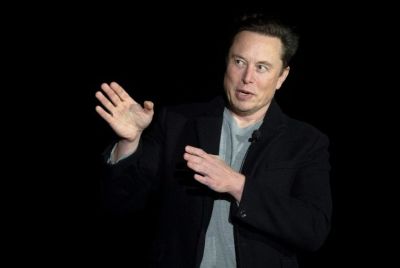
Space Exploration Technologies Corp. delivered stronger-than-expected results in its first earnings report as a public company on Tuesday, but shares fell sharply in after-hours trading as investors focused on soaring artificial intelligence spending rather than the revenue beat, while CEO Elon Musk used the call to warn that a global memory chip shortage could keep prices elevated for years.
SpaceX, which began trading on Nasdaq under the ticker SPCX following its initial public offering in mid-June, reported second-quarter revenue of $7.8 billion, a 92% increase from a year earlier and well above the market forecast of roughly $6.93 billion. Despite the beat, shares fell more than 7% in after-hours trading following the earnings release, extending a decline that has left the stock well below its IPO price in the weeks since the company's record-setting debut.
Capital Spending Spooks Investors
The market's negative reaction centered on the scale of SpaceX's capital expenditures, which reached $18.4 billion for the quarter, roughly a sixfold increase from a year earlier and an 81.7% jump from the $10.1 billion spent in the first quarter. Of that total, $15.8 billion was directed toward the company's artificial intelligence operations, a division that posted a $1.3 billion net operating loss for the period. SpaceX indicated that spending in the third and fourth quarters would likely remain at similarly elevated levels, a signal that appeared to unsettle investors already weighing questions about the sustainability of the company's AI ambitions following its record $1.75 trillion valuation at the time of its IPO.
Musk Lays Out a Long-Term Vision
During the call, Musk outlined an ambitious roadmap for the company's growth, including plans to launch a Starlink mobile service by the end of 2027, build lunar rocket-launch infrastructure by 2028, and reach $1 trillion in annual revenue by 2030. He also said the company could not rule out the possibility that Starlink would eventually provide most of the world's internet access, adding that such a scenario was not something in the very distant future but less than a decade away. Musk further said the company plans to launch its Starship spacecraft at least once a day starting roughly a year from now, positioning the vehicle as a key driver of long-term growth for the space business.
Despite the scope of that vision, investors appeared largely unmoved, with the stock's decline reflecting continued concern over the pace of AI-related spending and the looming expiration of employee share lockups, set to release as many as 911.5 million additional shares on Aug. 7 according to analysts at Deutsche Bank.
Communications and AI Businesses Drive Growth
Within SpaceX's results, the communications segment, which includes the Starlink satellite internet service, led revenue growth, rising 66% from a year earlier to $4.29 billion. Starlink subscribers doubled over the past year to reach 12 million, with the service now deployed across 170 markets following the launch of more than 10,000 satellites into low Earth orbit. Revenue from the company's AI business, which SpaceX has described as a future core operation, surged 250% to $2.56 billion, while the traditional space launch business grew 29% to $962 million.
Musk also addressed the company's chip strategy directly, stating that SpaceX's data centers would be built exclusively on Nvidia chips, a comment that sent shares of rival chipmaker AMD lower in after-hours trading even as AMD posted its own strong results the same day.
A Warning on Memory Chip Prices
Perhaps the most closely watched moment of the call came when Musk addressed the global memory chip market, arguing that current supply constraints represent the central bottleneck facing continued AI infrastructure expansion. Musk said memory chip production is increasing by roughly 20% annually, while demand is surging by more than 200%, a gap he said would keep prices climbing rather than falling under basic economic principles, directly rebutting a "memory peak-out" theory that had circulated among some market analysts in recent months.
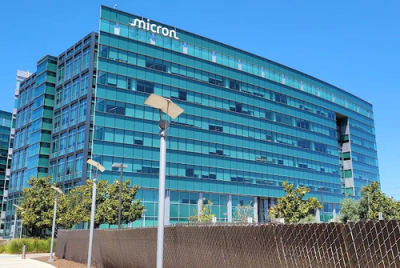
The comments echoed remarks Musk made during Tesla's second-quarter earnings call last month, when he said memory was currently in short supply and specifically thanked Micron Technology for allocating memory to the company, along with expressions of gratitude toward TSMC and Samsung Electronics. Industry observers noted that Musk's willingness to name specific suppliers and express public gratitude during an earnings call was unusual, and some analysts suggested it reflected the growing dependence of Musk's broader business empire on the AI semiconductor supply chain.
Musk's remarks triggered a swift reaction across memory chip stocks. Micron shares closed up more than 7% following the comments, while American depositary receipts of South Korea's SK Hynix also advanced in New York trading. Analysts at consulting firm Deloitte have separately forecast that global memory chip sales could exceed $1 trillion in 2027, up sharply from approximately $230 billion in 2025, with memory supply tightness potentially persisting into 2029 or 2030 if hyperscale cloud providers continue expanding their data center investments at current rates.
AMD Posts Its Own AI-Driven Surge
SpaceX's results arrived alongside a strong earnings report from AMD, which has emerged as a leading rival to Nvidia in the AI chip market. AMD reported second-quarter data center revenue of $6.72 billion, more than double the figure from a year earlier, driven by robust demand tied to AI infrastructure buildouts. The company forecast third-quarter revenue of $13 billion, above the market consensus estimate of $12.52 billion, citing continued growth in demand from large-scale AI data center expansion.
A Broader Signal for the AI Supply Chain
Taken together, the results from SpaceX and AMD reinforced a broader theme among analysts covering the AI infrastructure buildout: that demand for the underlying chips and memory components powering artificial intelligence systems continues to outstrip available supply, even as some individual companies face investor skepticism over the scale and pace of their own capital spending. For SpaceX specifically, the coming quarters are likely to remain a focal point for investors weighing the company's long-term growth ambitions against the near-term financial strain of its aggressive AI infrastructure investments.
© Copyright 2026 IBTimes AU. All rights reserved.
- Recommended For You