Elon Musk Says Starlink Will Be in Every Car Calling It the Only Way to Connect Billions of Vehicles
Musk's Ambitious Plan to Revolutionise Vehicle Connectivity with Satellite Internet
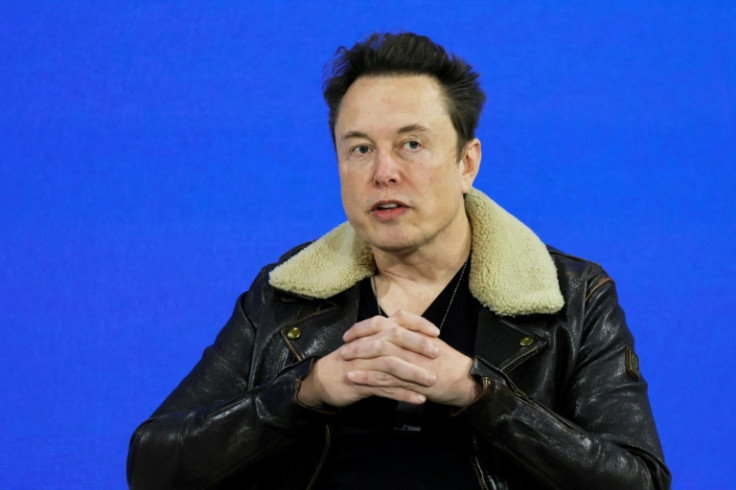
AUSTIN, Texas — Elon Musk said all cars will eventually feature Starlink connectivity, describing satellite internet as the only practical method for delivering high-bandwidth service to the global vehicle fleet.
"All cars will have Starlink in the future," Musk posted on X. "It's the only way to get super high bandwidth to billions of vehicles."
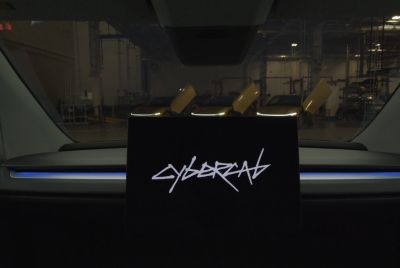
The comment came in response to discussion of a Tesla Cybercab prototype spotted in Texas with a flush-mounted Starlink dish on its rear. Photos shared by an account tracking Tesla developments showed the antenna integrated more seamlessly than earlier temporary installations on test vehicles.
Musk, who leads both Tesla and SpaceX, has long argued that traditional cellular networks face inherent limits in providing consistent, high-capacity connections across vast numbers of moving vehicles, especially in rural or remote areas where coverage is sparse. Starlink's low-Earth-orbit satellite constellation is designed to deliver broadband nearly anywhere with a clear view of the sky.
The vision aligns with Tesla's work on autonomous vehicles and robotaxis. Continuous high-bandwidth connectivity could support real-time data exchange for full self-driving systems, over-the-air software updates, high-definition mapping, and in-vehicle entertainment or productivity features once cars operate without a driver. For a fleet of robotaxis, reliable connectivity would also enable remote monitoring, fleet management and rapid response to edge cases.
SpaceX has steadily expanded Starlink's capabilities for mobile use. The service already powers connectivity on aircraft, ships, recreational vehicles and some emergency vehicles. Smaller, more integrated terminals have been under development to suit automotive constraints of size, weight, aerodynamics, vibration and power consumption. A flush-mounted design on the Cybercab suggests progress toward solutions that minimize visual and aerodynamic impact.
Musk has previously projected ambitious long-term figures for Starlink. In related comments, he has indicated the network could eventually carry more than half of global internet traffic and generate substantial revenue for SpaceX, with some estimates from the company and analysts pointing toward potential annual revenue in the hundreds of billions or higher as adoption scales across consumer, enterprise, maritime, aviation and mobility markets.
Integrating Starlink into passenger cars at scale would represent a significant expansion. Billions of vehicles worldwide currently rely primarily on cellular networks, which can face congestion, coverage gaps and capacity constraints as data demand from connected cars rises. Satellite connectivity offers a complementary or alternative layer that is less dependent on ground infrastructure density.
Challenges remain. Automotive-grade hardware must withstand extreme temperatures, vibration, weather exposure and long service lives. Cost per unit will need to decline for mass-market adoption. Regulatory approvals, spectrum coordination and manufacturing scale for millions of terminals would also be required. Power draw and heat management inside a vehicle present additional engineering hurdles.
Tesla has already embedded extensive connectivity and computing hardware in its vehicles for Autopilot and Full Self-Driving features. Adding a dedicated high-bandwidth satellite link would build on that foundation. Other automakers have explored satellite partnerships or hybrid cellular-satellite solutions, but Musk's statement frames Starlink as a potential industry standard rather than a Tesla-only feature.
The Cybercab, Tesla's purpose-built robotaxi design, lacks a traditional driver's cabin and features a minimalist exterior. That architecture may simplify antenna placement compared with conventional passenger cars that have more complex roof lines, glass roofs or aerodynamic requirements. Early test vehicles have carried more conspicuous external antennas; the flush-mounted version indicates ongoing refinement.
Musk's remarks arrive as SpaceX continues launching batches of Starlink satellites and refining the network's capacity and latency. Direct-to-cell capabilities, which allow ordinary smartphones to connect via satellite in limited fashion, are progressing in parallel and could complement vehicle-mounted terminals.
For consumers, the practical benefits could include uninterrupted navigation and streaming on long road trips, reliable emergency communications in remote areas, and smoother operation of advanced driver-assistance or autonomous systems that depend on cloud data. For fleet operators, consistent connectivity supports predictive maintenance, route optimization and centralized oversight.
The statement does not include a specific timeline for widespread automotive integration. Musk has a history of setting ambitious targets that sometimes shift based on technical progress and manufacturing realities. Still, the public affirmation that every car will eventually carry Starlink capability signals a strategic priority linking SpaceX's satellite network with the mobility sector.
Automakers, suppliers and telecommunications companies will likely watch closely as Tesla and SpaceX advance the hardware and service models. If high-bandwidth satellite connectivity becomes standard, it could reshape expectations for vehicle connectivity much as cellular data did in the previous decade.
Musk's brief post distilled a broader thesis: scaling high-capacity internet to the world's vehicle fleet requires a network architecture that is not limited by the density of ground-based towers. In his view, Starlink provides that path. The appearance of integrated hardware on a Cybercab prototype offers an early visual of how that future might look on the road.
© Copyright 2026 IBTimes AU. All rights reserved.
- Recommended For You