

Tesla Robotaxi Fleet Unveiled as Company Accelerates Autonomous Driving Ambitions
Tesla's latest robotaxi demonstration highlights its commitment to AI-driven urban mobility solutions.
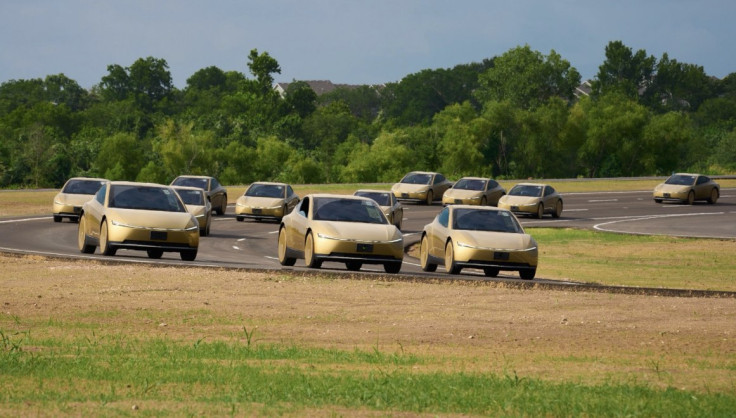
AUSTIN, Texas — Tesla Inc. showcased a fleet of gleaming gold-colored autonomous vehicles Tuesday, intensifying its push into robotaxi services as the electric vehicle maker seeks to capitalize on artificial intelligence advancements and reshape urban transportation.
The images circulating on social media depicted multiple Cybercab prototypes navigating a test track, signaling progress toward commercial deployment of fully driverless vehicles. Tesla has positioned robotaxis as a cornerstone of its future growth strategy, promising to unlock new revenue streams beyond vehicle sales.
Chief Executive Officer Elon Musk has long championed full self-driving technology as a transformative opportunity. The company has invested billions in AI and computer vision to develop systems capable of operating without human intervention in complex environments.
Gold rush pic.twitter.com/MWQoEAD76Z
— Tesla Robotaxi (@robotaxi) July 18, 2026
Tesla's approach relies on camera-based perception combined with neural networks trained on vast amounts of real-world driving data. Unlike some competitors using lidar, Tesla bets on vision systems mimicking human sight for cost efficiency and scalability.
The gold fleet appearance comes amid broader industry efforts to commercialize autonomous mobility. Waymo, Cruise and others have deployed robotaxis in select cities, though regulatory hurdles, safety concerns and technical challenges have slowed widespread adoption.
Tesla aims to differentiate through volume production and integration with its existing vehicle ecosystem. Owners of compatible cars could potentially add their vehicles to a Tesla-operated ride-hailing network, generating passive income while expanding fleet size rapidly.
Analysts project significant upside if Tesla executes successfully. Robotaxi margins could exceed those of traditional auto manufacturing, with software and data advantages creating network effects similar to ride-sharing platforms but without driver costs.
Challenges remain substantial. Achieving regulatory approval for unsupervised operation across diverse geographies requires extensive validation. Safety incidents involving autonomous systems have drawn intense scrutiny from authorities and the public.
Tesla has faced criticism over its Full Self-Driving software, with some regulators questioning marketing claims and incident reporting. The company maintains that its systems are improving rapidly through over-the-air updates and data accumulation.
The robotaxi event builds on previous unveilings, including the Cybercab prototype shown late last year. Production targets call for high-volume manufacturing to achieve cost parity with human-driven alternatives.
Tesla's vertical integration, from battery production to AI chip design, provides advantages in controlling the full stack. Its Dojo supercomputer trains models on petabytes of driving data collected from its vehicle fleet.
Investors have responded enthusiastically to autonomy updates, though execution timelines have slipped in the past. Tuesday's visuals helped renew excitement around the technology roadmap.
Musk has described robotaxis as central to Tesla's valuation case, potentially worth trillions if scaled globally. The company continues selling vehicles with increasing levels of driver assistance while developing unsupervised capabilities.
Competition includes traditional automakers partnering with technology firms and pure-play autonomous developers. Established players bring manufacturing expertise, while startups focus on software.
Safety data will be crucial for public acceptance. Tesla publishes quarterly reports on intervention rates and miles driven, though independent verification remains limited compared to some rivals operating in geofenced areas.
Regulatory landscapes vary. California and other states have stringent testing requirements, while some international markets are more permissive for pilot programs. Harmonization efforts could accelerate deployment.
Economic implications extend beyond transportation. Reduced accident rates, lower insurance costs and optimized traffic flow represent societal benefits, though job displacement for drivers raises transition concerns.
Tesla has outlined plans for dedicated robotaxi hubs and integration with energy products for charging. The vision includes 24/7 operation maximizing vehicle utilization far above personal car averages.
Tuesday's fleet demonstration featured consistent design language with Tesla's Cybertruck and other models, emphasizing futuristic aesthetics. Gold coloring may represent a limited edition or test theme.
Broader AI investments at Tesla span Optimus humanoid robots and energy optimization. The company positions itself as an AI and robotics leader beyond automotive.
Financially, Tesla reports vehicle deliveries and energy storage growth alongside software progress. Autonomy milestones could accelerate margin expansion as higher-value features are unlocked.
Analysts closely monitor FSD adoption rates and regulatory feedback. Positive developments could catalyze further stock gains, while delays have historically pressured valuations.
The robotaxi push aligns with global trends toward electrification and automation. Governments incentivize both through emissions targets and smart city initiatives.
Challenges include cybersecurity for connected fleets and ethical decision-making in edge cases. Industry-wide standards are evolving to address these issues.
Tesla's data advantage grows with each mile driven by its vehicles. This flywheel effect strengthens its AI models, potentially widening the lead over competitors.
Tuesday's images quickly spread across social media, generating buzz among enthusiasts and analysts. The visual fleet underscored tangible progress toward Musk's ambitious timelines.
As Tesla refines the technology, public demonstrations and pilot programs will build confidence. Scaling from test tracks to public roads represents the next major hurdle.
The company continues hiring AI talent and expanding compute resources. Dojo's capabilities are expected to accelerate training cycles for new model versions.
Investors will watch upcoming earnings for updates on autonomy timelines and capital allocation toward robotaxi infrastructure.
Tesla's robotaxi ambitions, if realized, could transform mobility and create substantial shareholder value. Execution risks remain, but the potential rewards have captured market imagination.
The gold fleet serves as both marketing and proof point, signaling readiness for the next phase of autonomous transportation development.
© Copyright 2026 IBTimes AU. All rights reserved.