

Samsung's New Portable Freestyle+ AI Projector Launches in the US for $1,200 With Smart Setup Features
Discover the AI-driven features of Samsung's latest portable projector, designed for seamless setup and versatile use.
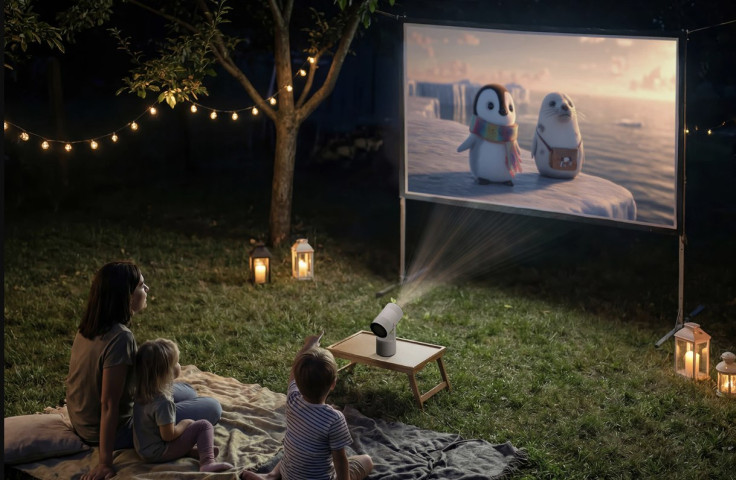
Samsung has launched its Freestyle+ projector in the United States, a compact portable device priced at $1,199.99 that leans heavily on artificial intelligence to eliminate much of the setup hassle traditionally associated with portable projectors, including manually correcting distorted images on uneven walls or surfaces.
The Freestyle+ is now available directly through Samsung's website and select retail partners, positioning it as a premium upgrade to the company's existing second-generation Freestyle projector, which remains available for roughly $800 through Samsung and for $798 on Amazon. The roughly $400 price premium reflects the addition of a suite of new AI-driven features Samsung first demonstrated at CES 2026 earlier this year.
The centerpiece of the new model is a feature called 3D Auto Keystone, an upgraded version of the standard keystone correction found on many projectors. According to Samsung, the technology can instantly calculate depth and perspective, allowing the device to flatten and correct image distortion even when projecting onto irregular surfaces such as room corners, wrinkled curtains, angled walls or ceilings, without requiring users to manually adjust the projection through dials or menus. That capability extends the projector's usefulness beyond a traditional flat wall or screen, enabling users to project onto surfaces such as tent walls while camping or outdoor spaces where a flat white backdrop isn't available.
Working alongside 3D Auto Keystone is a companion feature Samsung calls Wall Calibration, which uses sensors to detect the color and pattern of whatever surface the projector is aimed at, then automatically adjusts the projected image's color and brightness to compensate. Samsung says the feature is designed to ensure clear viewing even when projecting onto patterned wallpaper or colored walls, conditions that would otherwise significantly distort the accuracy of colors in the projected content. The company has also added two additional automated features, called Screen Fit and Obstacle Avoidance, which allow the projector to automatically resize its image to match a defined space on a wall and reposition the projection if it detects an object blocking part of the viewing area. An ultrasonic motor built into the device continuously maintains focus in real time as the projector is moved or as its distance from the viewing surface changes.
On the hardware side, the Freestyle+ offers a Full HD 1080p resolution with brightness rated at up to 430 ISO lumens, nearly double the brightness of the second-generation Freestyle, a change Samsung has described as a direct response to feedback and reviews of its earlier portable projector models. The device supports PurColor and HDR10+ for improved color accuracy and contrast, and can project images up to 100 inches diagonally. Audio comes from a built-in 360-degree speaker system featuring dual passive woofers, and the projector supports Samsung's Q-Symphony technology, allowing it to sync audio output with compatible Samsung soundbars and WiFi speakers for a more immersive sound experience.
The Freestyle+ also builds in a range of smart software features on top of its projection hardware. The device runs Samsung's Smart Hub interface, giving users access to built-in streaming apps, cloud gaming through Samsung's Gaming Hub, and content from Samsung TV Plus, the company's free ad-supported streaming service. Content can also be projected directly from Galaxy smartphones and tablets, or from Apple devices via AirPlay, giving the device broad compatibility regardless of which smartphone ecosystem a user relies on. Samsung has additionally integrated a Vision AI Companion feature into the projector, allowing users to interact with both Google's Gemini and Samsung's own Bixby voice assistant directly through the device.
Portability remains a core focus of the Freestyle+'s design, continuing the emphasis on flexible, on-the-go use that has defined the broader Freestyle lineup since its debut. While the projector still requires a power connection during normal use, it supports external USB-C battery packs, along with Samsung's own optional Battery Base accessory, making it usable in outdoor settings such as campsites or other locations without convenient access to a wall outlet.
Industry reviewers have offered a mixed but generally positive assessment of the new model, with much of the conversation centering on whether the added AI-driven setup features justify the substantial price increase over the standard second-generation Freestyle. One review from Gadget Review framed the Freestyle+'s value proposition around a single bet: that AI-powered surface intelligence can permanently eliminate the setup friction that has historically made portable projectors frustrating to use in imperfect spaces such as rental apartments or hotel rooms. The same review noted that despite the improved brightness and correction features, the Freestyle+ remains a 1080p device in a market where some competing portable projectors now offer 4K resolution, and cautioned that its 430-lumen brightness rating, while a significant improvement over its predecessor, still performs best in darker viewing environments and can wash out under strong ambient light.
The Freestyle+ enters a competitive and increasingly crowded portable projector market. Rival manufacturer Xgimi has continued expanding its own Elfin projector lineup, including a new Elfin Flip Laser model priced at $799 that offers a substantially brighter 1,600 ISO lumens using a triple laser light source, a notably higher brightness figure than Samsung's new flagship portable model despite its lower price point.
Samsung's launch of the Freestyle+ comes as the company continues expanding its broader ecosystem of AI-integrated home entertainment products, following earlier debuts of the technology showcased at CES 2026. For consumers weighing whether the added convenience of automated surface correction and calibration justifies the roughly $400 premium over the standard Freestyle model, the calculation is likely to come down to how often they expect to project onto imperfect or constantly changing surfaces, such as rental walls, outdoor spaces or oddly shaped rooms, versus a single, consistent flat viewing area where the second-generation Freestyle's simpler and less expensive feature set may prove entirely sufficient.
© Copyright 2026 IBTimes AU. All rights reserved.