Samsung Unveils UFS 5.0 Storage Chip, Doubling Speeds to Power On-Device AI
Samsung's UFS 5.0 sets new benchmarks in speed, efficiency, and size for mobile AI storage.

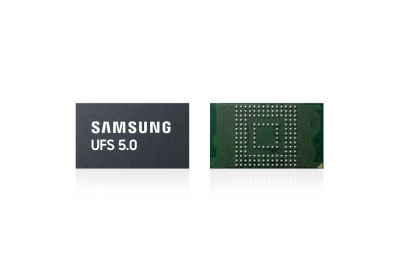
Samsung Electronics, the world leader in advanced memory technology, today announced that, for the first time in the industry, it has developed the industry's fastest Universal Flash Storage 5.0 solution, which will help enable seamless and highly efficient AI services on future mobile devices.
A Major Speed Increase Over the Current Standard
The new storage solution integrates the latest JEDEC embedded memory interface standards. According to specifications released by the company, UFS 5.0 achieves a sequential read speed of up to 10.8 gigabytes per second and a sequential write speed of up to 9.5 gigabytes per second — speeds that are respectively more than twice as fast as those of the previous UFS 4.1 standard, which tops out at 4,300 megabytes per second for reads and 4,100 megabytes per second for writes.
Built Specifically for On-Device AI
The milestone sets a new benchmark for the next-generation mobile memory market, as the enhanced performance is expected to allow mobile device users significantly reduced latency and faster response times when running large language models in on-device AI environments. Generative AI is rapidly shifting from the cloud to the device, driving a surge in the scale of data required for local processing. As a result, storage is evolving from a medium used primarily to store data to core infrastructure that supports AI computation.
Jangseok Choi, head of Memory Product Planning at Samsung Electronics, framed the announcement within that broader industry shift. "In the era of on-device AI, storage devices are evolving into a key driver defining AI experiences," Choi said. "As we successfully move beyond the development stage of the industry's first UFS 5.0 solution, Samsung is setting a new standard for storage on the go and will continue to drive innovation for the next-generation mobile platform market."
A Significant Improvement in Power Efficiency
Beyond raw speed, Samsung emphasized improvements to battery life as a key selling point of the new standard. Power efficiency in Samsung's UFS 5.0 is also improved by more than 40% compared to the company's UFS 4.1 solution. This is achieved by implementing a number of new innovations, including clock gating and multi-voltage technologies. These enhancements help to considerably reduce the power required to transfer the same amount of data, drastically lowering overall power consumption and extending the battery life of next-generation mobile devices.
A Smaller Physical Footprint
Alongside the performance and efficiency gains, Samsung has also managed to shrink the chip's physical dimensions compared to the prior generation. Samsung has engineered the UFS 5.0 solution into an ultra-compact package measuring just 7.5mm x 13mm x 0.9mm — making it 16.7% smaller than its predecessor. This form factor significantly boosts design flexibility and internal space utilization for a wide range of applications, including mobile, wearable, and extended reality devices.
Mass Production Timeline and Storage Capacities
Samsung has set a clear timeline for bringing the new storage standard to market. Mass production of UFS 5.0 is set to begin in the fourth quarter of this year, with the new storage solution available in capacities of up to 1TB.
Likely First Devices to Feature the New Standard
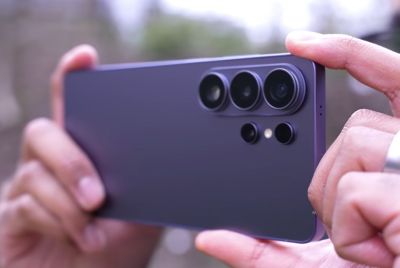
While Samsung has not officially confirmed which specific products will launch with UFS 5.0 first, industry speculation has already centered on the company's next flagship smartphone lineup. The chips, expected to be used in the upcoming Galaxy S27 phones, represent a significant speed improvement over current technologies. Samsung also just revealed that it's working on the Exynos 2700 chip, which is expected to power at least some Galaxy S27 devices. Leaker Ice Universe noted on social media that the Exynos 2700 will natively support UFS 5.0, making the Galaxy S27 one of the potential first phones to ship with the new storage standard. Samsung itself, however, has not confirmed UFS 5.0 for the Galaxy S27.
Given the timing of mass production beginning in the fourth quarter of this year and the Galaxy S27 not expected to arrive until early 2027, the two timelines align closely enough that the flagship phone series remains a plausible, if unconfirmed, launch vehicle for the new storage technology. Flagship phones launching this September, by contrast, are unlikely to feature the new standard given the production timeline.
Beyond Smartphones
Samsung indicated the new storage solution will extend well beyond its phone lineup once production ramps up. The company said it will be bringing UFS 5.0 to multiple devices in the future, including mobile, wearable, and extended reality products — reflecting a broader strategy of positioning the storage standard as foundational infrastructure for on-device AI across Samsung's full hardware portfolio, rather than a feature limited to flagship smartphones alone.
The Broader Industry Context
Samsung's announcement reflects a wider trend across the memory chip industry, as on-device processing of AI models becomes an increasingly important differentiator for mobile hardware manufacturers. Higher throughput usually helps out two places on current smartphones: app launch times and on-device AI, which more and more depends on fast data retrieval over brute CPU power alone. That shift has placed growing pressure on memory chipmakers to deliver storage solutions capable of feeding data to local AI models with minimal delay, a dynamic Samsung's UFS 5.0 announcement appears squarely designed to address.
With mass production scheduled to begin in the fourth quarter of 2026 and storage capacities reaching up to 1TB, the coming months will reveal which specific devices ultimately become the first to ship with Samsung's new UFS 5.0 standard. Given the strong circumstantial link between the production timeline and the expected early 2027 launch window for the Galaxy S27 series, Samsung's next flagship smartphone lineup remains the most likely candidate to debut the technology, even though the company has yet to make that connection official.
© Copyright 2026 IBTimes AU. All rights reserved.
- Recommended For You