Pixel Watch 4 vs Samsung Galaxy Watch 9 Comparison: Which Android Smartwatch Should You Buy Right Now
Comparing Design, Health Features, and Ecosystem Compatibility of Two Leading Smartwatches

Shoppers weighing a new Android smartwatch this summer face a familiar but increasingly nuanced choice: Samsung's newly released Galaxy Watch 9 or Google's Pixel Watch 4, now nearly a year old but still considered one of the strongest wearables on the market. Reviewers who have tested both devices say the decision largely comes down to which smartphone ecosystem a buyer is already invested in, along with personal preferences around design and health tracking philosophy.
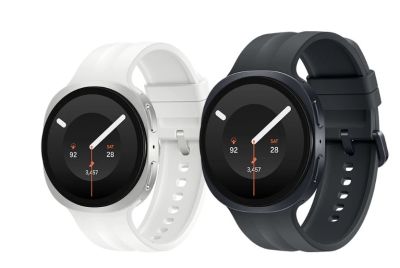
Samsung unveiled the Galaxy Watch 9 last month at its Galaxy Unpacked event in London, alongside the more rugged Galaxy Watch Ultra 2. The watch retains the same "squircle" design Samsung introduced with the Galaxy Watch 8, available in Graphite or Silver for the 44mm size and Graphite or Cream for the smaller 40mm size, both constructed from Armor Aluminum. Notably, Samsung has not released a Classic variant with the brand's signature rotating bezel this year, a decision expected since the company has typically reserved that design for alternating generations.
Design Philosophy Diverges Sharply
Perhaps the most polarizing difference between the two watches remains their physical design. Samsung's squircle shape has drawn mixed reactions from reviewers since its introduction, with some describing it as a departure from the understated, traditional timepiece aesthetic that once defined the Galaxy Watch line. Google, by contrast, has kept the Pixel Watch's rounded, pebble-inspired silhouette largely unchanged across four generations, with reviewers consistently praising its domed glass and comfortable fit for both daily wear and overnight sleep tracking.
Beyond aesthetics, the two watches differ in weight and battery capacity. The Galaxy Watch 9 comes in a 360mAh battery for the 40mm model and a 445mAh battery for the 44mm version, both increases over the prior generation that push the smaller watch to roughly 30 hours of use with the always-on display enabled. The Pixel Watch 4 offers 325mAh in its 41mm size and 455mAh in its larger 45mm model, meaning the two watches are broadly comparable on battery capacity depending on size chosen, with Samsung holding a modest edge at the smaller end and Google slightly ahead at the larger end.
Health Tracking Takes Different Approaches
Both companies have invested heavily in health and wellness features, but their platforms reflect different philosophies. The Galaxy Watch 9 continues to run on Samsung Health, which received a significant update in June adding new metrics including vitals tracking, daily cardio load and a fitness index. The watch also introduces an antioxidant index designed to gauge nutrient levels, alongside an FDA-cleared sleep apnea score that monitors nighttime breathing disturbances, a daily cardio load score, and additional metrics not currently available on the Pixel Watch 4.
The Pixel Watch 4, meanwhile, continues to rely on what was formerly branded as Fitbit and has since been folded into Google's broader health platform. Reviewers who have used both devices extensively say Google's redesigned interface remains their preferred experience, citing customizable dashboards that make it easy to surface preferred metrics, along with Gemini-powered coaching available to Fitbit Premium subscribers. One reviewer at Android Authority, who has tested both watches over multiple generations, wrote that despite Samsung Health's genuine progress in recent years, the Fitbit-derived platform remains their favorite for both new and long-term wearable users seeking approachable health insights.
Heart rate accuracy has also emerged as a point of differentiation. The same reviewer noted that across repeated workouts, the Pixel Watch 4's heart rate data tracked closely enough to a chest strap monitor that they trust it to nearly the same degree, a level of confidence they said matters because virtually every other health metric, from sleep insights to training load and stress tracking, ultimately depends on reliable heart rate data.

Software and AI Features Converge
One of the more notable developments to emerge from Samsung's Galaxy Watch 9 launch wasn't actually a new Samsung feature at all: the addition of a raise-to-talk gesture for triggering Google's Gemini assistant, a capability Pixel Watch owners have already had access to for months. That overlap illustrates a broader trend of the two ecosystems converging on similar AI-powered features even as their underlying software experiences remain distinct. Both watches run on Google's Wear OS platform, but Samsung layers its own One UI Watch interface on top, while the Pixel Watch presents what reviewers describe as a more direct, unmodified take on Google's vision for the platform.
For buyers already embedded in one ecosystem, this distinction tends to be less important than raw brand loyalty. Samsung phone owners, or anyone who also uses a Galaxy Ring, are generally advised by reviewers to stay within that ecosystem, while Pixel phone owners are pointed toward the watch that shares their phone's software philosophy. It is technically possible to pair either watch with a phone from the other company, but reviewers note that doing so introduces limitations, including reduced access to advanced health metrics that require a matching phone brand.
Pricing and the Case for Waiting
On price, the two watches sit in a similar range, though Samsung's newest models arrive at a premium over the outgoing Galaxy Watch 8. The Galaxy Watch 9 starts at $380 for the 40mm Wi-Fi model and $410 for the 44mm version, with cellular variants running an additional $50. The Pixel Watch 4 remains more affordable at its current price point, and with Google's next-generation Pixel Watch 5 expected to launch this month, some reviewers have suggested that pricing on the current Pixel Watch 4 could soften further in the coming weeks.
That looming launch has led at least one reviewer to frame this year's decision in blunt terms, writing that it feels like Samsung is refining a product while Google is refining an experience. For shoppers who can wait, holding off for the Pixel Watch 5 may be worth considering. But for those who need a new watch now, reviewers broadly agree that both devices remain capable, well-reviewed options, with the ultimate choice hinging less on which watch is objectively better and more on which phone is already in the buyer's pocket.
© Copyright 2026 IBTimes AU. All rights reserved.
- Recommended For You