

(VIDEO) Samsung Galaxy Z Fold 8 Review: The Shorter, Wider Foldable That Reviewers Say Gets the Formula Right
Samsung's Galaxy Z Fold 8 introduces a wider design, shifting focus to everyday content consumption.
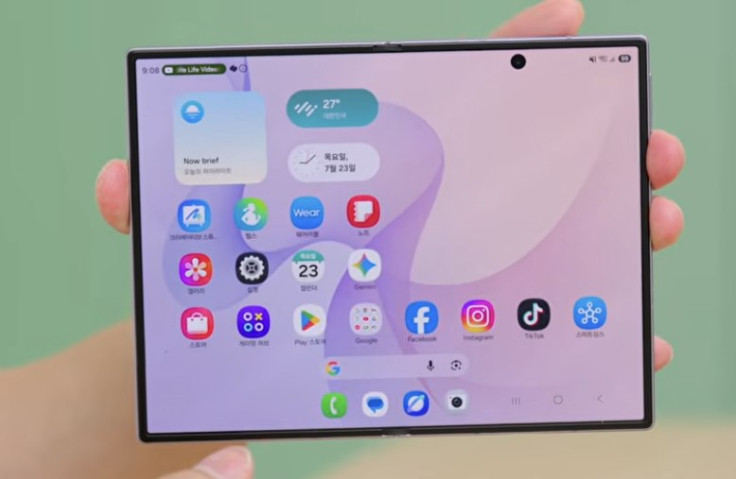
Samsung's newest foldable phone, the Galaxy Z Fold 8, has drawn early praise from technology reviewers who spent hands-on time with the device following its unveiling at the company's July Galaxy Unpacked event in London, with several outlets singling out its dramatically reworked shape as the most significant change to Samsung's foldable lineup in years.
Unlike previous Z Fold models, which have grown progressively wider but retained a tall, narrow silhouette, the Z Fold 8 marks the first time Samsung has shifted to a shorter, wider design when closed, a shape some reviewers have compared to a passport. The change positions the standard Z Fold 8 as a more content-focused alternative to the taller, productivity-oriented Galaxy Z Fold 8 Ultra, which now sits above it as Samsung's flagship foldable.
A dramatically different shape
Reviewers who tested the device largely embraced the redesign. Engadget described the phone in a headline as simply "wider is better," while a hands-on review from Gizmodo characterized the shorter, wider form factor as "actually better" than expectations going in, noting that early doubts about how the shape would feel in the hand and pocket faded once the reviewer unfolded the device.
Tom's Guide offered similarly enthusiastic early impressions, describing the phone as "super light and tailor-made for consuming content," and noting that the wide 5.5-inch cover display felt well suited for everyday tasks like scrolling social media and typing. Android Central's managing editor Derrek Lee said he had expected to dislike the wider design based on pre-release leaks, but "actually came away from my hands-on kind of loving it."
TechRadar's reviewer echoed that sentiment, noting Samsung's own description of the phone's unfolded screen as setting "the new standard for viewing content," a framing the outlet suggested may prove prescient given widespread expectations that Apple's rumored first foldable iPhone will arrive later this year with similar dimensions.
How it compares to the Fold 8 Ultra
The wider Z Fold 8 and taller Z Fold 8 Ultra now represent two distinct approaches within Samsung's foldable lineup, aimed at different types of users. According to Trusted Reviews, the standard Z Fold 8 is "easier to use one-handed and better suited to videos, games and everyday apps," while the Ultra "keeps the more productivity-focused form factor, with a boxier inner screen that's better for split-screen multitasking."
That distinction extends to camera hardware as well. The Z Fold 8 includes a dual 50-megapixel camera system covering wide and ultra-wide shooting, but lacks the dedicated telephoto zoom lens included on the pricier Ultra model. Trusted Reviews noted that while the standard Fold 8's camera setup "seems capable from early testing," those prioritizing camera performance above all else would likely be better served by the Ultra.
Shared hardware, different trade-offs
Despite their differing shapes and price points, the two phones share a substantial amount of underlying hardware. Both run on Qualcomm's Snapdragon 8 Elite Gen 5 chip and offer identical wired and wireless charging speeds, 45 watts and 20 watts respectively, according to TechRadar. Gizmodo similarly noted that beyond incremental design differences, "the Z Fold 8 Ultra has many of the same specs as the Z Fold 8," including the same chip, storage options and RAM configurations.
Samsung's new Flex Titanium display technology, which combines a titanium-alloy film with a reinforced titanium plate to help reduce crease visibility and improve display durability, is present across both models, according to Engadget, which reported that the shared engineering should make the fold line "even" less noticeable than on prior-generation devices.
Design details reviewers highlighted
Several reviewers pointed to specific design touches that stood out during testing. Tom's Guide praised how the wide cover display minimizes the black bars that typically appear above and below content on the main 7.6-inch internal screen once unfolded. 9to5Google's reviewer described being immediately taken with the device's build quality, writing that the phone's light weight, thin profile and available color options, particularly the online-exclusive Pistachio shade, made it the most compelling version yet of a wide foldable form factor previously attempted by other manufacturers, including Oppo's Find N2 and Google's original Pixel Fold.
Engadget's hands-on review noted one minor mechanical quirk: because of how the Z Fold 8's hinge springs are engineered, the phone cannot hold itself open in a tabletop mode when bent in half the way some other foldables can, naturally closing itself instead. The reviewer described the limitation as "a very small annoyance" for users who like to prop up their phone hands-free, noting that a standard tent mode remains available as an alternative.
A device built around everyday content, not just work
Multiple reviewers framed the Z Fold 8 as reflecting a broader strategic shift by Samsung, moving away from a singular focus on multitasking and productivity toward a foldable better suited for the kinds of everyday tasks most users actually perform on their phones, including watching videos, gaming, messaging and browsing social media. Trusted Reviews noted that Samsung had effectively split its prior single-Fold approach into two distinct products, preserving the productivity-first form factor under the new Ultra branding while giving the standard Fold 8 a more consumer-friendly identity of its own.
Pricing and where each model fits
The Galaxy Z Fold 8 starts at $1,899.99, while the Galaxy Z Fold 8 Ultra starts at $2,099.99, a $200 premium tied largely to the Ultra's additional camera hardware, larger 8-inch main display and more advanced hinge engineering, according to pricing confirmed across multiple outlets covering the launch. TechRadar summarized the choice facing prospective buyers as one of priorities: whether to opt for the wider Z Fold 8's advantages for scrolling and watching video, or the taller Ultra's strengths in productivity and photography.
With full reviews still pending following these initial hands-on impressions, technology outlets are expected to publish more detailed assessments of the Z Fold 8's camera performance, battery life and everyday durability in the coming weeks as devices reach a broader group of reviewers and early buyers. For now, early impressions suggest Samsung's decision to introduce a genuinely new foldable shape, rather than simply iterating on its existing tall-and-narrow design, has resonated with reviewers looking for a lighter, more pocketable alternative to the increasingly feature-dense Ultra tier.
© Copyright 2026 IBTimes AU. All rights reserved.