10 Smartwatch Alternatives to the Samsung Galaxy Watch 9 Worth Considering Before You Buy This Year
Samsung introduced its latest smartwatch lineup last month alongside its new foldable phones, but the Galaxy Watch 9 arrives with a higher price tag and modest upgrades over its predecessor, prompting reviewers and shoppers to look more closely at competing options across the wearables market.
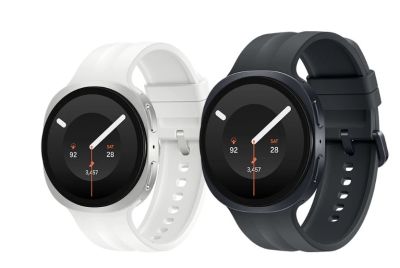
The Galaxy Watch 9, unveiled in July, features a larger battery, a new Qualcomm processor, a raise-to-talk voice assistant feature and expanded health tracking tools. The 40mm model starts at $380, while the 44mm version costs $410, with cellular variants running $50 more in each case. Those prices mark a notable jump from the 2025 Galaxy Watch 8, and reviewers have noted the two generations share many core features, raising questions about whether the newer model is worth the added cost.
For shoppers weighing their options, here are 10 smartwatches worth considering as alternatives to Samsung's newest release.
Samsung Galaxy Watch 8
The closest match to the Galaxy Watch 9 experience remains its direct predecessor. The Galaxy Watch 8 shares the same design, AMOLED display specifications and accurate health and sleep tracking, and it uses the same strap mechanism, meaning newer bands remain compatible. While Samsung lists it for $350, it has been found for around $300 at major retailers. Many of the Galaxy Watch 9's newer health features, including sleep apnea detection and vitals tracking, are expected to reach the Watch 8 through a software update. Its main drawbacks are a battery that requires daily charging and a roughly two-hour charge time.
Google Pixel Watch 4
For buyers who want a pure Wear OS experience, the Pixel Watch 4 remains a top pick. It comes in two sizes, undercuts the Galaxy Watch 9 on price, and offers multi-day battery life along with notably faster charging. Heart rate and sleep tracking are strong points, though some advanced features are locked behind a subscription. Unlike Samsung's watches, the Pixel Watch 4 does not require a specific phone brand to unlock full health tracking. A successor, the Pixel Watch 5, is expected to launch in mid-August, which could push down prices on the current model in the meantime.

Samsung Galaxy Watch 7
For shoppers seeking value within Samsung's own lineup, the 2024 Galaxy Watch 7 now retails for as little as $270 for the top-end 44mm LTE configuration through Samsung's own site, with lower prices available elsewhere. It retains a circular dial rather than the newer squircle design, offers dual-band GPS and accurate fitness tracking, and is set to receive some of the Galaxy Watch 9's new health metrics through a software update. Samsung has committed to supporting the device with operating system upgrades through 2028.
Samsung Galaxy Watch Ultra 2
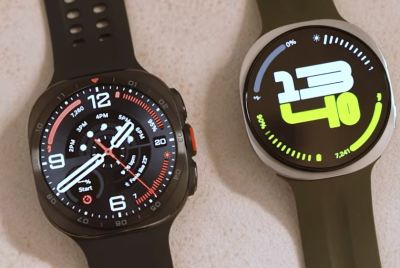
Samsung's premium option, announced at the same July event as the Galaxy Watch 9, retails for $699.99 in a single 47mm cellular configuration. It runs on Qualcomm's new Snapdragon Wear Elite chip, built on a 3-nanometer process, and supports satellite messaging for use outside cellular coverage. The watch targets serious athletes and outdoor users willing to pay a premium for its more rugged build and expanded battery capacity.
Garmin Venu 4
For buyers prioritizing fitness accuracy over smartwatch styling associated with rugged outdoor gear, the Garmin Venu 4 offers Forerunner-level tracking precision in a sleeker design. Priced at $550, it delivers more than a week of battery life and includes turn-by-turn navigation through Google Maps integration, though its app ecosystem is far more limited than Wear OS, and it lacks an on-device AI assistant.
Amazfit Balance 2
The Amazfit Balance 2 matches several Galaxy Watch 9 features, including sapphire glass, 32GB of storage and dual-band GPS, while extending battery life up to 21 days and adding 10 ATM water resistance suitable for diving. Priced around $300, it appeals to buyers who value long battery life and a streamlined health app over access to third-party apps.
Xiaomi Watch 5
Xiaomi's newest smartwatch, which went on sale in March, is built around a 930mAh battery capable of roughly six days of typical use and up to 18 days in power-saving mode. Running Wear OS 6 with Google Gemini integration, it starts around $299 to £269, undercutting comparable Wear OS competitors. Reviewers have noted some software quirks and a proprietary charging dock as drawbacks, along with the absence of ECG or blood pressure monitoring.
Apple Watch SE 3
For iPhone owners, the Apple Watch SE 3 offers Apple's ecosystem at a lower entry price than the flagship Series 11. Released in September 2025, the SE 3 starts at $249 and runs on the Apple S10 chip with a 1.6-inch OLED display. It lacks an always-on display and some higher-end sensors found on pricier Apple Watch models, but remains a capable option for buyers focused on core fitness and notification features rather than advanced health metrics.
OnePlus Watch 2R
Among Wear OS devices, OnePlus watches have built a reputation for leading battery performance. The Watch 2R, positioned as a budget-friendly Wear OS option, uses a dual-chip architecture that switches between a low-power processor and a full application processor to extend runtime, giving it an edge over many rivals in the same price range while still supporting third-party Android apps.
Garmin Venu X1
Aimed at more serious athletes, the Venu X1 combines dual-frequency GNSS positioning with a full suite of health sensors and 10 ATM water resistance. Its 47mm case runs large and may not suit smaller wrists, and battery life between two and three days has been described by reviewers as inconsistent following its initial launch. Still, for buyers focused on structured training features like customizable workout chaining, it remains a strong option within Garmin's lineup.
Ultimately, the right alternative depends on which phone a buyer owns, how they plan to use the device and how much they are willing to spend. Samsung and Google devices offer the broadest app support through Wear OS, while Garmin, Amazfit and Xiaomi models tend to prioritize battery life and fitness-tracking depth over software flexibility. With several new releases, including the Pixel Watch 5, expected in the coming weeks, shoppers weighing a purchase may find prices on current models shifting further in the near term.
© Copyright 2026 IBTimes AU. All rights reserved.
- Recommended For You