

(VIDEO) Samsung Debuts Galaxy Watch Ultra 2 and Galaxy Watch 9 With New Chip, Brighter Screens, Higher Prices
Samsung's latest smartwatches feature faster processors, bigger batteries, and brighter displays, setting new standards in the wearable tech market.
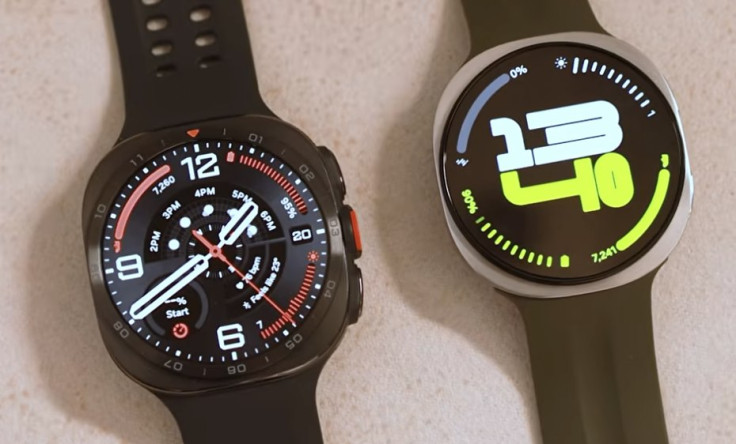
Samsung Electronics unveiled its next generation of smartwatches Wednesday, introducing the Galaxy Watch Ultra 2 and Galaxy Watch 9 alongside its new foldable phone lineup at the company's Galaxy Unpacked event in London, with both wearables gaining a faster processor, bigger batteries and brighter displays, along with higher price tags than their predecessors.
Both watches are now available for preorder, with general retail availability set for Aug. 7, the same release date as Samsung's newly announced Galaxy Z Fold 8 series.
A shared processor upgrade
For the first time, both the standard Galaxy Watch 9 and the rugged Galaxy Watch Ultra 2 move away from Samsung's own Exynos chips and onto Qualcomm's new Snapdragon Wear Elite processor, built on a 3-nanometer process. Samsung says the switch delivers a significant boost to overall speed and efficiency, particularly for on-device AI processing, while also enabling support for newer wireless standards including Bluetooth 6.0.
What's new on the Galaxy Watch 9
The standard Galaxy Watch 9 keeps a familiar cushion-shaped design similar to last year's Galaxy Watch 8, but gains a larger battery, now rated at 390mAh on the 40mm model and 445mAh on the larger 44mm version, along with a display capable of reaching 3,000 nits of peak brightness. The watch is available in Cream or Graphite for the 40mm size, with Graphite and Silver options for the 44mm model.
Pricing for the Galaxy Watch 9 varies depending on the specific retail source, with some outlets reporting a starting price of $379 for the 40mm Bluetooth-only model and $429 for the LTE version, while other reports citing official retail listings put the starting U.S. price closer to $430. Regardless of the exact figure, multiple outlets confirmed the new pricing represents an increase over last year's Galaxy Watch 8, which launched at $349.
The bigger leap: Galaxy Watch Ultra 2
Samsung reserved its more significant upgrades for the Galaxy Watch Ultra 2, the company's rugged flagship wearable aimed directly at competing with Apple's Watch Ultra 3. The new Ultra 2 packs an 800mAh battery, a 35% increase over the roughly 590mAh battery in the original Galaxy Watch Ultra, addressing one of the most common criticisms of that earlier model, which reviewers had noted often lasted only one to two days under heavy use.
Despite the larger battery, Samsung managed to make the new Ultra 2 about 12% thinner than its predecessor while retaining its shock-resistant titanium casing, according to the company. The watch's 1.52-inch Sapphire Crystal Super AMOLED display now peaks at 5,000 nits of brightness, a figure Samsung and multiple outlets described as a world-first for smartwatch display brightness, up sharply from the roughly 3,000 nits offered by the original Ultra.
The Galaxy Watch Ultra 2 comes in a single 47mm case size, available in Titanium Silver and Titanium Gray, and ships with LTE connectivity as standard rather than offering a separate Bluetooth-only option. U.S. pricing for the new Ultra 2 was reported at $699 by multiple retail sources, a $50 increase over the original Galaxy Watch Ultra's $649 starting price, though at least one outlet citing updated official retail listings put the figure closer to $650.
New health and fitness features
Both watches share a common set of AI-powered health tracking capabilities built around Samsung's BioActive sensor, including an FDA-cleared sleep apnea detection feature, a Heart Health Score, Daily Cardio Load tracking designed to help users gauge workout recovery, and a hearing feature that monitors environmental noise exposure over time. Samsung says these AI health tools process data on-device rather than requiring a cloud connection.
The new lineup also introduces several more specialized fitness tracking options, including a dedicated trail-running mode, a Nutrition Alert feature that draws on perspiration data, and an upcoming diving-focused app developed in partnership with dive computer maker Mares, expected to launch later this year to complement the Ultra 2's enhanced water-resistance rating.
Durability improvements
The Galaxy Watch Ultra 2 carries an upgraded durability rating compared with the standard Watch 9, including IP69K dust and water resistance and a 10ATM-plus rating for underwater use, alongside MIL-STD-810H military-grade durability certification and EN13319 diving equipment certification. The standard Galaxy Watch 9, by comparison, carries a more modest IP68 rating alongside 5ATM water resistance, reflecting its positioning as a general-purpose smartwatch rather than a dedicated adventure and diving companion.
Software and platform
Both watches run One UI 9 Watch, built on top of Google's Wear OS 7 platform, continuing Samsung's ongoing software partnership with Google across its wearable lineup. The shared software experience means most of the AI health and fitness features introduced with this generation are available across both models, with the Ultra 2's additional hardware capabilities, including its brighter display and more rugged build, serving as the primary differentiators between the two devices.
Part of a broader price increase across Samsung's lineup
The higher pricing on both new watches mirrors a broader trend across Samsung's entire product lineup unveiled this week. According to How-To Geek, the same component cost pressures driving up prices on Samsung's new Galaxy Z Fold 8 and Z Flip 8 foldable phones have extended to its wearable devices as well, with essentially every new smartwatch model priced higher than its direct predecessor.
With preorders now open and general availability set for Aug. 7, Samsung's newest wearables enter a competitive smartwatch market that includes Apple's Watch Ultra 3 and a growing field of rivals from Google and Garmin. Given the emphasis Samsung placed on battery life and display brightness improvements for the Ultra 2 specifically, reviewers and early buyers are likely to focus closely on whether those upgrades meaningfully address the battery-life complaints that shaped much of the criticism surrounding the original Galaxy Watch Ultra when it launched two years ago.
© Copyright 2026 IBTimes AU. All rights reserved.