Download Tesla Robotaxi App Now: Elon Musk Pushes Update With Interior Camera Safety and Pulsing Lights
AUSTIN, Texas — Elon Musk urged fans Friday to download the Tesla Robotaxi app immediately after the company rolled out a significant update featuring new safety tips, a darker user interface and clearer guidance on how the autonomous vehicles operate in limited service areas.

Musk's post on X, which quickly amassed more than 1.4 million views within hours, quoted Tesla enthusiast Sawyer Merritt's detailed breakdown of the refreshed app. The update introduces a prominent "tips" section that explains key rider protocols: vehicles seat up to four passengers with explicit instructions not to sit in the driver's seat, arrival lights pulse to signal boarding, the car waits a maximum of seven minutes before departing, and interior cameras may monitor the cabin for safety.
The changes come as Tesla continues its cautious rollout of unsupervised Robotaxi service in Austin and the San Francisco Bay Area. Merritt's post, which included four screenshots of the new interface, highlighted the app's sleeker dark-mode appearance and minor UI tweaks designed to make the rider experience more intuitive and reassuring.
Download the Tesla Robotaxi app https://t.co/x7eVGBWJ1R
— Elon Musk (@elonmusk) April 10, 2026
One tip screen shows a top-down vehicle schematic with four blue-highlighted seats and the warning: "Space for 4 riders. Do not sit in the driver seat." Another displays a stylized rear view of a Tesla with glowing red taillights and the message: "Vehicle lights will pulse on arrival. Wait for the pulse before boarding." A third features an alarm-clock icon noting: "Your ride will wait up to 7 minutes. The vehicle will leave after the timer runs out." The final tip includes a blue-circled interior camera graphic: "We may use interior cameras to ensure your safety during the ride."
Musk's simple directive — "Download the Tesla Robotaxi app" — triggered an immediate wave of responses. Users across the country and internationally flooded replies with enthusiasm, questions about availability and frustration over geographic limits. Many confirmed downloading the app even if Robotaxi service remains unavailable in their cities, viewing it as a show of support for Tesla's autonomous ambitions.
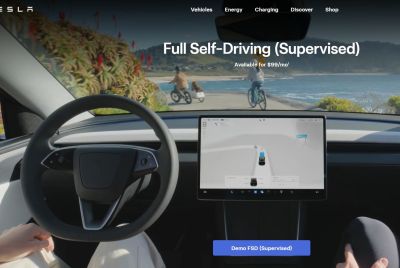
The update arrives at a pivotal moment for Tesla's Full Self-Driving (FSD) technology. The company has been iterating rapidly on FSD version 14.x, with recent demonstrations showing impressive performance on challenging routes such as twisty mountain roads in California's Santa Cruz Mountains. Tesla Owners Silicon Valley posted video Friday of a near-perfect unsupervised drive to the summit of Mount Umunhum, complete with flawless parking at the top.
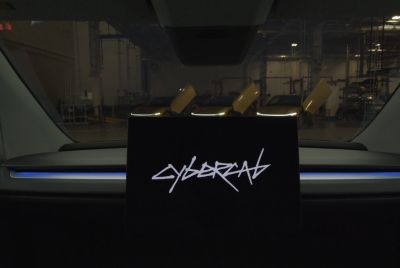
Tesla unveiled the Cybercab — its purpose-built Robotaxi vehicle — in October 2024 at Warner Bros. Studios in Burbank, California. The sleek, two-seater autonomous pod, priced under $30,000 and designed without a steering wheel or pedals, represents the hardware foundation for the company's ride-hailing network. Production is slated to begin in 2026 at Gigafactory Texas, with unsupervised FSD capability planned for the same year.
Regulatory hurdles have slowed broader deployment. California and Texas remain the only states with active unsupervised testing approvals for Tesla's Robotaxi fleet. Austin serves as the primary proving ground, while Bay Area operations focus on select routes in Palo Alto, San Francisco and surrounding communities. Musk has repeatedly stated that expansion to additional cities depends on accumulating millions of safe autonomous miles and securing necessary permits.
The new app features emphasize passenger education and transparency — critical elements as Tesla navigates public skepticism around driverless technology. Interior camera usage, long a point of privacy debate, is framed strictly around safety monitoring rather than constant recording. Tesla has previously assured customers that cabin cameras activate only when necessary and that data remains encrypted and user-controlled where possible.
Industry analysts see the update as part of a deliberate strategy to build rider confidence ahead of scaled operations. "Tesla is essentially training users on how to interact with a driverless vehicle before the fleet grows," said one autonomous-vehicle consultant who requested anonymity to discuss ongoing regulatory talks. "Pulsing lights, timed waits and seat restrictions reduce confusion and potential liability."
Competitors are watching closely. Waymo, Alphabet's autonomous unit, already operates commercial robotaxi services in multiple cities including Phoenix, San Francisco and Los Angeles, carrying paying passengers without safety drivers. Cruise, General Motors' former leader in the space, continues recovery efforts after a 2023 pedestrian incident in San Francisco. Tesla's approach — leveraging its massive existing vehicle fleet and over-the-air software updates — aims to leapfrog rivals through sheer scale once regulatory green lights appear.
Wall Street has priced in significant Robotaxi revenue in Tesla's long-term valuation. Morgan Stanley and other firms maintain "overweight" ratings, citing the potential for a high-margin autonomous ride-hailing business that could eclipse traditional auto sales. Friday's app update, while incremental, reinforces momentum toward that goal. Tesla shares, already up sharply in 2026 on FSD progress and energy-storage growth, reacted positively in early trading.
For everyday users, the app serves as both booking platform and educational tool. Riders in service areas can summon vehicles via the app, which integrates seamlessly with Tesla's existing ecosystem. The darker UI aligns with Tesla's broader design language seen in recent vehicle software updates, reducing eye strain during nighttime use.
International interest remains high despite limited availability. Replies from Europe, Canada and Asia expressed eagerness for eventual rollout, with some users noting the app's absence from local app stores. Android users, in particular, pressed Musk for Play Store availability, as the current version appears optimized primarily for iOS in supported regions.
Musk has not responded publicly to individual queries Friday, but his history suggests rapid iteration. Tesla frequently pushes software updates without fanfare, and the Robotaxi app is expected to receive further refinements as real-world usage data accumulates. The seven-minute wait timer, for instance, could adjust based on operational feedback to balance efficiency and rider convenience.
The push also highlights Tesla's dual role as automaker and technology platform. By encouraging downloads even outside current service zones, Musk is building a nationwide — and potentially global — user base primed for future expansion. Similar tactics helped scale Tesla's Supercharger network and energy products.
Safety remains paramount. The interior-camera disclosure addresses concerns raised during earlier FSD beta testing, where some critics questioned monitoring practices. Tesla maintains that cameras enhance rather than invade privacy, citing features like automatic emergency braking and cabin alerts for forgotten items or pets.
As Friday progressed, Tesla enthusiasts continued sharing download confirmations and speculating on expansion timelines. Some predicted Austin and Bay Area fleets would double within months, while others looked toward Los Angeles or New York as next logical markets pending regulatory approval.
The Robotaxi vision traces back to Musk's 2016 promise of autonomous Tesla vehicles summonable via app. A decade later, the technology has matured through billions of miles of real-world data collected from customer cars. FSD version 14.3's recent mountain-drive success demonstrates the leap from supervised to unsupervised capability.
Challenges persist. Insurers, lawmakers and unions continue debating liability, job impacts and infrastructure needs for widespread robotaxis. Yet Tesla's vertical integration — owning the vehicles, software, charging network and now dedicated app — positions it uniquely to capture the emerging market.
Musk's Friday post, though brief, encapsulates the company's relentless forward momentum. In an era when autonomous technology promises to reshape transportation, entertainment and urban planning, Tesla's latest app update represents another tangible step toward that future — one download at a time.
Whether users are in Austin ready for their first driverless ride or simply curious supporters elsewhere, the message is clear: the Robotaxi era is accelerating, and Tesla wants riders prepared from day one.
© Copyright 2026 IBTimes AU. All rights reserved.
- Recommended For You