Elon Musk Says 'Money Won't Matter' in 2036 as His Fortune Plunges Nearly $700 Billion in Just Weeks
Musk's vision of an AI-driven future challenges traditional economic models

Elon Musk predicted that money will become largely irrelevant within the next decade, a statement that drew significant attention given its timing: the world's richest man made the comment just weeks after his paper fortune shrank by nearly $700 billion amid a steep decline in Tesla and SpaceX stock prices.
A bold prediction about an AI-driven future
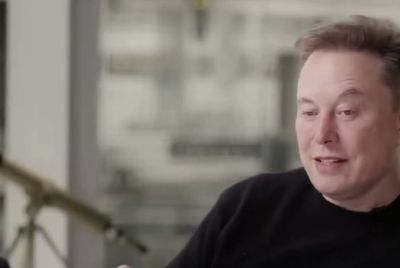
Speaking with The Economist's editor-in-chief, Zanny Minton Beddoes, in a wide-ranging interview, Musk argued that rapid advances in artificial intelligence and robotics could fundamentally reshape how the global economy functions. "Money won't matter in 2036," Musk said, predicting the world would transition into what he described as an era of "incredible abundance," in which robots and AI systems produce more goods and services than people could ever consume.
Musk framed his reasoning around the basic purpose money serves. "You want money for goods and services, right? You want money for obviously food, housing," he said, arguing that once AI and automated production make those goods and services essentially limitless, the underlying need for currency would diminish substantially.
Beddoes pushed back on the prediction during the interview, pointing out the apparent tension between Musk's forecast and the market value of his own companies. "I'm not sure that the people who bought your shares think that money won't matter," she said, challenging Musk to explain how Tesla and SpaceX would continue generating revenue in a future where money supposedly carries little significance.
Universal income and deflation concerns
Pressed on how people might live after losing jobs to AI over the next decade, Musk pointed to the idea of expansive government support, replying that the future would likely involve "universal high income" rather than the more commonly discussed concept of universal basic income. He suggested governments could directly issue payments to citizens as automation reshapes the labor market.
When Beddoes raised concerns that dramatically increasing the money supply to fund such payments could trigger inflation, Musk rejected the premise, arguing that inflation depends on the balance between money supply and the availability of goods and services rather than the money supply alone. He said that if AI-driven production dramatically expands the overall supply of goods and services, governments could increase the money supply without triggering meaningful inflation. Musk went further, suggesting that deflation, not inflation, would become the more pressing economic challenge if production outpaces growth in the money supply.
Acknowledging uncertainty about AI's risks
Despite his optimistic framing of an abundant AI-powered future, Musk also acknowledged significant uncertainty and personal ambivalence about the technology's trajectory. Describing his own shifting views on artificial intelligence, Musk said, "I've gone from exhilaration to terror regarding AI," a comment that underscored the tension between his enthusiasm for AI's potential and his stated concerns about its risks. He also weighed in on the global competitive landscape, suggesting China has a strong chance of eventually dominating AI development given the scale of computing resources the country could bring to bear, even as Chinese firms have already shown they can achieve results with comparatively limited computing power.
A steep decline in Musk's fortune
The interview's timing amplified public reaction, coming as Musk's net worth has fallen sharply from its recent peak. Musk briefly became the world's first trillionaire following SpaceX's initial public offering, with his paper wealth reaching approximately $1.45 trillion on June 16, when SpaceX's market value climbed to roughly $2.64 trillion. Since then, his estimated net worth has fallen to around $738 billion as of July 23, according to the Bloomberg Billionaires Index, a decline of nearly $700 billion in a little over five weeks.
The bulk of that decline stems from a dramatic slide in SpaceX's stock price. Shares in the company, which trade under the ticker SPCX, have fallen nearly 50% from their June 16 peak of $225.64, closing at $115.07 on Friday, July 24. That drop has erased roughly a trillion dollars in SpaceX's market capitalization since its post-IPO high. The stock's decline accelerated following a delayed Starship launch on July 16, compounded by a broader selloff among AI-related companies as initial post-IPO enthusiasm cooled. SpaceX shares fell for seven consecutive trading sessions, closing below their IPO price during that stretch. Short sellers betting against the stock have reportedly gained roughly $15.5 billion during the decline.
Tesla adds to the pressure
Tesla shares also weighed on Musk's overall net worth this week following the company's latest earnings report. Tesla posted second-quarter revenue of $28.24 billion, beating analyst expectations by more than 7%, and delivered a record 480,126 vehicles during the quarter. However, adjusted earnings per share came in at $0.33, falling well short of the $0.5367 consensus estimate, a miss of more than 38%. The disappointing profit figures contributed to a roughly 19% weekly decline in Tesla shares, which closed at $313.03 on Friday.
Not all investors have reacted negatively to Tesla's pullback. Prominent fund manager Cathie Wood, known for her bullish long-term stance on the company, purchased more than $51 million worth of Tesla shares during the recent dip, signaling continued confidence in the company's trajectory despite the earnings miss.
A prediction that invites skepticism
Musk's comments about money losing relevance by 2036 have drawn both interest and skepticism from economists and commentators, many of whom note the significant gap between Musk's sweeping predictions about AI-driven abundance and the practical, near-term financial realities facing his own companies. Whether Musk's long-term vision of a post-scarcity economy comes to pass remains deeply uncertain, but for now, the sharp decline in his personal fortune has added an unusual layer of context to his latest remarks about a future in which, in his view, money itself may eventually cease to matter.
© Copyright 2026 IBTimes AU. All rights reserved.
- Recommended For You