

Elon Musk Says He 'Got Carried Away' in Politics During His DOGE Tenure but Still Defends the Record
Musk defends DOGE's mission despite acknowledging excessive political involvement
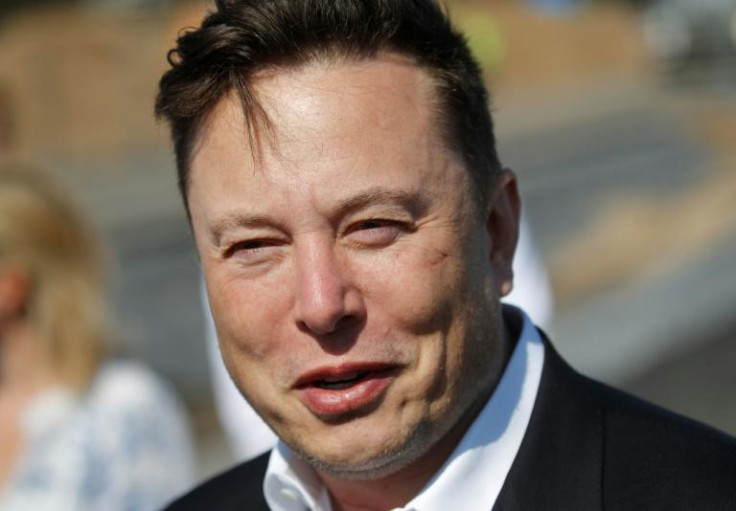
Elon Musk said in a new interview published Thursday that he became too deeply involved in politics during his time leading the Department of Government Efficiency, offering one of his most direct personal reflections yet on his brief but turbulent tenure inside the Trump administration, even as he continued to defend the agency's overall record.
Speaking with The Economist's "Insider" program, hosted by Zanny Minton Beddoes, Musk acknowledged that his political involvement went further than he had anticipated. "I think I got a little too involved in politics. I got carried away, frankly," Musk said. He offered few specifics about which particular actions or decisions he might reconsider.
What DOGE did
President Donald Trump created the Department of Government Efficiency by executive order on his first day back in office, tapping Musk, who had poured hundreds of millions of dollars into Trump's 2024 campaign, to serve as the entity's unelected director. Under Musk's leadership, DOGE launched a sweeping effort to cut federal spending and personnel, ultimately pushing more than 272,000 federal employees out of their jobs through direct firings and a deferred resignation program that nearly 140,000 workers accepted.
DOGE staffers also moved to terminate funding for a range of federal grant programs covering health research, arts initiatives and other government-funded projects, in many cases citing internal assessments that identified those programs as tied to diversity, equity and inclusion efforts. The agency's cuts also extended to core services, including reductions affecting the Social Security Administration, before DOGE formally shut down on July 4 after roughly an 18-month run marked by chaos, public backlash and numerous lawsuits alleging unconstitutional overreach.
Musk's continued defense of the work
Despite his acknowledgment of getting "carried away," Musk stood firmly behind the substance of DOGE's mission during the interview. "We need to sort of take a close look at spending and make sure that money is being spent in sensible ways and that it is not wasted or spent on fraudulent activities," Musk said, adding, "And I got a lot of flack for this, obviously."
That defense echoed comments Musk made in an earlier, separate interview with aide and conservative commentator Katie Miller, in which he described DOGE's efforts as only "somewhat successful" and said he would not undertake the same effort again, while still broadly defending Trump's cost-cutting initiative.
A pointed exchange over USAID
The most contentious portion of Thursday's interview centered on the U.S. Agency for International Development, the decades-old federal foreign aid organization that Musk previously vowed to feed through a "wood chipper." Pressed by Beddoes, who noted that "huge numbers of things shut down in Africa that were health related," Musk maintained that "zero" people died as a result of DOGE's cuts to USAID programs, dismissing contrary reports as unfounded. "These claims are false. They're nonsense, absolute nonsense," Musk said.
That claim has been directly disputed by public health researchers. According to Impact Counter, a statistical tracker developed by Dr. Brooke Nichols, an infectious disease mathematical modeler and health economist, more than 780,000 deaths, including more than 518,000 among children, were documented within the first year following the USAID funding cuts. Separately, an analysis published in the medical journal The Lancet estimated that USAID assistance had saved approximately 92 million lives over the preceding two decades, underscoring the scale of the programs affected by the funding reductions.
Musk pushed back against the underlying premise of those figures, describing USAID during the interview as "a political organization" and "the biggest funder of regime change," and questioning why other nongovernmental organizations could not step in to fill any gaps left by the funding cuts. "How many NGOs are there that could step in?" he said.
A broader reflection on his political role
Beyond the specific defense of DOGE's record, Musk used the wide-ranging interview to offer some additional reflection on his political involvement more broadly. He has separately indicated in recent interviews, including one with Bloomberg at the Qatar Economic Forum, that he intends to scale back his political spending going forward, telling that outlet, "I think I've done enough. If I see a reason to do political spending in the future, I will do it. I do not currently see a reason." Musk spent nearly $300 million on political activity last year, the large majority of it supporting Trump's campaign.
Context around the interview's timing
Musk's comments come amid a broader stretch of public scrutiny surrounding both his political activities and his business ventures. The Economist's accompanying coverage of the interview characterized some of Musk's political views as "plainly bigoted," while the interview itself also touched on Musk's broader predictions about artificial intelligence's economic impact, including his suggestion that AI could eventually make traditional employment less central to economic life, an outcome he described using the phrase "age of amazing abundance," while proposing that governments could respond by directly issuing payments to citizens.
With DOGE now formally dissolved and Musk indicating a reduced appetite for direct political spending going forward, the practical consequences of his acknowledgment that he "got carried away" remain unclear, particularly given his continued defense of the agency's underlying record. The disputed death toll connected to the USAID cuts remains a point of ongoing contention between Musk and public health researchers, with no indication from Thursday's interview that either side is likely to revise its position in the near term. For now, Musk's comments mark a rare moment of public self-criticism from a figure who has otherwise remained largely unapologetic about the scope and impact of his time atop DOGE.
© Copyright 2026 IBTimes AU. All rights reserved.