Elon Musk Poised to Become World's First Trillionaire Following SpaceX Record IPO
SpaceX's IPO could propel Musk's wealth beyond $1 trillion, sparking debates on wealth inequality and innovation.
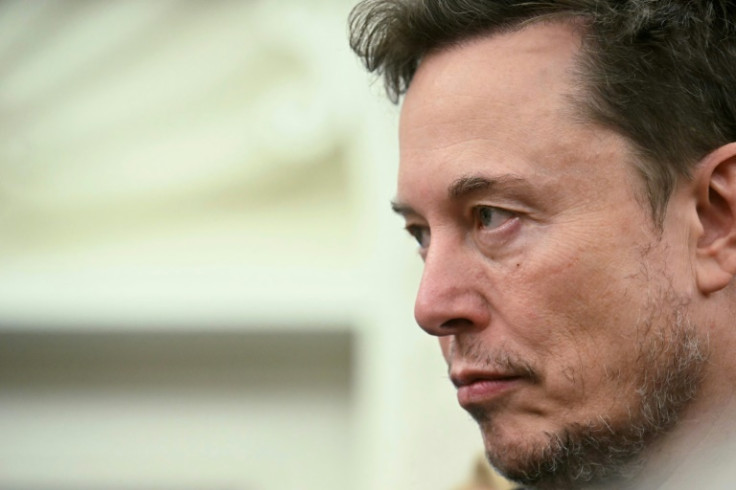
NEW YORK — Elon Musk is on the verge of becoming the world's first trillionaire as his rocket company SpaceX prepares for a landmark public debut on the Nasdaq stock exchange Friday after pricing its initial public offering at $135 per share.
The move would catapult Musk, already the wealthiest person on the planet, into unprecedented financial territory. With a roughly 42% stake in SpaceX, his personal fortune could surpass $1 trillion once the shares begin trading, according to estimates tied to the company's $1.78 trillion valuation at the offer price.
SpaceX plans to sell 555.6 million shares, raising approximately $75 billion. Underwriters hold an option for an additional 83 million shares. The IPO represents one of the largest in history and marks a significant milestone for the company founded in 2002, which has revolutionized space travel with reusable rockets and expanded global internet access through its Starlink satellite network.
Valuation and Wealth Implications
Before the IPO announcement, Musk's net worth stood at approximately $696 billion, according to the Bloomberg Billionaires Index. The SpaceX listing is expected to add hundreds of billions to that figure, depending on early trading performance. Analysts project Musk's stake could be valued between $743 billion and $866.5 billion at the $135 offer price.
The $1 trillion threshold is almost incomprehensible in scale. As noted by UK charity Oxfam, if Musk spent $1 million every day, it would take him 2,740 years to exhaust such a fortune. His wealth would represent roughly 3% of U.S. gross domestic product, exceeding the relative economic power of 19th-century industrial titans like John D. Rockefeller and Andrew Carnegie.
Guido Alfani, a professor of economic history at Bocconi University in Milan, Italy, offered historical perspective. "If we do this, we can surely conclude that Elon Musk might be the wealthiest person who has ever lived — excluding emperors or other rulers whose wealth is not easily distinguishable from that of the state," Alfani told Al Jazeera. He estimated Musk could command the labor of 557,800 people in 2025, far surpassing Rockefeller's estimated 116,000 in 1937.
Historical Comparisons and Context
Musk's rise invites comparisons to the Gilded Age magnates who amassed vast fortunes during America's industrial expansion. Rockefeller, Carnegie and others were both admired for their achievements and criticized as "Robber Barons" for aggressive business practices. Richard White, professor of history emeritus at Stanford University, noted the similarities in public perception. "What made them famous was that they were very good at making and keeping money. There is little sign they accomplished much else," White told Al Jazeera.
Yet Musk diverges in several ways. While many Gilded Age tycoons became major philanthropists in their later years, Musk's giving has largely focused on causes aligned with his business interests through the Musk Foundation and donor-advised funds. He joined the Giving Pledge in 2012 but has faced questions about the scale and direction of his charitable efforts.
Christopher Nichols, a professor of history at Ohio State University, highlighted the contrast. "When examining the Robber Barons of the Gilded Age and Progressive Era, despite their many failings, one must note that they were also the pioneers of modern large-scale philanthropy," Nichols told Al Jazeera, referencing Carnegie's extensive donations.
Musk's Business Empire and Influence
SpaceX's success builds on Musk's broader portfolio, including Tesla, xAI and ownership of X, formerly Twitter. The companies span electric vehicles, artificial intelligence, space exploration and social media, creating a uniquely diversified empire. Musk has also taken an active role in politics, supporting former President Donald Trump's 2024 campaign and leading efforts to reduce government spending.
This level of influence has drawn both praise and criticism. Supporters view Musk as a visionary driving humanity toward a multi-planetary future. Detractors raise concerns about concentrated power, market dominance and the societal impacts of rapid technological change.
Daniel Waldenström, a professor of economics at the Research Institute of Industrial Economics in Stockholm, cautioned that such wealth is not guaranteed to endure. "He faces competition and the market valuation of his corporations can change," Waldenström told Al Jazeera. "It may well be that some of Musk's assets will lose value if reality changes."
Broader Questions on Inequality
Musk's potential milestone has intensified debates about wealth inequality. As global economies recover from recent challenges, the gap between the ultra-wealthy and the rest of society remains a point of contention. Oxfam and other organizations have used such examples to call for stronger progressive taxation and policies addressing economic disparity.
The SpaceX IPO itself reflects strong investor appetite for high-growth technology companies tied to ambitious long-term goals. Its success could encourage further innovation in space and related sectors while raising questions about regulatory oversight and market concentration.
What Comes Next
Friday's trading debut will provide the first real-time market verdict on SpaceX's valuation. Opening prices for high-profile IPOs can be volatile as supply and demand find balance. Strong performance would further solidify Musk's financial standing, while any weakness might reflect caution around elevated valuations in the technology sector.
For Musk, the transition of SpaceX to public markets brings new responsibilities to shareholders alongside his existing commitments. The company's future will depend on execution across Starship development, Starlink expansion and potential new frontiers in space exploration.
As the countdown to Friday's opening bell continues, global attention remains fixed on Musk and the implications of one individual approaching such extraordinary wealth. The event marks not only a corporate milestone but also a cultural moment in the ongoing conversation about innovation, power and responsibility in the modern economy.
The SpaceX IPO underscores the transformative impact of private enterprise in areas once dominated by governments. Whether Musk's fortune ultimately benefits society on the scale of past philanthropists remains to be seen, but its sheer magnitude ensures he will remain a defining figure of this era.
Markets will render their judgment Friday, but the broader discussion about wealth, innovation and inequality is likely to continue long after the trading day ends. SpaceX's public debut represents a new chapter for both the company and its founder, one that will be watched closely by investors, policymakers and the public alike.
© Copyright 2026 IBTimes AU. All rights reserved.
- Recommended For You