Elon Musk's $1.23 Trillion Fortune Now Towers Nearly $1 Trillion Over Jeff Bezos in 2026
Musk's wealth surpasses historical records, widening the gap with Jeff Bezos
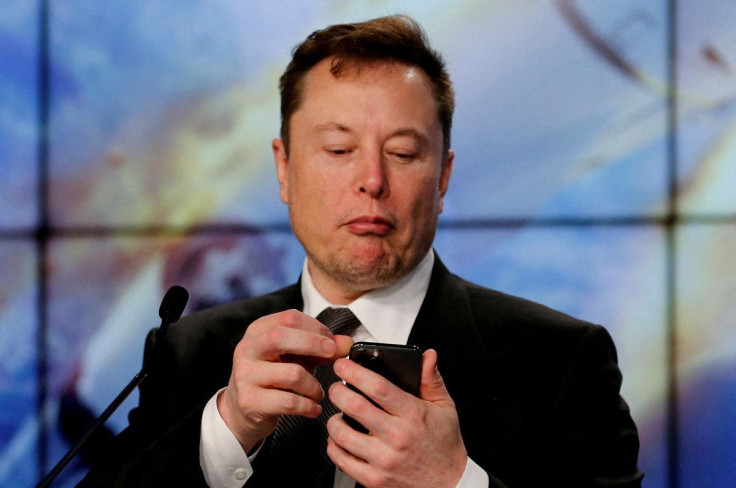
Elon Musk has become the world's first trillionaire, and the gap separating his fortune from that of Amazon founder Jeff Bezos has widened into a margin without historical precedent, according to the latest figures from the Bloomberg Billionaires Index.
As of June 18, 2026, the Bloomberg Billionaires Index placed Musk's total net worth at $1.23 trillion, up $608 billion year-to-date, while Jeff Bezos ranked fourth on the index with a net worth of $266 billion, up $12.6 billion for the year. That gap of roughly $964 billion between the two men reflects one of the most dramatic wealth divergences ever recorded between the world's top two richest individuals.
How Musk Became the First Trillionaire
Musk became the world's first trillionaire on June 12, 2026, when SpaceX went public at a valuation near $1.77 trillion. The IPO repriced his roughly 38% stake to around $800 billion, pushing his total net worth past the $1 trillion mark — years ahead of the 2028-2032 timeline most analysts had projected.
The milestone came when SpaceX completed the largest IPO in history, pricing at $135 per share, raising about $75 billion, and reaching a valuation near $1.77 trillion, which climbed to over $2 trillion after its first day of trading.
Musk owns 4.76 billion shares of SpaceX, according to the company's June 2026 S-1 filing. About 1.3 billion shares of unvested restricted stock are excluded from his net worth calculation because they remain subject to performance and other conditions, and 237,530 shares pledged to secure debt are also excluded. He also holds 350,000 exercisable options.
In June 2026, his SpaceX stake was valued at the company's offering price, leading to a roughly $274 billion increase in his net worth. That single repricing event accounts for one of the largest single-day wealth gains ever recorded for any individual.
The Scale of Musk's Lead
The magnitude of Musk's fortune relative to the rest of the world's wealthiest individuals has reached a point that breaks from historical patterns entirely. Musk's net worth now exceeds the combined wealth of the next three names on the Bloomberg Billionaires Index: Google co-founders Larry Page and Sergey Brin, and Amazon's Jeff Bezos. As a trillionaire, Musk is worth around seven Warren Buffetts, who ranks 11th on the index with a net worth of $145 billion.
After the SpaceX IPO, Musk's lead became historic — at his current valuation, he is worth more than the combined fortunes of the next four richest people: Larry Page, Sergey Brin, Jeff Bezos, and Larry Ellison.
Where Bezos Stands
While Bezos has continued to add to his fortune in 2026, his pace of wealth accumulation has lagged dramatically behind Musk's explosive gains tied to SpaceX's public listing. Bezos currently ranks fourth on the Bloomberg index with a net worth of $266 billion, having gained $5.80 billion most recently and $12.6 billion year-to-date.
Bezos's fortune remains heavily concentrated in a single company, in contrast to Musk's increasingly diversified holdings across multiple ventures. The vast majority of Bezos's wealth has historically come from his stake in Amazon, where he remains the company's largest individual shareholder.
A Diversified Fortune vs. a Concentrated One
Analysts have noted that the structural composition of Musk's wealth differs significantly from that of previous wealth leaders, including Bezos, in ways that have insulated it somewhat from the volatility tied to any single company's stock performance. By 2026, Musk is no longer just "the richest man"; he is viewed by analysts as an economic outlier. While Bezos continues to focus on Blue Origin's incremental approach to space development, SpaceX's aggressive Starship launch cadence has allowed it to capture 80% of the commercial launch market, leaving Bezos's space venture to play catch-up.
Unlike other tech billionaires whose wealth is tied to a single public entity, Musk's net worth is a composite of dominant global infrastructure, aerospace dominance, and the "Orbital AI" frontier. Analysts at Morgan Stanley have noted that by controlling the chips through Tesla, the satellites through Starlink, and the physical interface through Optimus, Musk's equity value has scaled in a more vertically integrated fashion than rivals whose wealth remains more hardware-centric.
SpaceX's Growing Share of Musk's Total Wealth
The SpaceX IPO has fundamentally reshaped the composition of Musk's overall fortune, shifting it away from Tesla, which had long served as the primary foundation of his wealth. As reported by The Guardian and Reuters, SpaceX's roughly $8 billion in annual EBITDA has allowed Musk to fund xAI's substantial capital needs. While Tesla served as the bedrock of his fortune for years, the Bloomberg Billionaires Index now notes that SpaceX accounts for nearly two-thirds of Musk's total net worth.
Musk's overall fortune is now built primarily on his ownership stakes in SpaceX, at roughly 38% and now publicly traded under the ticker SPCX on the Nasdaq, along with Tesla at approximately 13% of shares plus stock options, xAI, the Boring Company, and X, formerly known as Twitter.
A Long History of Trading Places
The current gap between Musk and Bezos represents the culmination of a rivalry for the title of world's richest person that has played out over more than half a decade, with the two men repeatedly trading the top spot during periods of stock market volatility. Musk first surpassed Bezos as the world's richest person in January 2021, when a rally in Tesla's share price pushed his net worth to $188.5 billion, $1.5 billion ahead of Bezos, who had held the top spot since October 2017.
The two men continued to leapfrog each other in the years that followed, depending largely on the relative performance of Tesla and Amazon stock. Musk lost his position atop the Bloomberg Billionaires Index to Bezos in late 2024 after Tesla shares tumbled 7.2% in a single session, with Musk's net worth falling to $197.7 billion against Bezos's $200.3 billion at the time — a gap that had once been as wide as $142 billion in Musk's favor before narrowing dramatically as the two companies' stocks moved in opposite directions.
Bezos reclaimed the title of world's richest man in early 2024, with his net worth reaching $200 billion compared to Musk's $198 billion at the time, as Bezos gained $23 billion that year while Musk lost about $31 billion.
A Decisive and Lasting Shift
That era of close competition between the two billionaires now appears to have ended decisively. The combination of SpaceX's historic public listing, the company's dominant position in the commercial launch market, and the broader market's enthusiasm for Musk's interconnected portfolio of ventures has pushed his fortune into territory that no rival, including Bezos, currently appears positioned to challenge in the near term.
What Comes Next
With SpaceX now trading publicly and subject to the same day-to-day market fluctuations that have historically driven swings in Musk's net worth through Tesla, some volatility in his trillion-dollar valuation should be expected in the months ahead. Bloomberg's index already reflected a single-day decline of $32.1 billion in Musk's fortune as of its most recent update, even as his year-to-date gain remained substantial at $608 billion. Still, with SpaceX commanding roughly 80% of the global commercial launch market and Musk's broader portfolio spanning artificial intelligence, satellite communications, and humanoid robotics, the scale of his current lead over Bezos and every other billionaire on the planet appears unlikely to narrow significantly anytime soon.
© Copyright 2026 IBTimes AU. All rights reserved.
- Recommended For You