Sam Altman Says Paul Graham and Peter Thiel Taught Him a Key Lesson About Investing in Unpopular Bets
OpenAI CEO Sam Altman shares insights from Peter Thiel and Paul Graham on identifying unconventional investment opportunities.
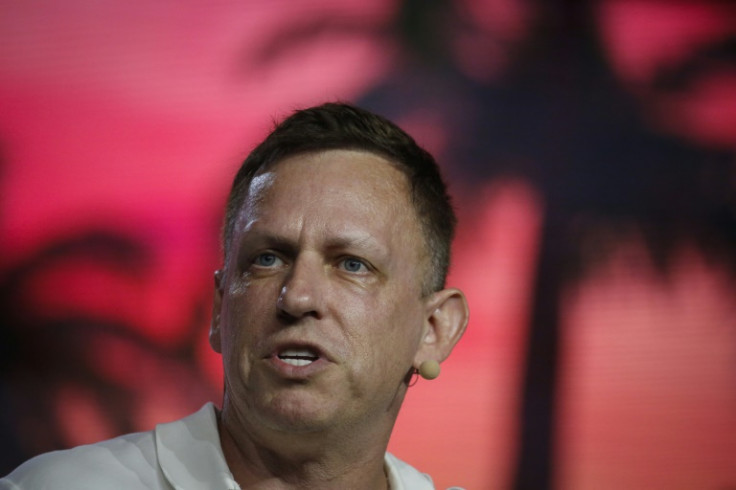
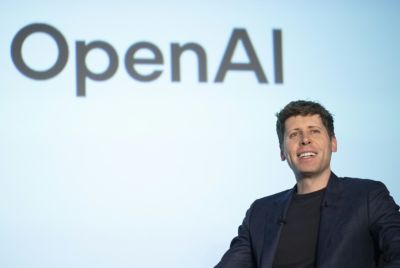
OpenAI CEO Sam Altman said the best investment decisions rarely appear obvious at the time they are made, crediting two of Silicon Valley's most prominent and often polarizing figures, Peter Thiel and Paul Graham, for teaching him that lesson in different ways over the course of his career.
Speaking during a recent episode of the "Invest Like The Best" podcast, Altman explained the core principle both men had instilled in him. "The thing I really learned from Peter Thiel and Paul Graham, both in two different ways, which is that the very best companies, the very best investment opportunities are almost never the ones that look really popular," Altman said. He went on to describe the tradeoff between following consensus and pursuing outsized returns. "You can do okay just following the trend and being a little early, but to do spectacularly well, you kind of almost always have to do things that are not what everybody else is doing," he said.
Altman drew a specific distinction from his experience running Y Combinator, the startup accelerator founded by Graham in 2005, arguing that effective startup investing more closely resembles teaching someone a physical skill than delivering a traditional lecture. According to Altman, Graham had taught him that being a startup investor is "like being a flight instructor," in that founders need direct, hands-on guidance rather than passive instruction from someone simply telling them what to do.
Altman connected that broader philosophy directly to decisions made early in OpenAI's history, describing how the company pursued a set of infrastructure bets that were widely dismissed as unrealistic at the time. "We started calling the clouds. We started calling chip fabs. We started calling energy providers and everyone's like, 'You're totally crazy. This is impossible. No industry has ever moved like this. We've been around. There's these booms and busts. It's not going to go up in a straight line. This is reckless,'" Altman recalled. He compared that skepticism to the experience of raising early-stage startup funding more broadly. "Most people tell you no, but all you need is one or two yeses," Altman said. "Most people told us no. And we got one or two yeses and we were able to start building."
Altman's relationship with both Thiel and Graham dates back to the earliest stages of his career in Silicon Valley. He was a member of Y Combinator's inaugural 2005 cohort as founder of the location-based startup Loopt, which was later acquired by payment technology firm Green Dot in 2012 for $43.4 million in cash. In a 2009 essay, Graham named Altman one of the "five most interesting founders of all time," placing him alongside Steve Jobs and Google co-founders Larry Page and Sergey Brin. Altman went on to become president of Y Combinator in February 2014, before eventually helping launch OpenAI as a nonprofit organization in 2015 alongside Thiel, Elon Musk, Y Combinator founding partner Jessica Livingston and others.
Thiel has separately reflected in past interviews on what he considers his own biggest investment mistake, a story Altman has previously cited as influential to his own thinking about conviction-driven investing. According to earlier comments Altman made about Thiel, the investor identified his greatest regret not as a failed bet, but as his hesitation to invest in Facebook's Series B funding round, a decision that meant missing out on further participation in what became one of the most valuable companies of the century. Altman has said that story reinforced his own belief in aggressively pursuing opportunities once their potential becomes clear, rather than spreading resources too thin across many smaller, more cautious bets.
The relationship between Altman and Graham has occasionally drawn public scrutiny over the years, including a 2024 episode in which Graham publicly disputed claims circulating online that Altman had been pressured to resign as Y Combinator's president in 2019 due to potential conflicts of interest tied to his growing involvement with OpenAI. "People have been claiming [Y Combinator] fired Sam Altman," Graham wrote on X at the time. "That's not true."
Altman's comments on the "Invest Like The Best" podcast reflect a broader philosophy he has articulated repeatedly throughout his career, one centered on identifying opportunities that appear unconventional or even reckless to outside observers at the time, then committing fully once genuine conviction in the underlying thesis takes hold. That approach has shaped OpenAI's own aggressive infrastructure investment strategy in recent years, as the company has continued pursuing large-scale commitments in cloud computing, chip manufacturing and energy production well ahead of when many industry observers initially believed such investments were warranted, a pattern Altman has directly tied back to the investing lessons he says he first absorbed from Thiel and Graham decades earlier.
© Copyright 2026 IBTimes AU. All rights reserved.
- Recommended For You