Palantir CEO Alex Karp Says AI Will Make Him 20 Times Richer While Workers See Modest Gains This Decade
Alex Karp discusses AI's impact on wealth distribution and societal implications
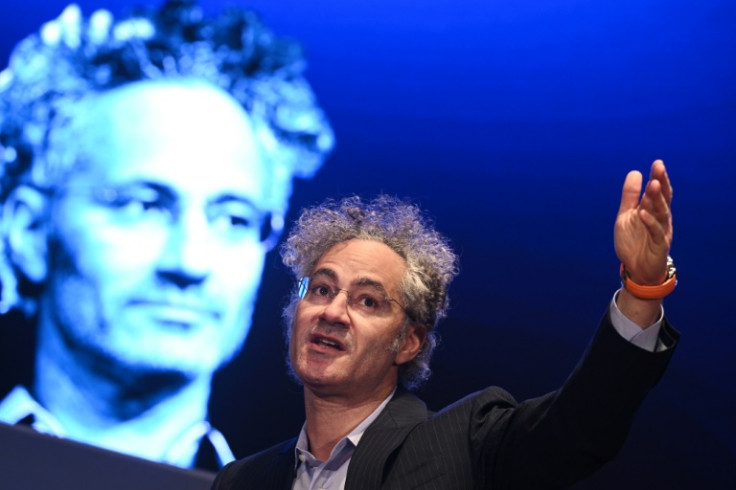
Palantir Technologies CEO Alex Karp says artificial intelligence stands to make him roughly 20 times wealthier over the coming decade, while predicting that most middle-class workers will see far more modest gains, a disparity he described as a fundamental threat to social cohesion.
A blunt admission about AI's winners
Speaking on the "MD Meets" podcast, hosted by Axel Springer CEO Mathias Döpfner, Karp offered an unusually candid assessment of how artificial intelligence is likely to reshape wealth distribution in the years ahead. Karp, whose net worth currently stands at roughly $15 billion amid Palantir's AI-driven surge to a market capitalization exceeding $320 billion, estimated that his own fortune could grow to nearly $300 billion, a roughly 20-fold increase, even as he predicted that typical middle-class salaries might only double over the same period.
Karp framed the underlying dynamics of AI's economic impact in stark terms. "This is a natural resource that's, on balance, excruciatingly valuable for humanity, but it has negative externalities," Karp said, comparing the technology to a resource capable of tremendous benefit alongside significant risk if left unmanaged. He went on to describe the scale of the coming wealth disparity directly, saying that while AI will raise living standards broadly, "the biggest problem in this country is AI will raise the standard of living of the average person, but the people involved are likely to get 10, 100 times wealthier than they already are."
A pointed description of AI's beneficiaries
Karp reserved some of his most striking language for the type of people he expects to capture the largest share of AI-driven wealth, a group he counts himself among. Describing the disconnect he sees between AI's biggest financial winners and the general public, Karp said the wealth is "done by people you don't really relate to, like very oddly shaped IQ specimens that you probably wouldn't want to have over for dinner." He elaborated further on the point in comments reported separately, suggesting that if such individuals were actually invited to dinner, "you'd have nothing to talk to them about and vice versa."
Warning of a fraying social fabric
Beyond the specific numbers, Karp argued that the scale of the coming wealth gap carries consequences that extend well beyond economics. He described the dynamic as "a complete decoupling of unimaginable wealth and normal wealth," warning that such a stark separation between a narrow technological elite and the broader public risks tearing at the foundations of social cohesion in wealthy countries, particularly the United States. Karp acknowledged the provocative nature of his framing but maintained that existing inequality in American society is likely to become significantly more pronounced as AI-driven fortunes accumulate among an increasingly narrow group of technologists and company founders.
Criticism of the AI industry's own messaging
Karp also used the interview to criticize what he characterized as the artificial intelligence industry's tendency to amplify public fears about the technology, even as those same industry leaders stand to benefit enormously from its continued development. He suggested that much of the public anxiety surrounding AI centers on fears of job loss, a concern he said is often stoked by messaging from the leaders of major AI labs themselves, regardless of whether the underlying fear is fully justified. Karp described the broader pattern of AI hype within the industry as both "disconcerting" and "depressing," pointing to what he views as a disconnect between the genuine promise of the technology and the sometimes exaggerated claims made by companies developing it.
Palantir's own AI-driven rise
Karp's comments arrive amid a period of extraordinary growth for Palantir itself, the data analytics company he co-founded in 2003 that has become one of the most closely watched beneficiaries of the broader artificial intelligence boom. The company's stock has surged dramatically over the past two years as government agencies and large enterprises have expanded their use of Palantir's AI-powered data analysis platforms, pushing its market capitalization past $320 billion and making Karp one of the most prominent public voices among AI-linked corporate leaders.
A rare comparison from another tech leader
Karp's remarks echo, in part, concerns raised by other prominent business leaders regarding the uneven economic impact of rapid technological change. JPMorgan Chase CEO Jamie Dimon has taken a somewhat more measured stance on the broader issue of economic inequality, telling Axios that lower-income Americans have genuinely been left behind by recent economic trends, while acknowledging the frustration many citizens feel watching wealth increasingly concentrate among a smaller group of already-wealthy individuals. Unlike Karp, Dimon did not tie his comments specifically to artificial intelligence's projected impact on wealth distribution.
A CEO acknowledging his own company's role
Commentators covering Karp's remarks have noted the unusual candor involved in a chief executive publicly describing the wealth-concentration problem his own company is actively contributing to through its rapid AI-driven growth. Rather than downplaying the disparity or framing AI's economic impact purely in terms of broad societal benefit, Karp explicitly acknowledged that he personally stands to be among the primary beneficiaries of the trend he described as socially corrosive, a level of self-awareness that has drawn both attention and scrutiny since the interview was published.
With artificial intelligence continuing to reshape valuations across the technology sector and fuel extraordinary wealth gains for founders and executives at companies like Palantir, Karp's comments add to a growing public conversation among business leaders about how societies should respond to the uneven economic impact of the technology. Whether his warnings about a fraying social fabric prompt any specific policy response, or simply remain part of an ongoing public debate among tech executives about AI's societal consequences, remains to be seen as the broader AI investment boom continues to reshape both corporate valuations and individual fortunes at a historic pace.
© Copyright 2026 IBTimes AU. All rights reserved.
- Recommended For You