Elon Musk And Ex-Google X Executive Warn Money Could Become Irrelevant Within A Decade
Tech Leaders Debate the Future of Money in an AI-Dominated Economy

Elon Musk and a former top Google X executive have separately made strikingly similar predictions in recent weeks: that money, as it currently functions, may become largely irrelevant within the next decade as artificial intelligence and robotics reshape the global economy, though the two men differ sharply on whether that shift represents liberation or a new form of control.
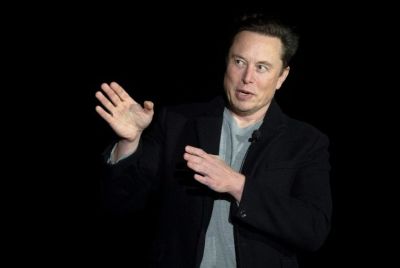
Musk made his comments during an interview with Zanny Minton Beddoes, editor-in-chief of The Economist, conducted at his Texas Gigafactory in late July as part of the publication's Insider interview series. "Money won't matter in 2036," Musk told Beddoes, arguing that robots and artificial intelligence will eventually produce far more goods and services than any person could consume. "You want money for food, housing, transport, entertainment," Musk said. "If that is so abundant, what do you need money for in that case?"
Musk also predicted the shift would bring deflation rather than inflation, reasoning that if machines keep increasing output while the money supply remains relatively stable, prices should fall over time rather than rise. He separately told Beddoes that he expects artificial intelligence to surpass humanity's collective intelligence within five years, describing the resulting gap in terms he compared to the difference between humans and chimpanzees. "It's hard to imagine that the chimpanzees would be in charge," Musk said, when Beddoes pressed him on how humans would retain control once that gap emerges.
Beddoes challenged Musk on the political realities standing between the present and his 2036 timeline, noting that job losses from AI-driven automation tend to arrive well before any offsetting abundance materializes, and that displaced workers historically pressure governments for protection rather than waiting patiently for prices to fall. According to reporting on the interview, Musk acknowledged the transition would likely be turbulent and said battles over income transfers to displaced workers were probably the next major political fight, before moving on to other topics.
Musk's comments echo remarks he made previously on the "Moonshots with Peter Diamandis" podcast, where he said people should not bother saving for retirement given his expectation of impending economic abundance. "Don't worry about squirreling money away for retirement in 10 or 20 years," Musk said at the time. "It won't matter."
Mo Gawdat, the former chief business officer at Google X and author of the book "Scary Smart," reached a similar conclusion about money's declining relevance in a separate interview, though he framed the shift in far darker terms. Gawdat argued that the current financial system is already largely disconnected from real economic value, describing modern currency as effectively an accounting illusion sustained by fractional reserve banking and concentrated institutional ownership of markets. He predicted that artificial intelligence systems will increasingly take over trading and major financial decisions, eventually consolidating control in ways that benefit a small number of platform owners while leaving most people economically marginalized. Gawdat also forecast that competing AI systems from different companies and countries will effectively converge into what he called a single dominant "AI brain" by 2030, cooperating with one another in ways that transcend national or corporate loyalties.
Where Musk framed the coming transition largely in terms of abundance and opportunity, Gawdat warned that a programmable digital currency system, if implemented without strong ethical guardrails, could become what he called "the ultimate form of surveillance" and a mechanism for controlling individual behavior rather than a tool for shared prosperity.
Not all economists have embraced Musk's abundance framing. In a Bloomberg opinion piece, columnist Adrian Wooldridge argued that Musk's vision overlooks the role status and relative position play in human behavior, noting that even in a world of material abundance, scarce goods such as desirable locations and social prestige would remain contested, meaning some rationing mechanism resembling money would likely persist regardless of how cheap manufactured goods become. Other economists, including Tyler Cowen and Noah Smith, along with researchers at the American Institute for Economic Research, have raised similar objections, arguing that Musk's post-scarcity vision applies primarily to manufactured physical goods rather than the full range of things people value, and that questions about who owns the robots and how their output gets distributed remain fundamentally political rather than automatic.
Musk did not specify in the Economist interview what would replace money once its relevance fades, leaving that portion of his vision comparatively undefined. Gawdat, in his own remarks, offered a more concrete answer, arguing that the only lasting form of value in an AI-dominated economy would be human connection and compassion, concepts he has said motivated his creation of a separate project focused on emotional intelligence within AI systems.
Both men's predictions arrive amid a broader wave of commentary from prominent technology figures about the accelerating pace of AI development and its potential economic disruption. While their specific timelines and interpretations diverge, both cite the same underlying driver: a belief that artificial intelligence and robotics are approaching a threshold capable of fundamentally altering how goods, services and decision-making authority are distributed across society within the next 10 to 15 years.
© Copyright 2026 IBTimes AU. All rights reserved.
- Recommended For You