

Elon Musk Tells G20 Leaders AI Could Add $30 Trillion Yearly To Global Economy, Warns Of Power Crisis
Musk highlights AI's economic potential and urgent electricity supply challenges at G20 Innovation Ministerial.
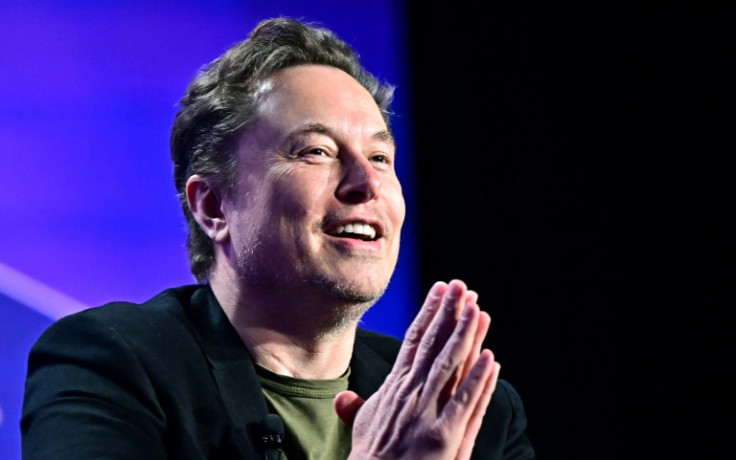
CHAPEL HILL, N.C. — Elon Musk told government ministers and central bank officials gathered for a G20 innovation summit this week that artificial intelligence could add as much as $30 trillion a year to the global economy, while warning that a looming electricity shortage threatens to slow the technology's rollout as soon as next year.
Speaking at the G20 Innovation Ministerial, Musk offered what he repeatedly described as a rough personal estimate rather than a formal forecast.
"I think, just to give you some sense of scale here, I think AI will probably increase the global economy by 20 to 30%," Musk said. "That's my rough estimate — meaning on the order of 20 to 30 trillion dollars per year."
Musk said the gains he was describing would come primarily from what he called "digital AI" — systems capable of handling tasks that do not require physically manipulating materials, including software development, financial analysis, administrative work, content production, research, design, customer service and compliance documentation. He predicted that by the end of next year, AI would be capable of performing nearly any task confined to the digital realm.
"AI will be able to do anything digital, anything that does not require shaping of atoms by hand, probably by the end of next year," Musk said.
On software specifically, Musk predicted that within roughly 12 to 18 months, AI coding tools would reach what he called "Stockfish-level" capability, a reference to the powerful open-source chess engine that can calculate millions of positions per second and has long since surpassed the best human players. He argued that once AI systems reach that threshold in software writing, humans will effectively be unable to compete, in much the same way a chess engine running on an ordinary phone can now defeat even world champion-caliber players.
Musk paired his economic projection with a more urgent warning about electricity supply, telling ministers that a global power shortfall for AI computing is not a distant risk but an imminent one.
"There will be a significant power shortfall next year, so not like the distant future," Musk told the session.
He pointed to a widely cited estimate of a roughly 15-gigawatt power gap by 2027, arguing that the pace of AI chip production, which he said is growing by roughly 40% to 50% annually, is far outstripping the growth of electricity generation outside China, which he put at closer to 10% to 20% a year. That mismatch, Musk argued, means large volumes of AI computing hardware could sit idle simply because there is not enough power, grid capacity, transformers or cooling infrastructure to run it.
Musk suggested the imbalance creates both a risk and an opportunity for individual countries. Nations capable of rapidly expanding their electricity generation, he said, could position themselves to attract major AI data center investment.
"This creates an opportunity, I think, for countries around the world, if they're interested in AI data centres, to construct a lot of power and offer that to AI companies," Musk said, adding that such facilities would generate tax revenue and other fees for host governments.
Musk's remarks came as G20 members at the gathering reached agreement on what organizers have called the Carolina Principles, a policy framework intended to guide how governments approach the development and deployment of emerging technologies including AI. Musk used part of his remarks to argue that regulators should default toward permitting new technology rather than restricting it.
"I think you want to have a lean-forward, try-new-technologies approach to new technologies, as opposed to being somewhat stuck in the past," Musk said, adding that the world is already seeing meaningful productivity gains from artificial intelligence and will soon see dramatic gains from robotics as well.
Musk's economic estimate is not a forecast of revenue for any individual company, nor an official prediction of global gross domestic product growth for the coming year. Analysts who track the AI industry note that such a scenario would depend on a long list of conditions being met simultaneously: AI systems reliably replacing or meaningfully augmenting knowledge work, companies restructuring internal processes rather than simply adopting chat-based tools, sufficient computing power and electricity being available, regulatory environments permitting widescale deployment, and labor markets, capital flows and consumer demand adjusting to a rapidly expanding pool of new productive capacity.
Economists who study technology adoption have also cautioned that productivity gains from transformative technologies historically arrive with a significant lag. Prior general-purpose technologies, including electricity, the internal combustion engine, the personal computer and the internet, delivered their largest economic gains only after businesses reorganized supply chains, factory layouts and organizational structures around them, rather than in the years immediately following their invention.
Musk's Wednesday remarks were not limited to AI's software potential. He also reiterated earlier predictions about the scale of humanoid robotics, telling the summit that he expects at least a billion humanoid robots to be in operation globally within the next decade, each capable of producing several times the output of an individual human worker, a forecast he has repeated at other public appearances in recent months.
He also used part of his appearance to point to the growing competition for computing resources among major technology firms, noting that some AI developers have begun leasing computing capacity from SpaceX because of the rocket company's own power generation capabilities, which Musk said allowed it to bring new computing capacity online more quickly than firms reliant solely on traditional utility infrastructure.
Musk's comments add to a broader chorus of technology executives who have used recent G20-linked forums to press governments on energy policy as a prerequisite for AI expansion, with other industry leaders at the same gathering separately raising concerns about data center power constraints and the global race for skilled labor, including electricians and grid engineers, needed to build out AI infrastructure at the pace companies are targeting.
Whether Musk's $20 trillion to $30 trillion projection proves accurate remains a matter of significant debate among economists, many of whom note that translating AI-generated output into measurable GDP growth requires that gains actually flow into enterprise systems, trigger real payments, replace existing costs or otherwise enter the formal economy, rather than remaining confined to isolated productivity improvements within individual companies or teams.
© Copyright 2026 IBTimes AU. All rights reserved.