Musk's $1 Trillion Pay Package Requires Tesla Stock to Grow Roughly Sixfold to an $8.5 Trillion Value
Elon Musk's unprecedented compensation plan hinges on Tesla's ambitious growth targets
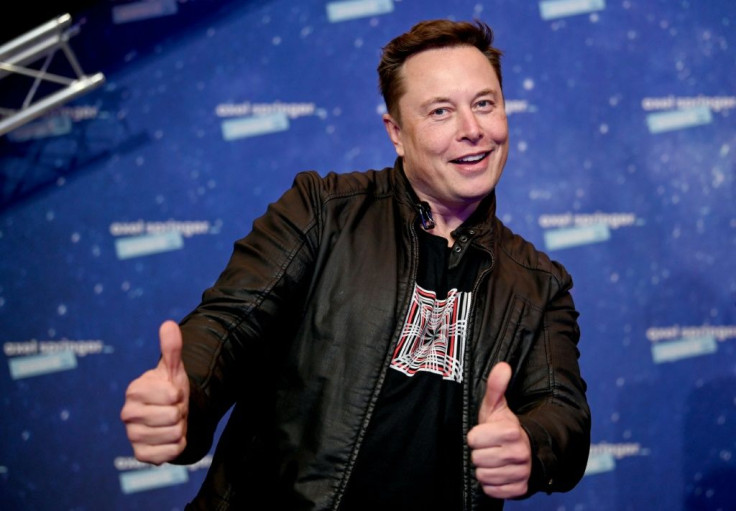
Tesla shareholders approved a $1 trillion pay package for CEO Elon Musk in November, the largest corporate compensation plan in history, but claiming the full award requires Tesla's market capitalization to grow roughly sixfold from its current level to $8.5 trillion, alongside a series of other demanding operational milestones.
The plan passed with more than 75% support among voting shares at Tesla's annual shareholders meeting in Austin, Texas. "Fantastic group of shareholders," Musk said after the vote was tallied, adding, "Hang on to your Tesla stock." Musk described the milestone in sweeping terms during the same appearance. "What we're about to embark upon is not merely a new chapter of the future of Tesla but a whole new book," he said.
Under the terms of the plan, first proposed in September 2025, Musk stands to receive up to roughly 12% of Tesla's stock, delivered across 12 separate tranches tied to specific performance targets the company's board has described as deliberately aggressive. To collect the full award, Musk must guide Tesla to a market capitalization of $8.5 trillion by 2035, a target that at the time of the vote stood at roughly six times the company's then-current valuation of approximately $1.4 trillion. Beyond the market cap threshold, Musk must also hit a series of operational milestones, including selling 12 million vehicles annually and deploying 1 million robotaxis and 1 million humanoid Optimus robots. While the headline figure of the package is commonly described as $1 trillion, required tax payments tied to the award would reduce its ultimate net value to Musk to approximately $878 billion.
The vote followed weeks of public debate over Musk's management record and whether any single executive deserved compensation on this scale, drawing commentary ranging from individual retail investors to major pension funds and, according to reporting on the vote, even the pope. Norway's sovereign wealth fund, one of Tesla's largest external shareholders, publicly opposed the package ahead of the vote. "While we appreciate the significant value created under Mr. Musk's visionary role, we are concerned about the total size of the award, dilution, and lack of mitigation of key person risk," the fund said in explaining its opposition. Proxy advisory firms Glass Lewis and Institutional Shareholder Services also both recommended shareholders vote against the plan, though Tesla's board recommended approval.
Musk has said the vote was less about the money itself and more about securing a larger ownership stake in Tesla, which will roughly double to approach 30% under the plan, giving him significantly greater voting control over the company. He has connected that desire for control directly to Tesla's expanding robotics ambitions, saying he did not trust anyone else to control what he described as Tesla's future "robot army," citing potential dangers to humanity if that control fell into the wrong hands.
Jesse Fried, a professor of law at Harvard Law School, said the structure of the vote itself set Tesla apart from typical corporate governance practices. "It was approved by unaffiliated shareholders, who are the parties most affected by the arrangement," Fried told Business Insider, adding that he was not aware of any other public company that had voluntarily put its CEO's pay package directly to a shareholder vote in this manner.
Wall Street reaction to the approved package was largely positive. Wedbush analyst Dan Ives wrote in a research note following the vote that the outcome supported his broader thesis around Tesla's valuation trajectory. "With this pay package now voted positively keeping Tesla's biggest asset, Musk, as its leader for the foreseeable future, we continue to believe that the AI valuation is getting unlocked, and we believe the march to an AI driven valuation for TSLA over the next 6-9 months has now begun," Ives wrote.
Musk used the shareholder meeting to outline a series of additional commitments tied to Tesla's broader technology roadmap, including plans to begin production of the company's two-seat, steering-wheel-free Cybercab robotaxi in April, alongside an upcoming unveiling of Tesla's next-generation Roadster electric sports car. He also said Tesla would need what he called "a gigantic chip fab" to produce artificial intelligence chips at scale, floating the possibility of a collaboration with Intel to help meet that manufacturing need.
The scale of the goals embedded in the package reflects just how far Tesla's valuation would need to climb to fully deliver Musk's compensation. Tesla's stock has continued to experience significant volatility in the months since the vote, a pattern that has repeatedly tested investor patience even as the company has pursued the ambitious robotics, autonomous driving and AI infrastructure initiatives that underpin the bull case for reaching the $8.5 trillion valuation threshold the pay package requires.
Compensation experts have generally framed the package's design as an attempt to align Musk's financial incentives directly with extraordinary shareholder returns rather than guaranteed pay. As one compensation consultant explained regarding executive pay structured this way, accountability concerns are generally minimized so long as the pay remains "tightly linked" to clear, rigorous performance goals without ambiguity in how those goals are measured, a binding standard that now leaves Musk's ultimate payout entirely contingent on whether Tesla can deliver on what remains, by any measure, one of the most ambitious corporate growth targets ever tied to an executive compensation plan.
© Copyright 2026 IBTimes AU. All rights reserved.
- Recommended For You