Elon Musk's Starship Rocket Eyes Tokyo-to-New York in 30 Minutes, But Commercial Launch Remains Years Away
HAWTHORNE, Calif. — Elon Musk has long promised that SpaceX's massive Starship could one day whisk passengers from Tokyo to New York in about 30 minutes, turning intercontinental travel into a suborbital hop that skips the jet lag and endless airport lines. As of April 2026, however, that futuristic vision remains firmly in the conceptual stage, with no firm timeline for the first passenger-carrying Earth-to-Earth flight and significant technical, regulatory and safety hurdles still ahead.
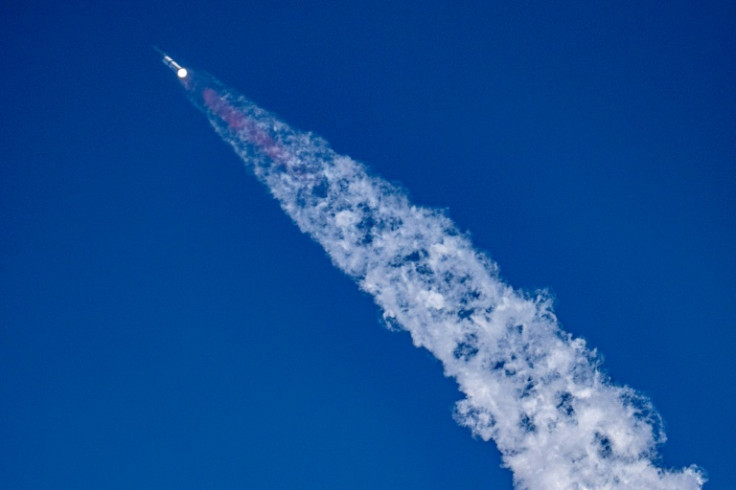
Musk first unveiled the ambitious "Earth-to-Earth" or point-to-point transportation concept in 2017 during a presentation in Adelaide, Australia. He described using a variant of what was then called the BFR — now Starship — to launch passengers from floating offshore platforms near major cities, accelerate to suborbital velocities, and land vertically at the destination. The pitch included eye-popping examples: Los Angeles to New York in 25 minutes, London to New York in 29 minutes, and routes like Tokyo to New York or similar long-haul pairs in roughly 30 minutes.
SpaceX's own early graphics showed Tokyo-to-Singapore shrinking from more than seven hours by plane to 28 minutes by rocket. For Tokyo to New York — a distance of approximately 6,700 miles (10,800 km) — the flight time would align with the company's broader claim of anywhere on Earth in under an hour, often cited around 30-40 minutes depending on exact routing and great-circle paths.
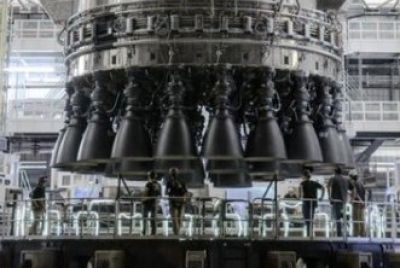
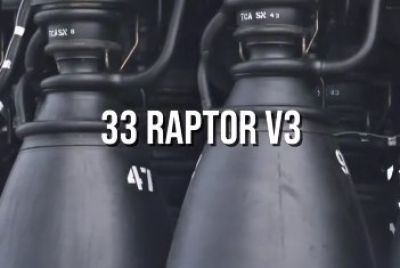
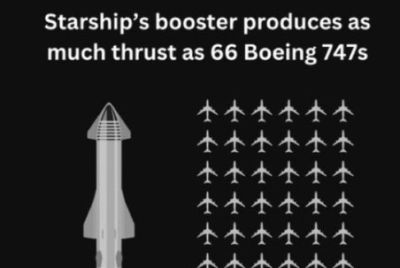
The physics are straightforward on paper. Starship, powered by its Super Heavy booster and six Raptor engines on the upper stage, would blast off, reach space briefly, and re-enter the atmosphere for a powered landing. At peak speeds approaching Mach 20 or more on longer routes, the journey becomes a ballistic arc rather than a traditional airplane flight. Musk has repeatedly said the same vehicle designed for Mars missions could double as a high-speed global transport system, potentially carrying up to 1,000 passengers per flight in a future configuration.
Yet as Starship racks up test flights in 2026, the focus remains squarely on orbital capability, reusability and NASA's Artemis lunar program — not ticketed passengers between cities. The next major milestone, Flight 12 — the debut of an upgraded Version 3 Starship and booster — is now targeted for early to mid-May 2026 after multiple delays, according to Musk's April updates on X. Previous targets for early 2026 slipped due to ongoing vehicle refinements and testing.
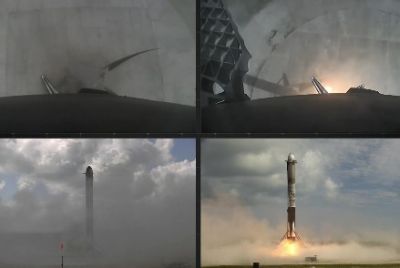
SpaceX has completed 11 Starship flight tests through late 2025, with a mix of successes and explosive setbacks that are typical for such a complex, fully reusable system. Recent flights have demonstrated heat shield improvements, booster returns and in-flight engine relights, but catching the booster with the launch tower's "chopsticks" and achieving rapid turnaround remain works in progress. Orbital refueling demonstrations, critical for deep-space missions, are eyed for mid-2026.
For point-to-point travel, the challenges multiply. Passenger versions would require human-rating the vehicle to aviation-level safety standards — far stricter than cargo or uncrewed test flights. Regulatory approval from the FAA and international aviation bodies, environmental impact studies for coastal or offshore launch sites, noise concerns, and emergency abort systems all stand in the way. Insurance and liability for flying civilians at hypersonic speeds add another layer of complexity.
Musk has been characteristically optimistic. In late 2024, responding to a post about the concept, he stated "This is now possible," hinting that regulatory shifts under a new U.S. administration could accelerate progress. Former SpaceX President Gwynne Shotwell once suggested Earth-to-Earth services could begin as early as 2025 in the most bullish scenarios, but that timeline has quietly faded as Starship's development priorities centered on Moon and Mars goals.
Industry analysts and space experts say a realistic target for initial uncrewed or limited passenger demonstration flights on suborbital routes might slip into the early 2030s. Full commercial operations with regular Tokyo-New York service could be even further out — perhaps mid-to-late 2030s — depending on how quickly reusability drives down costs. Early estimates pegged ticket prices in the hundreds of thousands of dollars, though Musk has envisioned eventual fares competitive with premium airline tickets as flight rates increase.
A Japanese travel agency made headlines in late 2025 by announcing plans for its own rocket-powered service in the 2030s, targeting Tokyo to U.S. cities including New York in about 60 minutes using space technology. The proposed round-trip fare: around 100 million yen, or roughly $657,000. The company cited SpaceX's vision as inspirational but operates independently.
SpaceX itself has scaled back visible promotion of the Earth-to-Earth concept in recent years, removing some dedicated pages or de-emphasizing it on its website as Starship's role in Artemis lunar landings and potential Mars cargo missions took center stage. Offshore platforms once discussed for launches and landings were reportedly sold or repurposed. The company's current public roadmap highlights lunar cargo flights starting in 2028 and uncrewed Mars missions possibly in late 2026 during the next Earth-Mars transfer window.
Still, the idea captivates the public. Social media frequently recirculates SpaceX animations showing sleek Starships departing from platforms near Tokyo Bay or landing dramatically in New York Harbor, passengers stepping off just half an hour after departure. Aviation enthusiasts note that such a system could slash long-haul travel times dramatically, open new business models, and even serve emergency or military logistics.
Engineers point out that while the rocket technology is advancing rapidly, the infrastructure is not. Major cities would need dedicated spaceports — likely floating platforms far enough offshore to meet safety and noise regulations — plus high-speed ferry or hyperloop connections to city centers. Medical screening for g-forces, zero-gravity effects during the brief coast phase, and rapid decompression risks would differ from commercial aviation.
Environmental groups have raised concerns about the carbon footprint of frequent methane-fueled launches and the potential for sonic booms over populated areas during re-entry. Proponents counter that Starship's full reusability and methane fuel (which can be produced with renewable energy) could make it cleaner per passenger-mile than today's long-haul jets on certain metrics.
As Starship Flight 12 approaches in May 2026, Musk continues to push an aggressive cadence. He has spoken of dozens of flights per year once the system matures, which could eventually create the flight heritage needed to certify a passenger variant. In the meantime, the company's primary customers for Starship remain NASA and, potentially, the Department of Defense for point-to-point cargo demonstrations.
For travelers dreaming of sushi in Tokyo for breakfast and Broadway in New York for dinner the same day, the wait continues. Musk's track record shows that timelines often shift, but Starship's rapid iteration — from steel prototype explosions to increasingly successful high-altitude flights — suggests steady progress toward the day when rockets might indeed replace airplanes for the longest routes.
Until then, the 30-minute Tokyo-to-New York journey exists as a powerful vision of what's possible when reusable rocketry meets bold imagination. SpaceX insists the technology is coming; the question is when regulators, safety standards and economics will allow it to carry paying passengers across the Pacific in record time.
For now, most passengers will still board conventional jets for the 13-plus-hour journey, while engineers in Texas and California keep iterating on the stainless-steel behemoth that could one day make the oceans feel a lot smaller.
© Copyright 2026 IBTimes AU. All rights reserved.
- Recommended For You