(VIDEO) Elon Musk Highlights Moon as Key Stepping Stone to Mars in Latest Vision for Multiplanetary Future
AUSTIN, Texas — Elon Musk posted a simple but provocative message on X on Wednesday — "The Moon" — accompanied by a video clip from a recent podcast discussion outlining why establishing a lunar base could dramatically lower the cost and complexity of colonizing Mars. The post quickly generated millions of views and reignited debate about humanity's next giant leap in space exploration.

The nearly two-hour clip features investor and All-In Podcast co-host David Friedberg explaining how the Moon's lack of atmosphere, abundant solar power, and low escape velocity make it an ideal industrial hub. Material could be launched toward Mars using mass drivers — essentially electric railguns — requiring far less energy than escaping Earth's gravity well. Friedberg argued that self-replicating robotic factories powered by artificial intelligence could turn lunar regolith into habitats, fuel, and spacecraft components, turning the Moon into "the solar system's factory floor."
The Moon pic.twitter.com/OCc2r4MwsS
— Elon Musk (@elonmusk) May 6, 2026
Musk's brief caption amplified the segment's core idea: the Moon is not a detour but a strategic launchpad. By building infrastructure there first, future missions to Mars become significantly more feasible and economical. The video also touched on fusion energy, AI-driven automation, and how these technologies could create unprecedented abundance, potentially reducing the need for scarcity-driven conflicts on Earth.
The post arrived amid heightened public interest in SpaceX's Starship program. Starship, designed as a fully reusable spacecraft capable of carrying crew and cargo to the Moon and Mars, has completed several successful test flights. NASA has already selected Starship as the lunar lander for the Artemis program's crewed Moon missions, scheduled for the late 2020s. Musk has long advocated for a self-sustaining city on Mars, but recent comments and this latest post suggest the Moon could serve as a critical proving ground and supply depot.
Strategic Advantages of Lunar Development
Friedberg detailed in the clip how lunar resources could be extracted and processed on site. The Moon contains iron, aluminum, silicon, titanium, and water ice at the poles. Solar power is abundant on the sunlit surface, and the lack of atmosphere eliminates drag during launches. A nine-kilometer mass driver could accelerate payloads to lunar escape velocity with minimal energy, then use small propulsion adjustments to reach Mars during optimal orbital windows.
Self-replicating factories, guided by advanced AI, could mine regolith, refine metals, fabricate solar panels, and construct habitats — all without constant resupply from Earth. This approach dramatically reduces the cost per kilogram delivered to Mars, a key barrier in current mission planning. Friedberg estimated that once initial equipment is in place, robotic systems could multiply production capacity exponentially.
Musk has echoed similar ideas in past statements. In 2024 interviews, he described the Moon as a natural testing ground for technologies needed on Mars while offering valuable resources and lower-risk operations. SpaceX's long-term vision includes lunar propellant depots and manufacturing sites that could support deeper space missions.
Public and Expert Reactions
The post triggered an immediate wave of responses on X. Supporters celebrated the vision as a practical roadmap for becoming multiplanetary. Replies included calls to accelerate Starship development and excitement about lunar industry. Some users highlighted potential economic opportunities, from mining rare metals to establishing tourism and research outposts.
Critics questioned feasibility, pointing to technical challenges like radiation exposure, extreme temperature swings, and dust that clings to equipment. Others raised geopolitical concerns, asking who would own lunar resources or regulate activity on the Moon. A small but vocal group revisited long-debunked Moon landing conspiracy theories, prompting Musk's followers to respond with links to Apollo mission archives and recent lunar orbiter data.
Aviation and space experts described the concept as ambitious yet grounded in physics. The Moon's gravity is only one-sixth of Earth's, and its lack of atmosphere allows electromagnetic launch systems to operate efficiently. NASA's Artemis program already envisions sustained lunar presence, including the Gateway space station and potential surface habitats. Private companies like Blue Origin and Intuitive Machines are also pursuing lunar missions, creating a growing commercial ecosystem.
Broader Context of Musk's Multiplanetary Mission
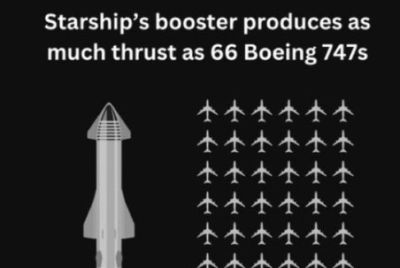
Musk founded SpaceX in 2002 with the explicit goal of making humanity multiplanetary. He has repeatedly stated that extending human consciousness beyond Earth is essential for long-term survival. Starship is the vehicle designed to achieve this, capable of carrying up to 100 people or 100 tons of cargo per flight once fully operational.
Recent Starship test flights have demonstrated rapid progress in reusability and heat shield performance. The vehicle's stainless-steel construction and methane-oxygen propulsion system are optimized for rapid turnaround and in-space refueling — critical capabilities for lunar and Martian operations.
NASA's selection of Starship for Artemis missions provides both validation and funding support. The first crewed lunar landing under Artemis is targeted for the late 2020s, with Musk predicting regular flights could follow shortly thereafter. A lunar base could serve as a proving ground for Mars technologies while generating scientific and commercial returns.
The Moon also offers strategic advantages for deep-space travel. Water ice at the poles can be split into hydrogen and oxygen for rocket propellant. Solar power is nearly continuous at certain sites, and the lower gravity reduces launch energy requirements by a factor of six compared to Earth.
Challenges and Timeline Questions
Despite enthusiasm, significant hurdles remain. Radiation exposure on the lunar surface requires robust shielding for habitats and vehicles. Lunar dust poses engineering challenges for machinery and spacesuits. Establishing reliable life support, power generation, and communication systems will demand years of testing.
Musk has acknowledged these difficulties but maintains that iterative development and AI-assisted design will accelerate progress. SpaceX's Starlink constellation already provides high-speed internet to Starship during test flights and could extend coverage to the Moon and Mars.
The exact timeline for a crewed lunar base or Mars missions remains fluid. Musk has targeted uncrewed Starship landings on Mars as early as 2026-2028, with crewed flights following in the early 2030s. A sustained Moon presence could occur earlier under Artemis partnerships.
Implications for Humanity's Future
Musk's latest post underscores a consistent theme in his public statements: technology and abundance can solve many of humanity's pressing challenges. By expanding into space, humanity gains access to vast resources and new frontiers, potentially reducing terrestrial conflicts over scarcity.
The Moon-first approach could serve as an economic bridge to Mars. Lunar industry might supply propellant, construction materials, and research infrastructure that make Martian settlement more affordable. Self-replicating robotic systems guided by AI could bootstrap entire industrial bases, dramatically lowering the cost of expansion.
Critics argue that resources should first address Earth's problems, including climate change, poverty, and inequality. Supporters counter that space development creates new technologies and economic growth that ultimately benefit everyone. Historical parallels, such as the Apollo program's contributions to computing and materials science, are frequently cited.
As Star Wars Celebration 2027 approaches and public interest in space exploration surges, Musk's vision continues to inspire both excitement and debate. The simple post — "The Moon" — accompanied by a detailed discussion of lunar industrialization, reminds followers that the path to Mars may begin closer to home than many realize.
Whether the Moon becomes a bustling industrial hub or remains a scientific outpost will depend on technological progress, international cooperation, and sustained investment. For now, Musk's message is clear: the Moon is not just a destination — it is a stepping stone to humanity's multiplanetary future.
© Copyright 2026 IBTimes AU. All rights reserved.
- Recommended For You