

LeBron James Takes a Roughly $48 Million Pay Cut From His Lakers Salary to Sign With the Philadelphia 76ers
LeBron James prioritises championship pursuit over salary, joining the Philadelphia 76ers with a significant pay reduction.
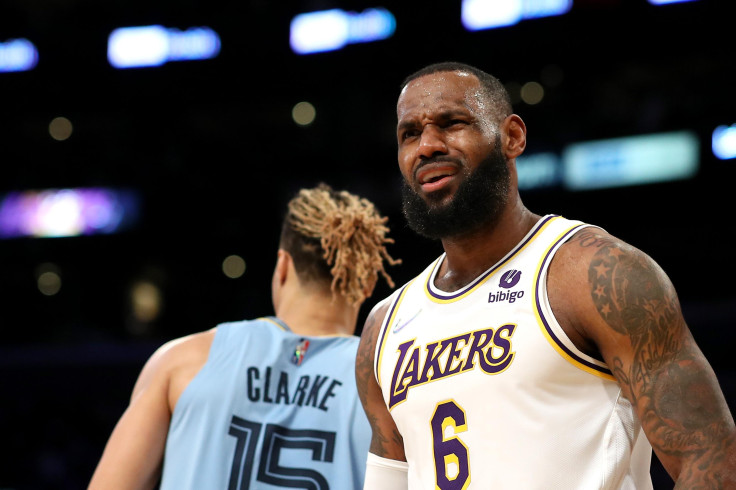
LeBron James' decision to sign with the Philadelphia 76ers this week came with a staggering financial cost: the four-time NBA champion is taking a pay cut of roughly $48 million from his final salary with the Los Angeles Lakers, one of the steepest single-season drops for any star athlete changing teams in recent memory.
James agreed to a two-year, $7.94 million contract with Philadelphia, according to contract data from Spotrac, a figure widely rounded to $8 million across most reporting on the deal. That comes after James earned $52.63 million with the Lakers during the 2025-26 season, meaning his new deal represents a reduction of roughly $48 million, or more than 90% of his previous salary, according to Fortune.
How the numbers break down
James' $52.63 million salary with the Lakers last season came from a two-year, $101.36 million maximum contract he signed with Los Angeles in July 2024, which included a player option for the 2025-26 season that he formally exercised. That deal made James, at the time, the first player in NBA history to play a 23rd professional season, pushing his career on-court earnings to roughly $580 million.
By comparison, his new agreement with Philadelphia includes a player option for the 2027-28 season and represents essentially a minimum-salary contract for a player of his experience level. According to Fortune, a maximum contract for someone with James' tenure would have started closer to $54 million this season, meaning his actual deal amounts to roughly 7 cents on the dollar relative to what league rules would have otherwise allowed him to command.
Why the pay cut was largely unavoidable
The scale of the reduction wasn't really a matter of choice for either James or the 76ers. According to Fortune, league salary cap mechanics made a deal of this size close to unavoidable given Philadelphia's roster situation. With Joel Embiid, Tyrese Maxey and newly acquired Jaylen Brown already consuming the bulk of the team's salary cap space, even after Philadelphia had just traded for Brown from the Boston Celtics, the Sixers had nothing left to offer James beyond a minimum-salary roster slot.
That reality applied broadly across nearly every team James considered during free agency, not just Philadelphia. Reporting from Yahoo Sports and Yardbarker ahead of his decision noted that James was likely to accept a contract in the range of the veteran minimum or various salary cap exceptions regardless of which team he ultimately chose, given that virtually every serious contender in the mix, including Cleveland, Golden State and Minnesota, was already a high-spending, tax-paying team with little remaining cap flexibility.
A financial detail James addressed directly
In the message James posted to X announcing his decision, he made clear that money was not a factor in his choice of destination. "This is my last decision. I'm not going for money. I'm not going for family. What am I really playing for at this point?" James wrote, adding that he remained motivated purely by a chance to compete for another championship.
Context: James remains the NBA's top earner overall
Despite the dramatic on-court pay cut, James' overall financial standing remains extraordinary. According to Sportico, James returned to the top of the NBA's total earnings table for the 2025-26 season with an estimated $132.6 million, a figure that includes roughly $80 million from endorsements, merchandise, licensing and his broader media business, alongside his on-court salary. His career earnings since turning professional in 2003 now stand at approximately $1.7 billion, ranking fourth all-time when adjusted for inflation, behind only Michael Jordan, Tiger Woods and Cristiano Ronaldo.
James had previously ranked as the NBA's top overall earner, including endorsements, for 11 consecutive years before Stephen Curry surpassed him ahead of the 2023-24 season following a contract extension tied to Curry's long-term Under Armour deal.
Where the new contract ranks him on the Sixers
Even with his outsized name recognition and accomplishments, James' new salary places him well down Philadelphia's payroll. According to Bleacher Report, James will rank as just the eighth-highest-paid player on the 76ers' roster for the upcoming season, reflecting how modest his new deal is relative to the team's other core contracts.
Why James was still willing to accept it
Throughout the free agency process, ESPN's Brian Windhorst had reported that James intended to base his decision primarily on personal and basketball happiness rather than chasing the largest possible contract or the most straightforward path to a title. By ultimately signing with Philadelphia at a steep discount to his market value, James followed through on that stated approach, betting on team fit and competitive opportunity over financial upside in what he has described as the final chapter of his playing career.
A pattern that echoes past James moves
Fortune noted that James' decision fits a broader financial pattern that has followed him throughout his career: teams and cities have often seen outsized economic benefits whenever he signs, pointing to a 115% jump in the Cleveland Cavaliers' franchise valuation during his first stint there, along with more than $500 million in additional revenue he is credited with generating for the Lakers during his tenure in Los Angeles. Philadelphia's front office appears to be betting that similar economic and competitive upside will follow, even at a fraction of what James has earned in salary in past seasons.
With James now locked into a two-year deal that pays a small fraction of his previous salary, attention turns to how quickly he can integrate into Philadelphia's revamped roster alongside Embiid, Maxey and Brown as the team looks to build a genuine championship contender heading into the 2026-27 season. For James, the financial sacrifice underscores just how directly his decision was driven by competitive opportunity rather than earnings, a rare instance in professional sports of a player of his stature accepting a near-minimum salary purely in pursuit of one more shot at a title.
© Copyright 2026 IBTimes AU. All rights reserved.