Seoul Stocks Surpass 9,000 for First Time as Chip Rally Powers Record High
South Korea's stock index hits record highs, driven by semiconductor demand and AI investments.
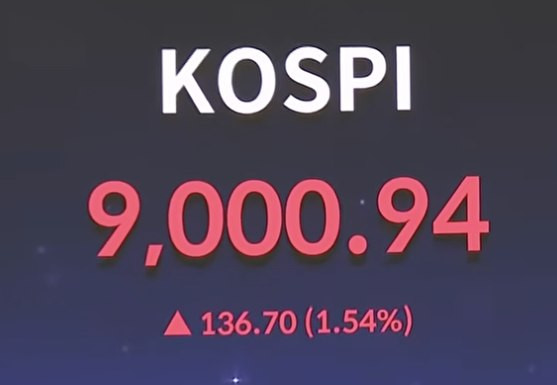
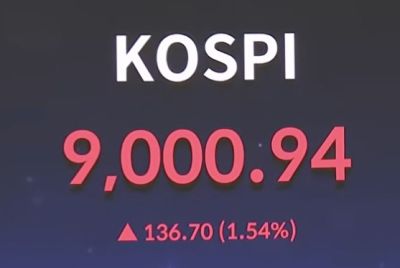
SEOUL — South Korea's benchmark stock index crossed the historic 9,000-point threshold for the first time Thursday, driven by a strong rally in semiconductor shares amid sustained global demand for artificial intelligence technology.
The Korea Composite Stock Price Index, or KOSPI, rose as much as 1.54 percent to 9,000.68 points intraday before settling around the landmark level. The advance marked the latest in a series of record highs for the index, which has surged more than 100 percent year-to-date in 2026.
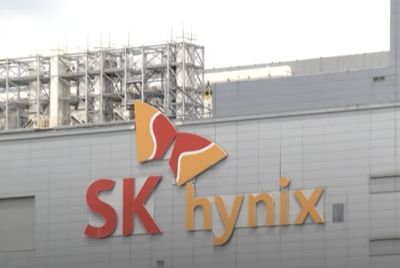
Chipmakers led the charge, with industry heavyweights Samsung Electronics and SK Hynix posting significant gains. The rally reflects investor confidence in the sector's role in powering AI infrastructure worldwide, as major technology companies continue heavy investments in data centers and advanced computing.
Market participants pointed to several factors supporting the advance. Optimism around AI-related capital spending has boosted semiconductor demand, particularly for high-bandwidth memory chips used in training large language models. South Korea's position as a global leader in memory chip production has positioned its flagship companies to benefit substantially.
The KOSPI's rapid ascent this year has outpaced many global indices, with the benchmark doubling in value since the start of 2026. Analysts have attributed much of the momentum to concentrated gains in a handful of technology giants, raising questions about market breadth and potential vulnerability to sector-specific setbacks.
Foreign investor flows have played a key role. Institutional buyers from overseas have returned to Korean equities, drawn by attractive valuations in the technology sector relative to global peers and expectations of continued earnings growth. Domestic retail participation has also remained robust throughout the rally.
Trading volumes surged as the index approached the milestone, reflecting heightened market interest. Program trading and algorithmic strategies amplified movements in key constituents, contributing to intraday volatility around the 9,000 level.
Market watchers noted the psychological significance of breaking the round number. The KOSPI had hovered near 8,000 points for much of the previous month before the latest leg higher, propelled by positive earnings outlooks from major chip producers.
Samsung Electronics and SK Hynix together account for a substantial portion of the index's market capitalization. Their performance has disproportionately influenced the benchmark's trajectory, creating what some analysts describe as a "hyper-concentrated" market.
Broader economic indicators have provided mixed support. While export data remains solid, particularly in the technology sector, concerns about global trade tensions and potential U.S. policy shifts have tempered enthusiasm in other areas of the market.
Analysts at major financial institutions have revised upward their year-end targets for the KOSPI. Some forecasts now point to levels well above 9,000, contingent on sustained AI demand and favorable macroeconomic conditions.
However, warnings about concentration risk have emerged. Regulators and market observers have cautioned retail investors about overexposure to leveraged products tied to individual stocks, particularly in the semiconductor space. Recent data showed a sharp increase in forced liquidations related to such instruments.
The rally has also drawn attention from international observers. South Korea's stock market performance stands out in a year marked by uneven global equity returns, highlighting the country's strategic importance in the global technology supply chain.
Looking ahead, market participants will monitor upcoming corporate earnings for further signals on the health of the semiconductor cycle. Any signs of softening demand or increased competition could test the index's ability to hold above the 9,000 level.
Currency movements have also influenced sentiment. The Korean won's performance against the U.S. dollar remains a key variable for export-oriented companies, with a stronger won potentially pressuring margins while a weaker currency could support competitiveness.
Domestic policy developments could provide additional tailwinds. Government initiatives aimed at supporting the technology sector and encouraging corporate investment in research and development have been viewed positively by investors.
As the trading session progressed, the KOSPI maintained gains, closing near its intraday highs. The milestone crossing caps a remarkable period for South Korean equities and underscores the market's sensitivity to global technology trends.
© Copyright 2026 IBTimes AU. All rights reserved.
- Recommended For You