Five Reasons Behind the KOSPI's Historic Two-Day Plunge as South Korean Stocks Lose a Tenth of Value
South Korea's KOSPI index experiences a historic drop due to AI spending concerns and market volatility.

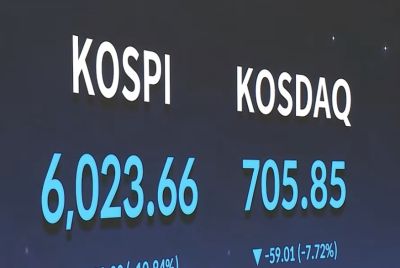
South Korea's benchmark KOSPI index has suffered one of the sharpest declines in its history over the past several trading sessions, plunging more than 12% across two days and triggering trading circuit breakers on consecutive sessions for the first time on record. Here is a breakdown of the main factors driving the selloff.
1. SK Hynix's earnings beat expectations but still fell short of forecasts
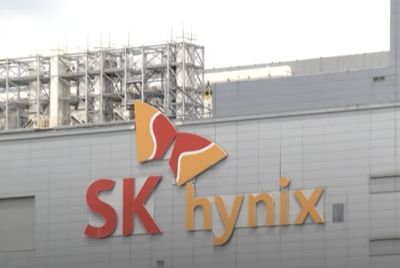
The proximate trigger for the latest leg of the selloff was an earnings report from chipmaker SK Hynix. The company reported that its operating profit soared sixfold from a year earlier to a record 60.5 trillion won, or roughly $41.2 billion, driven by strong demand for high-bandwidth memory chips used in artificial intelligence systems. Despite the record result, the figure still fell short of analysts' forecasts, and investors interpreted the miss as an early signal that the explosive earnings growth tied to AI-related chip demand may be beginning to moderate. SK Hynix shares fell more than 9% in the immediate aftermath of the report, with the stock sinking even further during intraday trading.
2. Samsung and SK Hynix's outsized weight in the index amplified the damage
Because Samsung Electronics and SK Hynix together account for more than half of the KOSPI's total market weighting, any sharp move in either stock has an outsized effect on the headline index. Analysts have noted that this concentration has effectively turned the KOSPI into a direct proxy for global sentiment toward AI hardware spending, stripping international investors of the diversification benefits they might otherwise expect from a broad national stock index. When both chip giants sold off together, with SK Hynix falling more than 9% and Samsung dropping more than 5% in a single session, the concentrated weighting translated those individual declines into a historic move for the overall market.
3. Broader doubts about the sustainability of AI infrastructure spending
The selloff in Seoul did not occur in isolation. It followed a steep overnight rout in U.S. chip stocks, where the Philadelphia Semiconductor Index fell for a fourth consecutive session amid growing investor skepticism about whether current levels of capital spending on artificial intelligence infrastructure can be sustained. Concerns have centered in part on reports of unusually large, circular financing arrangements between major AI infrastructure providers and their customers, arrangements that some investors worry could unravel if technology companies begin scaling back capital expenditure. That skepticism has weighed heavily on chip-linked stocks across multiple markets simultaneously, with Micron Technology, Advanced Micro Devices, Intel and other major U.S. chipmakers all posting sharp losses in the sessions preceding the KOSPI's plunge.
4. Intensifying competition from Chinese memory chip manufacturers
A separate but related concern has been the rapid narrowing of the technological gap between South Korean chipmakers and their Chinese counterparts. The successful stock market listing of Chinese memory chip manufacturer CXMT, combined with reports that Chinese firms have developed advanced deep ultraviolet lithography equipment, a category of chipmaking technology historically dominated by a small number of non-Chinese suppliers, added to investor anxiety about South Korea's long-term competitive position in the global memory chip market. That anxiety compounded the earnings-driven selling, giving investors an additional structural reason to reduce exposure to Korean chip stocks beyond the immediate disappointment tied to SK Hynix's results.
5. Leveraged retail trading and mechanical market structure amplified the swings
Elevated participation by individual investors in leveraged exchange-traded funds tracking the semiconductor sector has been cited as a factor that intensified volatility in both directions throughout 2026, and that dynamic appears to have played a role in accelerating the scale of the recent declines. When the KOSPI and the smaller KOSDAQ index both fell 8% or more in a single session, automatic circuit breakers halted trading entirely for 20 minutes, while separate "sidecar" mechanisms temporarily suspended program sell orders. According to the Korea Exchange, both mechanisms were triggered on both the KOSPI and KOSDAQ for two consecutive trading days, the first time that has happened in the exchange's history, underscoring how mechanically severe the selling pressure became once it started.
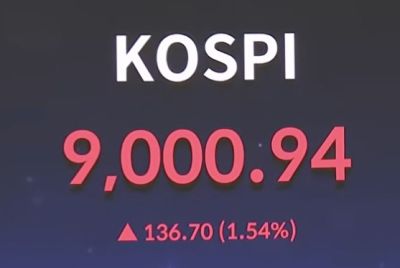
The combined effect of these factors pushed the KOSPI down 5.98%, or 360.42 points, to close at 5,663.24 on the most recent session, following an even steeper drop of nearly 11% the previous day. The index, which had only recently topped 9,000 points, is now down more than 39% from its 52-week high. The KOSDAQ, which tracks smaller and more growth-oriented Korean companies, fell 6.12% on the same day, with losses spread broadly across sectors, including declines of more than 6% in electrical and electronics, non-metallic minerals, metals, general services, medical equipment, construction, finance and manufacturing stocks.
Foreign investors and institutions were modest net buyers during the most recent session, together purchasing several hundred billion won worth of shares, suggesting some larger market participants viewed the selloff as an opportunity to accumulate positions at lower prices even as individual retail investors remained net sellers.
Market analysts widely expect that any sustained rebound in Korean equities will take time to materialize, given both the scale of the recent losses and the depth of investor skepticism now surrounding the broader AI spending narrative that had driven the KOSPI to record highs earlier in the year. Renewed geopolitical tensions in the Middle East, where fighting between the United States and Iran resumed this week after a brief pause, have added a further layer of caution to global risk sentiment, compounding the challenges facing South Korean markets as they attempt to stabilize in the sessions ahead.
© Copyright 2026 IBTimes AU. All rights reserved.
- Recommended For You