Intel Stock Rises Nearly 5% as SK Hynix Ohio Talks and Tight CPU Supply Lift Shares
The potential arrangement could provide Intel with foundry and packaging volume, while CEO Lip-Bu Tan says tight CPU supply is limiting shipments.

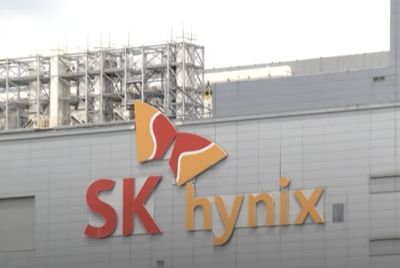
SANTA CLARA, Calif. — Intel shares rose 4.63% to $101.63 in midmorning trading Wednesday, up $4.49, after reports that SK hynix is in talks to make memory in the United States using Intel capacity and after Chief Executive Lip-Bu Tan said the company can fill only about half of customer demand for CPUs.
The stock closed Tuesday at $97.14. Premarket prints already pointed higher after The Wall Street Journal and other outlets said SK hynix was discussing a U.S. manufacturing arrangement that could tap Intel's Ohio footprint. Neither company announced a signed deal. Traders treated the talks as a foundry-and-packaging catalyst: a memory leader needing American wafers, and Intel needing paying volume on tools that have been underused.
Tan spoke Monday at Splunk's .conf26 conference in Denver. Asked by Cisco President Jeetu Patel why Intel's factories matter, he said design, manufacturing and advanced packaging should sit in one company. On foundry concentration he was blunt. "So I think relying 95% on one company, especially one based in Taiwan, is very risky," he said. TSMC held more than 70% of foundry revenue in the first quarter, according to Counterpoint.
On product, Tan said inference still runs on CPUs that schedule GPUs and applications. "CPU demand is so high that we can only serve 50% of our customers," he said. He also said memory prices have risen five- to sevenfold and that substrates for advanced packaging remain tight. He called packaging the industry's "Holy Grail." On Intel's own recovery: foundry is capital-heavy and slow. "The good news is, over the past 18 months the situation has improved." He said 18A is in mass production with yields rising about 7% a year. Intel's last earnings deck still pegged 14A high-volume manufacturing for 2028.
Those comments landed on a stock that has already had a violent month. Intel jumped 9% on Sept. 8, hit $106.24 on Sept. 9, then dropped more than 5% on both Sept. 10 and Sept. 14 as the broader AI-chip tape sold off. Wednesday's bounce recouped the Monday-Tuesday stall, not the September peak. The 52-week range still runs from the mid-$20s to about $141.
The last official numbers were the second quarter: $16.1 billion in revenue, 25% higher than a year earlier and $1.8 billion above April's outlook; non-GAAP gross margin 41.8%; non-GAAP earnings $0.42 a share. Third-quarter guidance was $15.8 billion to $16.8 billion, 42% gross margin and $0.38 a share. Foundry revenue in the second quarter was $5.8 billion. Client and data-center CPU lines are still the cash engine; foundry is the option the market is trying to price.
A SK hynix deal, if it happens, would not turn Intel into a DRAM company. It would be a customer for U.S. capacity and a political win in Ohio. Tan's 50% fill-rate line is the nearer trade: if CPUs are short, Intel can raise prices — reports already point to another PC-processor increase around Oct. 5 — and ship every wafer it can yield on 18A.
Wednesday's $101 handle is not a verdict on 14A. It is a bid on two sentences: customers want more Intel CPUs than Intel can make, and a Korean memory giant may need a U.S. roof. Until there is a term sheet or a third-quarter print that holds the $16 billion run-rate, those sentences are the whole story.
© Copyright 2026 IBTimes AU. All rights reserved.
- Recommended For You