No Official Price Tag Yet for Wednesday's Global Salesforce Outage, But Here's How the Costs Could Add Up
The incident affected customers across three operating regions during Dreamforce, with costs potentially spread between Salesforce and businesses relying on its platform.
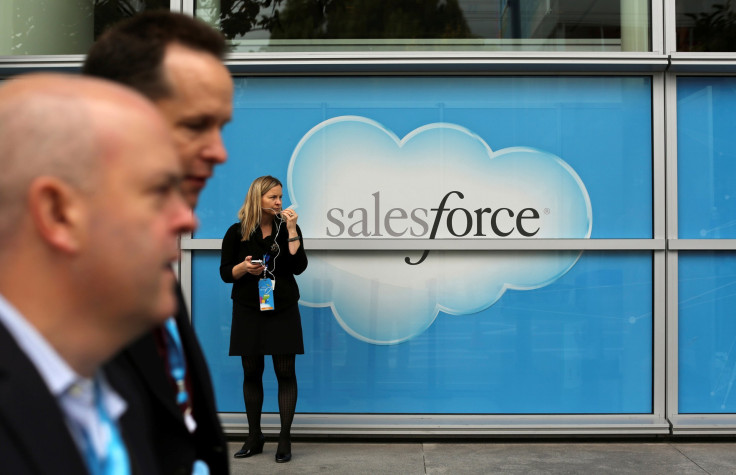
SAN FRANCISCO — Salesforce Inc. has not disclosed a dollar estimate for how much Wednesday's global service outage cost the company or its customers, and no independent analyst had published a specific figure as of Wednesday afternoon, leaving the financial toll of the disruption an open question even as the technical incident itself has been resolved.
The outage began around 7:50 a.m. UTC, roughly 3:50 a.m. Eastern time, according to Salesforce's own status page, and affected customers across all three of the company's operating regions, with reports of disruption spanning the United States, United Kingdom, Germany, France, India and Japan. Salesforce said the root cause traced to an internal login service, where incoming requests were stalling while waiting for a response, consuming available server resources and cascading into broader access failures across the platform. The company said it validated a fix on a test instance and began rolling it out fleetwide by roughly 10:56 a.m. UTC, with independent monitoring services logging the core disruption at around four hours and 22 minutes, though shorter, related incidents continued to appear on the company's status tracker later in the day.
Quantifying the financial impact of a cloud outage like Wednesday's is notoriously difficult, and companies rarely disclose precise figures even after an incident is fully resolved. Unlike a factory shutdown or a single retailer's website going dark, Salesforce's customer relationship management platform underpins day-to-day operations for a vast and varied customer base, one that Salesforce itself has described as including major global companies such as Amazon, Walmart, Coca-Cola, Toyota and IBM. An outage affecting that platform generates costs on at least two separate ledgers: the direct hit to Salesforce's own business, largely through service-level agreement credits and reputational damage, and a far larger, harder-to-measure set of costs borne by the customers who rely on Salesforce to run sales, service and marketing operations.
Salesforce's own scale offers one way to think about the stakes involved, even without a specific outage-cost figure attached. The company reported fiscal second-quarter revenue of $11.35 billion, up 11% year-over-year, with full-year revenue guidance raised by $200 million following that report. Spread across a full fiscal year, that revenue run rate implies Salesforce generates tens of millions of dollars in revenue on a typical day, though a service disruption does not translate directly into lost revenue on a one-to-one basis, since most Salesforce customers pay through annual or multiyear subscription contracts rather than per-use billing, meaning a several-hour outage does not necessarily reduce the total amount Salesforce ultimately collects from an affected customer.
The more significant financial exposure from an incident like Wednesday's typically falls on Salesforce's customers rather than on Salesforce itself. Businesses that rely on the platform for order processing, customer service ticketing, sales pipeline management and marketing automation can face lost productivity, delayed transactions, and in some cases direct revenue loss if the outage prevents customer-facing sales or support functions from operating during the disruption window. Because those costs are dispersed across thousands of individual Salesforce customers rather than concentrated at Salesforce itself, they are rarely aggregated into a single public estimate, and no such aggregate figure had been published in connection with Wednesday's incident as of the most recent available reporting.
The timing of Wednesday's outage added a further layer of reputational, if not directly quantifiable, cost. The disruption struck on the second day of Dreamforce, Salesforce's flagship annual conference in San Francisco, an event expected to draw more than 40,000 in-person attendees and more than 200,000 additional registrants online, with more than 400 sessions this year built around Salesforce's push into AI-driven "Agentic Enterprise" software. An outage occurring in the middle of an event explicitly designed to showcase the platform's reliability to customers, prospects and partners carries a cost in credibility and marketing impact that is difficult to translate into a specific dollar figure, even if it does not appear directly on Salesforce's income statement.
Financial markets offered one immediate, if imperfect, gauge of investor sentiment following the outage. Salesforce shares had already closed Tuesday at $255.65, down 1.46% from Monday's close of $259.43, a decline that occurred before the outage began and therefore cannot be attributed to the incident itself. Shares slipped a further roughly 0.5% in Wednesday premarket trading, changing hands around $254.40, though broader market conditions, including anticipation ahead of the Federal Reserve's interest rate decision, were also weighing on technology stocks more broadly that morning, making it difficult to isolate how much of Wednesday's modest share price movement, if any, reflected the outage specifically.
Wednesday's disruption was not an isolated event in Salesforce's recent history. The company has experienced a series of significant outages over the past year and a half, including a June 2025 incident that took its Heroku platform-as-a-service offline for more than six hours alongside disruptions to Commerce Cloud, Marketing Cloud, Tableau, Service Cloud and MuleSoft, and an earlier four-day disruption that crippled core customer service functions including Email-to-Case and Web-to-Case features. None of those prior incidents resulted in a publicly disclosed cost estimate either, consistent with the broader industry pattern of treating outage costs as commercially sensitive or simply too diffuse to calculate with precision.
Absent an official disclosure from Salesforce or a published third-party analysis, the true financial toll of Wednesday's outage, spanning lost productivity across its global customer base, any service credits owed under customer contracts, and the harder-to-quantify reputational cost of the disruption occurring during Dreamforce, is likely to remain an estimate rather than a confirmed figure, unless Salesforce chooses to address the matter directly in a future earnings call or regulatory filing.
© Copyright 2026 IBTimes AU. All rights reserved.
- Recommended For You