Hewlett Packard Enterprise Stock Plunges 9.57% as Analyst Downgrade Ends Its Blistering AI-Fueled Rally
Evercore cited stretched valuation after Hewlett Packard Enterprise shares surged, while concerns over AI demand, margins and component shortages added to the pressure.
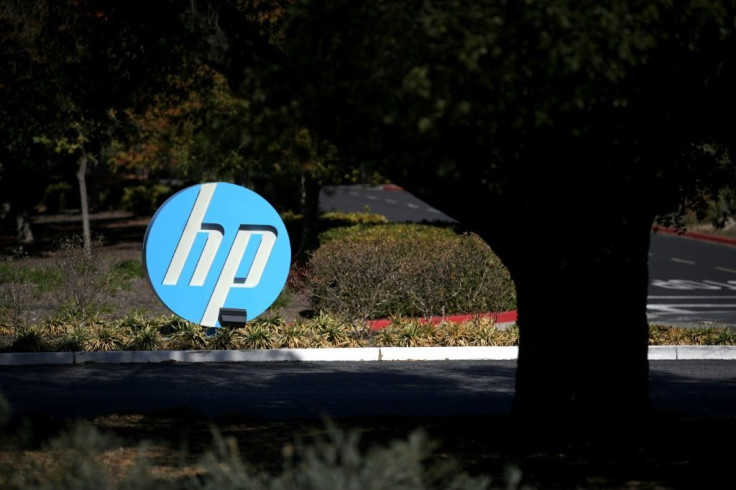
SAN JOSE, Calif. — Shares of Hewlett Packard Enterprise Co. tumbled 9.57% to $56.14 in Monday trading, shedding $5.94, as a high-profile analyst downgrade combined with a broader selloff in artificial intelligence-linked stocks to abruptly halt one of the market's most remarkable rallies of the year.
The decline followed a downgrade from Evercore ISI, which cut its rating on HPE to In Line from Outperform while keeping its price target unchanged at $65. The firm said the downgrade reflected how far the stock's valuation had climbed rather than any deterioration in the underlying business, noting that HPE now trades at roughly 13 times projected fiscal 2027 earnings, well above its five-year average multiple of about 8 times.
That valuation concern followed an extraordinary run for the stock. HPE closed at $62.08 on September 11, having gained 158.5% since the start of the year, compared with an 11.9% rise for the broader S&P 500 over the same stretch. Over just the past quarter, HPE shares had climbed 37.6%, versus a 2.1% gain for the S&P 500, underscoring how sharply the networking and server maker had outpaced the broader market before Monday's pullback.
Monday's decline also came as HPE was swept up in a broader selloff across artificial intelligence and semiconductor-linked stocks, triggered by a weekend essay from Anthropic Chief Executive Officer Dario Amodei calling for AI companies to slow the pace of model development due to safety concerns, a position that drew public support from OpenAI CEO Sam Altman and xAI's Elon Musk. That selloff weighed broadly on chipmakers, data center operators and AI infrastructure providers across the market, adding pressure to HPE shares already vulnerable to profit-taking after their sustained run higher.
The pullback comes less than two weeks after HPE reported record fiscal third-quarter results that initially sent the stock sharply higher before a series of subsequent declines chipped away at those gains. The company posted adjusted earnings of $1.11 per share for the quarter, the first time HPE has topped $1 in adjusted per-share earnings in a single quarter, on revenue of $12.21 billion, up roughly 34% from a year earlier. Both figures comfortably beat Wall Street expectations, which had called for adjusted earnings of about 93 cents per share on revenue of approximately $11.9 billion.
The results were driven in large part by surging demand for AI server infrastructure. HPE also disclosed a multi-year, $3.5 billion deal to supply Oracle with high-density Juniper routing and switching systems for AI supercomputing clusters, an agreement that includes Oracle stock warrants tied to deployment milestones. Following the results, HPE raised its full-year guidance, now projecting revenue growth of 34% to 37% for the fiscal year, along with non-GAAP earnings per share of $3.75 to $3.85 and free cash flow above $3.75 billion.
Even with those strong headline numbers, HPE's management flagged concerns that have continued to weigh on the stock in the weeks since. At Citi's 2026 Global TMT Conference, company executives cautioned that gross margins, which reached a record 40.4% on a non-GAAP basis in the third quarter, would ease in the current quarter and normalize downward due to a shifting product mix and rising component costs. That guidance has been compounded by persistent supply chain bottlenecks, including ongoing shortages of DDR5 and DDR4 memory, NAND flash storage and semiconductor wafer capacity, which have limited HPE's ability to convert its expanding order backlog into recognized revenue. The company's orders grew 42% year-over-year in the third quarter, outpacing the 34% growth in revenue, highlighting the widening gap between demand and the company's current capacity to fulfill it.
The stock's reaction to those margin and supply chain concerns has played out in stages over recent weeks, with HPE shares posting a series of pullbacks even as the company's underlying order momentum and guidance remained largely positive. Following the September 3 earnings release, HPE briefly traded down alongside broader profit-taking in AI infrastructure names, closing below its 50-day moving average trendline for the first time since July before recovering to post further gains into the following week.
Wall Street's assessment of the stock remains mixed heading into Monday's decline. Raymond James holds the highest price target among major analysts at $86, while Goldman Sachs maintains a Buy rating with a $75 target. Deutsche Bank recently raised its target to $68 from $62, citing record AI-related demand, even as it acknowledged the near-term margin pressures. On the more cautious side, Wells Fargo lowered its target to $54, pointing to concerns about the pace of revenue conversion and pressure on operating margins, while Piper Sandler maintains a Neutral rating with a $57 target. The consensus rating across covering analysts remains a Buy, with an average price target of $69.18, suggesting many on Wall Street continue to view Monday's decline as a pullback within a longer-term uptrend rather than a reversal of the stock's fundamental momentum.
Technically, HPE shares remain above their 200-day moving average despite Monday's sharp drop, a level analysts often cite as an indicator of longer-term trend strength, even as the stock has fallen below shorter-term support levels tied to its 20-day and 50-day moving averages amid the recent volatility.
For a stock that had emerged as one of the standout performers of 2026 on the strength of the broader AI infrastructure buildout, Monday's decline serves as a reminder of how closely HPE's valuation has become tied to sentiment around the durability of that buildout, leaving the shares vulnerable to sharp swings whenever concerns emerge about the pace of AI development, component supply constraints, or the sustainability of the elevated margins the AI server business has generated in recent quarters.
© Copyright 2026 IBTimes AU. All rights reserved.
- Recommended For You