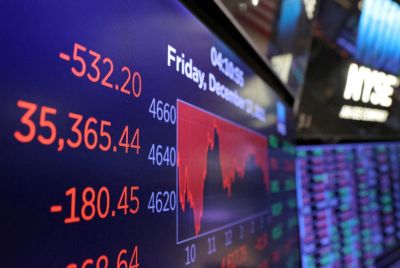
Dow Slips as AI Slowdown Calls and Surging Oil Prices Test Wall Street's Nerve Ahead of the Fed Meeting
The Dow, S&P 500 and Nasdaq declined as investors assessed calls from leading technology executives to slow AI development alongside renewed energy-supply concerns.

NEW YORK — The Dow Jones Industrial Average slipped 122.53 points, or 0.23%, to 52,450.76 in early trading Monday, as Wall Street opened the week under pressure from a fresh wave of warnings about the pace of artificial intelligence development and another sharp jump in oil prices tied to escalating tensions in the Middle East.
The decline extended a rough pattern for U.S. stocks to start the trading week, with the three major indexes having now opened either mixed or lower for six consecutive weeks. The broader S&P 500 fell roughly 0.8% in early trading, putting it on track for its fifth decline in six sessions, while the tech-heavy Nasdaq Composite dropped about 1.2%, reflecting the outsized impact of the day's news on technology and semiconductor shares.
Nvidia, whose chips have powered much of the artificial intelligence boom of recent years, fell nearly 4% and was among the heaviest drags on the broader market. Other chipmakers came under similar pressure, with Advanced Micro Devices, Broadcom and Taiwan Semiconductor Manufacturing Company all trading lower, alongside declines in optical component makers, data center operators and power-related stocks tied to the AI infrastructure buildout.
The selling was triggered by a weekend essay from Anthropic Chief Executive Officer Dario Amodei, who called on artificial intelligence companies to slow the pace at which they increase the capabilities of their models, citing safety concerns. Amodei's roughly 3,800-word post argued that a more deliberate pace of development would give safety measures time to catch up with the technology's advancing capabilities. His call was echoed by two of his most prominent rivals: OpenAI CEO Sam Altman said the industry needs to "pace the frontier," while Tesla and xAI chief Elon Musk offered his own brief endorsement of Amodei's position.
The rare public alignment among three executives known for frequently clashing over AI strategy added weight to the market's reaction, with several notable developments following in short order. Altman confirmed in an interview with Fortune published Saturday that OpenAI would delay its long-anticipated initial public offering to 2027 rather than proceed this year, citing the current environment around AI safety. Anthropic, meanwhile, has reportedly continued moving forward with its own planned stock market listing later this year and is said to be considering the Nasdaq exchange for that offering, according to people familiar with the matter.
President Donald Trump weighed in on the debate Sunday, playing down the need for his administration to impose new checks on AI development. Trump said he was more concerned about the United States ceding its competitive edge to China in the global race to develop the technology, arguing that maintaining that lead would ultimately help address safety risks rather than heightened domestic regulation.
Compounding the pressure on markets, oil prices extended a multi-day rally after Saudi Arabia shut down a key pipeline that had served as an alternative route bypassing the Strait of Hormuz, following an attack on the route over the weekend. Brent crude climbed toward $108 to $109 a barrel, up several percent over the prior 24 hours, as the Iran-aligned Houthi movement intensified its military campaign around the critical energy transit corridor. Analysts have warned that Saudi Arabia's own oil inventories available for export could face strain within days if the disruption continues, adding urgency to the market's concerns about energy supply.
The combination of surging crude prices and expectations for continued Federal Reserve interest rate action has weighed on other asset classes as well. Gold prices slipped roughly 0.3% to around $4,334 an ounce, as rising oil costs strengthened expectations that the Fed will move ahead with a rate increase at its policy meeting later this week, a dynamic that tends to pressure gold since the metal pays no interest and becomes less attractive relative to yield-bearing assets when borrowing costs rise. Silver futures fell nearly 3% in early trading.
Beyond the AI and energy-driven selloff, several individual stocks moved on company-specific news. Corning shares sank more than 9% after the materials company issued disappointing guidance, while Stellantis was downgraded to Underweight from Equal Weight by Morgan Stanley, with the bank cutting its price target on the automaker, citing a product pipeline that has fallen behind competitors and limited flexibility to adjust investment given softer cash generation. Tesla, meanwhile, continued to stand out relative to broader industry trends, with new data showing the company captured 52% of U.S. electric vehicle sales through August, up from 43% a year earlier, even as its own domestic sales declined 16% amid a steeper 30% contraction across the overall U.S. EV market.
The pressure on chipmakers and AI infrastructure-related names Monday illustrated how central the artificial intelligence theme has become to the broader market's direction over the past several years. While the largest AI-focused companies, including OpenAI and Anthropic, remain privately held and therefore insulated from the immediate stock market reaction, the sharp declines in publicly traded chipmakers and infrastructure providers demonstrated how directly investor sentiment toward AI's trajectory has become intertwined with valuations across the broader technology sector.
With the Federal Reserve's policy announcement still ahead later this week, alongside continued uncertainty over the trajectory of Middle East oil supplies and the broader industry response to Amodei's call for a slower pace of AI development, market participants said they expect volatility to remain elevated in the sessions ahead. Whether Monday's declines mark the beginning of a more sustained repricing of AI-related stocks or a shorter-term bout of caution is likely to become clearer only once the Fed's rate decision and further details on the industry's response to the safety debate come into sharper focus.
© Copyright 2026 IBTimes AU. All rights reserved.
- Recommended For You