

Micron Shares Fall 3.7% Amid Chip Sector Pullback Ahead Of Sept. 30 Earnings Report In Boise This Thursday
Despite a recent stock dip, Micron Technology remains a strong performer in the semiconductor sector, driven by a global memory chip shortage and AI demand.
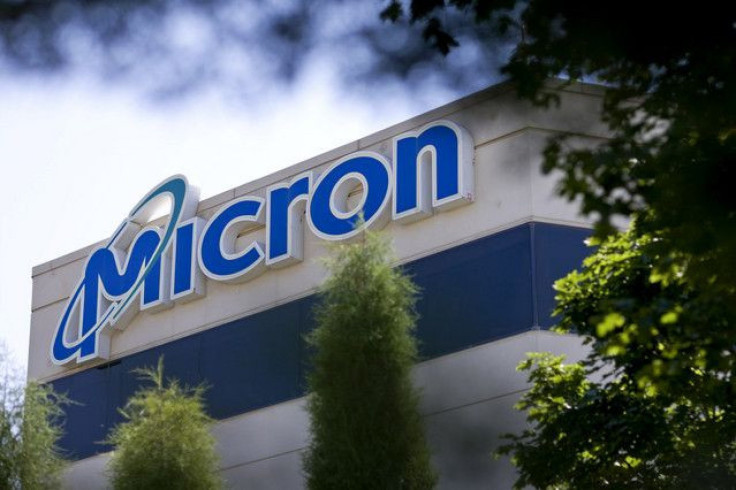
BOISE, Idaho — Shares of Micron Technology Inc. fell $37.68, or 3.67%, to $990.08 as of 10:10 a.m. ET Thursday, pulling back alongside a broader decline across semiconductor stocks even as the memory chip maker continues riding one of the most favorable pricing environments in its history heading into its next earnings report.
Thursday's decline came amid weakness across the broader chip sector, with rivals Nvidia and AMD also trading lower during the session. Nvidia shares fell after Bloomberg reported the Justice Department is reviewing whether the company's $20 billion arrangement with AI startup Groq was structured to limit antitrust scrutiny, a development that weighed on sentiment across AI-linked semiconductor names more broadly, including Micron.
Despite Thursday's pullback, Micron has been one of the standout performers within the chip sector throughout 2026, with the stock surging 16.5% during the month of August alone, according to the Motley Fool. The company's market capitalization stood at approximately $1.1 trillion as of early September, reflecting the scale of the rally that has propelled Micron into the ranks of the world's largest technology companies by market value.
Micron's stock surge has been driven primarily by a severe global memory chip shortage that has allowed the company to raise prices substantially while demand from AI data center operators continues to outstrip available supply. According to the Motley Fool, Micron's management indicated during its most recent quarterly earnings call that it does not expect the current supply shortage to ease until after 2027, positioning the company to continue benefiting from elevated pricing power well into the future.
Micron's financial results have reflected that favorable pricing environment directly. According to CNBC data, the company's trailing 12-month gross margin stands at 72.57%, with net margin at 55.89% and return on equity reaching 66.64%, figures that reflect unusually strong profitability even by the standards of the broader semiconductor industry. Yahoo Finance separately noted that Micron is currently experiencing operating margins exceeding 80%, a level the outlet described as unprecedented for the company, driven by the combination of the ongoing memory shortage and surging AI-related demand.
Micron is scheduled to report its fiscal fourth-quarter 2026 earnings on Sept. 30, a date investors are watching closely given the company's recent trajectory. According to the Motley Fool, investors will be particularly focused on the continued health of the memory chip market and whether Micron can sustain its recent pattern of price increases tied to the ongoing supply shortage. The company is also actively investing in new production capacity to help address the shortage over the longer term, though Motley Fool contributor Keith Noonan noted that new facilities generally take considerable time to bring online, with many of Micron's current expansion projects not expected to reach full operating capacity until late 2027 or 2028.
Micron has continued announcing significant strategic partnerships and infrastructure investments throughout 2026 in support of its AI-driven growth strategy. In June, the company announced a strategic agreement with Anthropic aimed at scaling next-generation AI infrastructure, according to a GlobeNewswire release cited by CNN. Micron also selected construction firm Bechtel as its partner for a major semiconductor manufacturing project in New York state, and separately announced plans to invest $10 billion over the next decade in a new research facility in Boise, Idaho, focused specifically on developing next-generation memory technologies and AI computing systems, according to Finbold.
Wall Street sentiment toward Micron has remained largely positive despite Thursday's pullback. According to Yahoo Finance, analyst price targets for the stock have clustered in a range of roughly $1,500 to $2,000, reflecting continued confidence in the company's ability to sustain strong revenue and earnings growth through its upcoming fiscal fourth-quarter report. Bernstein has maintained a Buy rating on the stock, according to CNN's compilation of recent analyst coverage, and separate analyst comparisons between Micron and competitors including SK Hynix and SanDisk have generally continued to favor Micron's near-term growth trajectory, even as some analysts have debated which specific memory chip maker offers the most attractive relative upside within the sector.
Despite the stock's strong performance throughout the year, some market commentators have raised questions about how much of Micron's future growth is already reflected in its current valuation. CNBC reported in late August that Micron carries the third-lowest valuation multiple among AI rally leaders within the S&P 500, a dynamic some analysts have pointed to as evidence the stock remains reasonably priced relative to its growth trajectory, even after its substantial gains this year, while others have cautioned that the memory chip cycle has historically proven volatile and subject to sharp reversals once supply conditions eventually normalize.
Micron has also continued making organizational changes to support its expanding operations, appointing Alexis Black Björlin to its board of directors in June, and showcasing its broader AI computing strategy at industry events including COMPUTEX 2026 in May.
With Micron's fiscal fourth-quarter earnings report now just weeks away on Sept. 30, investors are likely to continue closely watching the stock for further signals on the sustainability of the current memory chip supply shortage, the company's ongoing capacity expansion efforts, and any additional commentary from management regarding pricing trends heading into fiscal 2027. Thursday's pullback, occurring alongside broader weakness across Nvidia and AMD tied to the separate Groq antitrust news, appears to reflect sector-wide sentiment shifts rather than any specific deterioration in Micron's own underlying business fundamentals, which have continued to benefit substantially from the ongoing AI-driven memory chip shortage throughout 2026.
© Copyright 2026 IBTimes AU. All rights reserved.