

SK Hynix's U.S.-Listed Shares Jump 4% as AI Memory Rally Continues Despite Choppy Trading This Year
SK Hynix experiences stock volatility as AI memory demand and strategic partnerships drive investor interest.
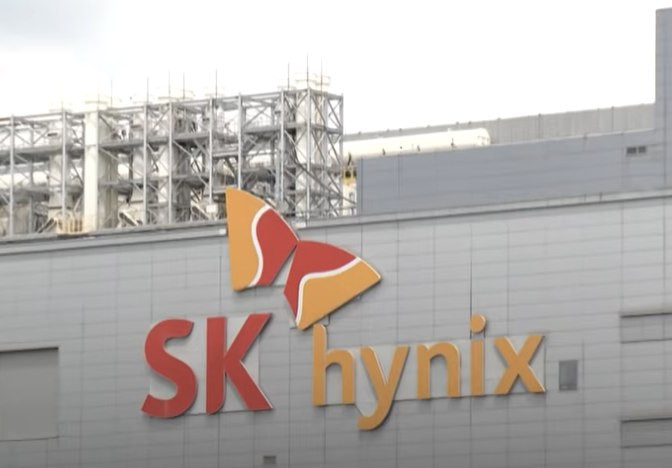
SEOUL — Shares of SK Hynix's U.S.-listed American depositary receipts climbed 4.12%, or $6.86, to $173.19 as of 9:59 a.m. EDT Monday, extending a volatile but broadly upward run for the South Korean memory chipmaker as investor enthusiasm for artificial intelligence-driven memory demand continued to reassert itself following weeks of sharp swings.
Monday's gain came amid renewed optimism tied to expanding AI memory demand, according to market analysis, with the stock benefiting from broader momentum across the semiconductor sector as investors continued positioning around companies seen as key suppliers to the ongoing AI infrastructure buildout.
The rally builds on a dramatic run for SK Hynix's ADRs since their debut on Wall Street in July. The company priced its initial offering of 177.9 million ADRs at $149 each, raising proceeds of $26.5 billion in what became the largest-ever initial share sale in the United States by a foreign company. The shares opened at $170 on their first day of trading and closed that session at $168.01, up 12.8% from the offering price, reflecting immediate and substantial investor demand for exposure to the memory chipmaker.
Since that debut, however, SK Hynix's American shares have traded with significant volatility. According to market tracking data, the stock closed near $169.50 on July 23 before sliding into the low $140s by Aug. 11, then rebounding sharply back above $170 by Aug. 14. That pattern of steep declines followed by rapid recoveries has continued into this week, with the stock's swings tied closely to headlines regarding the company's various AI infrastructure partnerships and broader sentiment shifts across AI-linked technology stocks.
Much of that volatility has centered on a massive infrastructure partnership SK Hynix entered alongside Nvidia and its parent company, SK Group. The companies signed a partnership valued at more than $500 billion focused on AI infrastructure, under which SK Hynix locked in a long-term deal to co-develop next-generation high-bandwidth AI memory and support a 2-gigawatt AI cloud buildout in South Korea. Despite the scale and strategic significance of the agreement, SK Hynix shares initially sold off sharply on the announcement, falling as much as 8.8% to 10% in a single session, reflecting a pattern in which investors have periodically taken profits on positive news given how far and fast the stock had already climbed.
SK Hynix has continued expanding its manufacturing footprint to keep pace with surging demand. The company announced plans to invest 54 trillion Korean won, or approximately $38.1 billion, to build two new memory chip manufacturing plants — one in Yongin, referred to as "Y2," and another in Cheongju, referred to as "M17" — as demand for components critical to AI applications continues to outstrip available supply. Neil Shah, vice president of research and co-founder of Counterpoint Research, said the investment reflects a longer-term strategic response rather than an immediate production shift. "This has prompted SK Hynix to inject fresh capex to expand its footprint. In the near term, this won't alter SK Hynix's output but is built for 2029 and beyond," Shah said, adding that expansions from Samsung, SK Hynix, Micron and China's CXMT are expected to meaningfully increase global memory supply through 2028.
SK Hynix has separately announced plans to resume construction of its second NAND memory plant in Dalian, China, targeting roughly 50% output growth at that facility, a move that contributed to a 3.2% jump in the stock that helped it lead gains among peers valued above $200 billion.
The company's push into the U.S. market comes as America represents SK Hynix's largest single market, accounting for 68.8% of its revenue last year. The company is planning to build its first U.S. production facility in Indiana as part of its broader expansion strategy. SK Hynix generated just under $65 billion in revenue in 2025, with profits doubling to roughly $28 billion, a turnaround the company has attributed largely to soaring demand for high-bandwidth memory chips used in AI processors, including chips supplied to Nvidia.
Wall Street analysts have remained broadly bullish on SK Hynix's prospects despite the stock's recent volatility. In the weeks following the company's public listing, Goldman Sachs raised its price target on SK Hynix's Korean-listed shares to 290,000 won, implying a potential gain of roughly 25% from the stock's trading level at the time the target was issued. Citigroup went further, raising its target to 350,000 won, more than 50% above the stock's trading level at the time. Nineteen analysts revised their forecasts upward for SK Hynix in the month leading up to those target increases, according to data compiled by Bloomberg, driven largely by anticipation of continued strong earnings tied to AI-related memory demand.
Some investors have expressed caution given how significantly the stock has already appreciated. SK Hynix has traded at as much as 2.9 times book value, a level not seen since at least 2011, raising questions among some market participants about how much additional upside remains priced into the stock at current valuations. According to fundamental data cited by market analysts, SK Hynix currently carries an enterprise value of approximately $1.21 trillion and a leverage ratio of 1.5, alongside a one-year return on invested capital of 73.54%, figures that underscore both the scale of investor enthusiasm surrounding the stock and the increasingly demanding performance bar the company faces going forward.
Reports of fresh institutional investment have also contributed to recent gains. News of funding interest from Singapore's Temasek in both SK Hynix and Samsung reportedly drove a 4.6% single-day gain in SK Hynix shares, signaling what analysts described as rising institutional appetite for exposure to Korean memory chipmakers amid the broader AI infrastructure buildout.
With memory prices continuing to rise amid persistent supply shortages, SK Hynix, Samsung and Micron have all seen substantial share-price rallies over the past year as investors bet that the current imbalance between memory chip supply and AI-driven demand will persist for an extended period. Whether that dynamic continues to support SK Hynix's valuation, or whether expanding global memory supply eventually catches up with demand as new manufacturing capacity comes online later this decade, is likely to remain one of the central questions shaping investor sentiment toward the stock in the months ahead.
© Copyright 2026 IBTimes AU. All rights reserved.