

Nvidia Stock Slips After Big Tuesday Rally as Huang Confirms Vera Rubin Chip Is Now in Production Today
Nvidia Faces Stock Volatility Amid AI Chip Production and Export Policy Developments
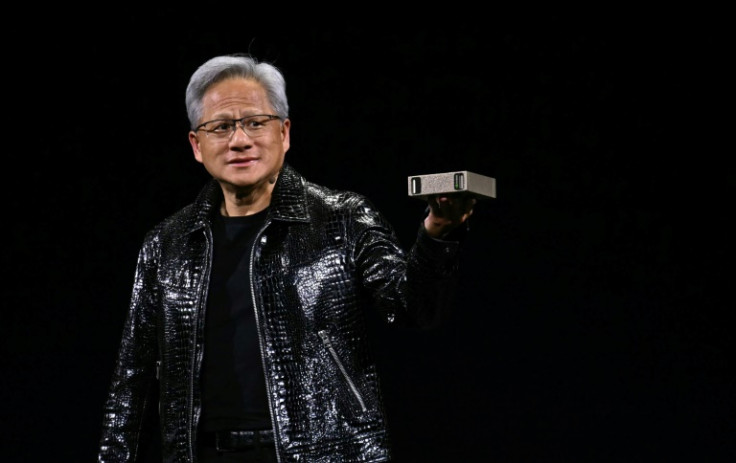
Shares of Nvidia fell 1.48% on Wednesday, trading at $208.67 as of 11:58 a.m. EDT, down $3.13 on the day, as the stock cooled off following Tuesday's sharp 4.06% rally, even as Chief Executive Jensen Huang moved to dismiss reports of delays affecting the company's next-generation Vera Rubin AI chip.
Wednesday's pullback comes after Nvidia shares surged from $203.53 to $211.80 during Tuesday's session, a move that pushed the stock up 8.63% over the preceding two weeks and helped Nvidia push back against recent characterizations of the stock as a relative laggard within the broader chip sector rally.
Huang Addresses Vera Rubin Delay Concerns
Huang directly addressed recent supply chain reports suggesting Nvidia's next-generation Vera Rubin AI accelerator had experienced delays in its volume production ramp due to thermal lid issues affecting server integration. In comments this week, Huang dismissed those delay reports and affirmed that production of the Vera Rubin platform remains on track at what he described as "giant" volumes.
That confirmation carries significant weight for investors given Vera Rubin's central role in Nvidia's next generation of AI computing products, with the platform expected to serve as a key growth driver for the company heading into its next major product cycle.
US Opens Door for Additional AI Chip Exports
Adding to Wednesday's news flow, the U.S. government has opened the door for several major technology companies, including Nvidia, Amazon, Apple and SpaceX's AI unit, to export AI chips to the United Arab Emirates, according to reports. That development follows a broader pattern of incremental policy shifts around U.S. export controls on advanced AI hardware, an area that has remained a persistent source of both opportunity and uncertainty for Nvidia's business throughout 2026.
Separately, reports indicated that a subsidiary of Chinese telecommunications company ZTE has received a license to purchase Nvidia's H200 AI accelerator chips, while a U.S. official told Reuters that only a small number of H200 chips have actually been shipped to China so far under recently eased export rules.
Memory Sector Volatility Continues to Ripple Through Chip Stocks
Nvidia's modest pullback Wednesday comes amid continued volatility across the broader memory chip sector, which has periodically spilled over into logic-focused chip designers like Nvidia in recent sessions. Turmoil surrounding South Korean memory maker SK Hynix, whose U.S.-listed shares have swung dramatically since its recent Nasdaq debut, has continued to inject volatility into the broader AI hardware complex, even as Nvidia's direct exposure to memory pricing dynamics remains more limited than pure-play memory producers.
A Stock Fighting Back Against a 'Laggard' Narrative
Despite recent volatility, Nvidia's stock has shown renewed strength in recent sessions, with shares up 13.6% for the year as of Tuesday's close. That performance has helped push back against a narrative that had developed earlier in the year characterizing Nvidia as underperforming relative to some other AI-linked chip names during the broader 2026 rally.
Nvidia's stock remains well below its all-time high of $236.54, reached on May 14, even after Tuesday's strong session, leaving the stock down roughly 10% to 11% from that peak level.
Strong Underlying Business Metrics
Nvidia's most recent quarterly results showed continued acceleration in the company's core business. Revenue grew 70.7% year over year to $82.0 billion, while gross margin rose to 74.1% for the quarter. Nvidia management has characterized overall growth as accelerating, with revenue approaching record levels, partly aided by H200 chip shipments to China under the recently eased export framework.
Analysts Remain Overwhelmingly Bullish
Wall Street continues to hold an overwhelmingly positive view of Nvidia's stock. According to recent analyst tracking, roughly 92% of analysts covering the company maintain a "Buy" rating, with an average price target of approximately $301.62, implying substantial upside from current trading levels. KeyBanc recently reiterated an "Overweight" rating on the stock following its own analysis of the company's supply chain and production outlook.
Bank of America has also reiterated a bullish stance on Nvidia, describing the company as a "unique, durable growth franchise" in recent commentary, reflecting continued institutional confidence in Nvidia's long-term positioning within the broader AI infrastructure buildout despite near-term stock volatility.
AI Infrastructure Spending Remains a Key Theme
Nvidia's business continues to benefit from what analysts describe as accelerating capital expenditure commitments tied to artificial intelligence infrastructure across the technology sector. Broader industry estimates suggest AI-related capital expenditures could cross $1 trillion in aggregate spending as soon as next year, according to recent industry analysis, underscoring the scale of the ongoing infrastructure buildout that continues to underpin bullish sentiment toward Nvidia and other companies positioned at the center of that spending wave.
A High-Beta Stock in a Volatile Sector
Nvidia's stock continues to exhibit significant volatility, with a beta coefficient of 1.44 reflecting its tendency to move more sharply than the broader market in both directions. That volatility has been on full display over the past several weeks, as shares have swung between strong single-day rallies, such as Tuesday's 4% gain, and more modest pullbacks like Wednesday's session, often in response to shifting sentiment across the broader semiconductor and AI infrastructure investment landscape.
What Comes Next
With Nvidia's next earnings report not scheduled until August 26, investor attention in the near term is likely to remain focused on incremental developments tied to Vera Rubin production progress, evolving U.S. export policy toward China and other markets, and broader sentiment shifts across the AI infrastructure investment theme. Huang's continued public reassurances about Vera Rubin's production timeline appear aimed at maintaining investor confidence in Nvidia's next-generation product roadmap, a factor that is likely to remain central to the stock's performance heading into the second half of 2026.
© Copyright 2026 IBTimes AU. All rights reserved.