(VIDEO) Jensen Huang Celebrates Nvidia Partnerships with Korean Leaders and Expands AI Hiring in Seoul
Jensen Huang's visit to Seoul highlights Nvidia's AI advancements and collaborations with Korean tech leaders.
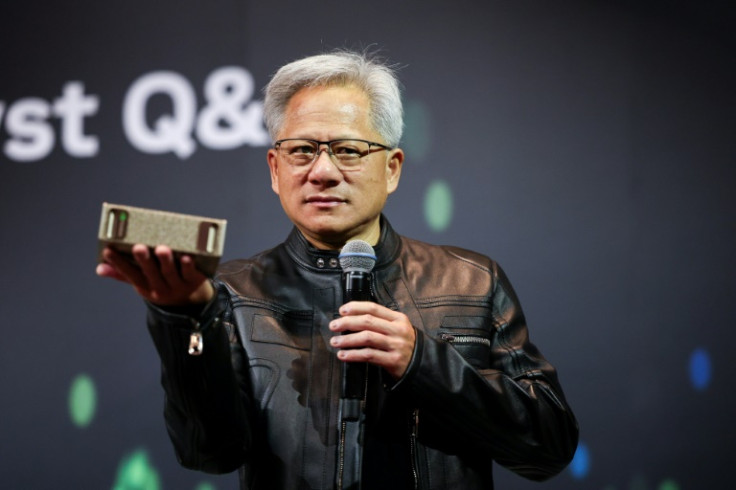
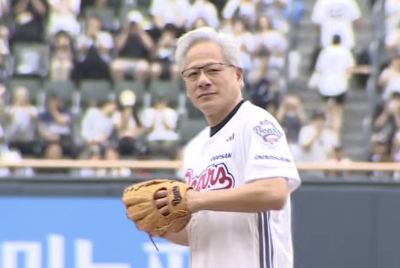
SEOUL — Nvidia CEO Jensen Huang highlighted deepening ties with South Korea's tech and industrial giants during a high-profile visit to Seoul on Friday, joining top business leaders for a casual samgyeopsal dinner while announcing expanded hiring for artificial intelligence research and celebrating new product launches.
Huang met with SK Group Chairman Chey Tae-won, LG Group Chairman Koo Kwang-mo and Naver Chairman Lee Hae-jin at a barbecue restaurant near Hongik University in Mapo-gu. The gathering drew crowds of citizens eager to see the executive, whom Huang engaged by distributing snacks outside the venue.
"We are growing together with Hyundai Motor, LG, SK hynix, Samsung, and Naver," Huang said while interacting with the public. He emphasized the importance of Korean partners, stating, "Korea is doing really well. Like a PC bang, bang!, business is coming back. Korea's business partners are very important to me."
The Nvidia chief arrived around 7:10 p.m., toasting with the chairmen before sharing grilled pork and conversation. Outside, he sampled and distributed "HBM Chips" — honey banana-flavored corn snacks developed by 7-Eleven and SK hynix — along with other treats like banana milk. Huang took the microphone to address cheering onlookers, praising the country's economic momentum.
"My friends had a really good year. But this is just the beginning," Huang said. He expressed satisfaction with business performance and Nvidia's stock price while noting Korea's strong economy.
New Product Push and Collaborations
During the event, Huang spotlighted Nvidia's recent advancements in artificial intelligence infrastructure. "Nvidia unveiled four new products this week," he said. He detailed the next-generation AI supercomputer Vera Rubin, which relies heavily on high-bandwidth memory (HBM) and low-power DRAM (LPDDR), along with a new Vera CPU that also incorporates significant memory components.
Huang introduced the RTX Spark, describing it as "a new form of PC platform appearing for the first time in 40 years" that will "open a completely new era." He noted its demand for advanced memory like LPDDR5. Additionally, he mentioned new processors for autonomous driving and robotics, highlighting "major collaborations with Hyundai Motor in Robotics."
"All my friends, LG, SK hynix, Samsung, Naver, we are all booming," Huang added. "I came here to celebrate our great partnerships." He previewed even more activity ahead, saying, "I also came to prepare for next year. If there was one product this year, there are four new products next year. Please get ready for a very exciting new year."
The executive also touched on Korean culture, expressing enthusiasm for samgyeopsal, snacks, fried chicken, K-pop and K-dramas. "K-dramas always make me happy," he said, describing them as family stories often featuring emotional moments.
Nvidia's AI Expansion in Korea
Nvidia began the hiring process Friday to establish an AI technology center in South Korea. Huang encouraged local talent to apply, stating, "We are expanding AI research and engineering and Robotics research in Korea, and we are hiring talent with several partners. If you know AI researchers or engineers, tell them to apply to Nvidia."
The move aligns with Nvidia's strategy to strengthen its presence in key markets driving AI demand. South Korea's semiconductor leaders, including Samsung Electronics and SK hynix, are critical suppliers of HBM chips essential for Nvidia's GPUs powering data centers and AI training. Hyundai Motor Group has pursued robotics and autonomous vehicle initiatives that complement Nvidia's technology.
Naver, one of Korea's largest internet companies, collaborates with Nvidia on AI cloud services and research. LG contributes through electronics and battery technologies that support broader AI ecosystems. These partnerships underscore Korea's role as a vital hub in the global supply chain for advanced computing.
Broader Context of Nvidia's Global Dominance
Nvidia has solidified its position as the leading provider of AI accelerators, with its chips powering much of the world's generative AI infrastructure. Demand for HBM and related memory has surged, benefiting Korean manufacturers amid the global AI boom. Huang's visit reinforces these symbiotic relationships at a time when geopolitical tensions and supply chain resilience remain key concerns.
The CEO's approachable style — engaging directly with citizens and sharing snacks — generated positive local buzz in Hongdae, a vibrant Seoul neighborhood known for youth culture and entertainment. Crowds gathered as word spread of the dinner, turning the evening into a public celebration of business ties.
Industry analysts view Huang's trip as strategic outreach ahead of further AI infrastructure investments. With major Korean conglomerates investing billions in chip production and data centers, Nvidia's expanded local hiring could accelerate talent development and innovation collaboration.
Economic and Cultural Significance
South Korea's economy has shown resilience, with tech exports playing a central role. Nvidia's success has indirectly boosted Korean firms, as HBM demand from AI servers drives revenue for Samsung and SK hynix. Government initiatives to position the country as an AI powerhouse complement these private-sector partnerships.
Huang's comments on enjoying Korean food and entertainment reflect a personal affinity that strengthens business diplomacy. Such gestures often humanize corporate leaders and foster goodwill in international dealings. The casual samgyeopsal setting, complete with soju toasts, contrasted with formal boardroom meetings, highlighting a blend of professional and cultural exchange.
For young Koreans in tech, Huang's call to apply at Nvidia signals opportunities in a high-growth field. The company's AI centers could create specialized jobs in research, engineering and robotics, contributing to brain gain in a competitive global talent market.
Outlook for Nvidia and Partners
As Nvidia prepares multiple new platforms for 2027, partnerships in Korea are poised to play a larger role. The Vera Rubin architecture and RTX Spark platform are expected to set new standards in performance and accessibility for AI computing. Robotics collaborations with Hyundai could extend to autonomous vehicles and industrial applications.
Market observers anticipate continued strong performance for Nvidia, driven by insatiable demand for AI capabilities across industries. Korean partners stand to benefit from this trajectory, provided they maintain leadership in memory and related technologies.
Huang's Seoul visit caps a week of product announcements while laying groundwork for sustained collaboration. His optimism about mutual growth reflects confidence in the Asia-Pacific region's contribution to the AI revolution. For South Korea, it affirms its strategic importance in the semiconductor and AI value chain.
The event also offered a moment of levity and connection amid intense business focus. By distributing snacks and chatting with citizens, Huang bridged the gap between global tech titan and local enthusiast, embodying the approachable innovation culture Nvidia cultivates.
As AI continues reshaping economies worldwide, initiatives like Nvidia's Korea expansion and high-level engagements signal a bright outlook for collaborative advancement. Huang's message was clear: the partnership is thriving, with even greater achievements on the horizon.
© Copyright 2026 IBTimes AU. All rights reserved.
- Recommended For You