NVIDIA Stock Drops 3% Amid Geopolitical Pressures and Export Regulation Concerns
NVIDIA Corporation shares fell sharply on March 6, 2026, closing down 5.52 points, or 3.01%, at $177.82 as investors grappled with fresh reports of potential U.S. export restrictions on AI chips and broader market volatility tied to rising geopolitical tensions in the Middle East.
The Santa Clara, California-based chipmaker opened at $179.84 and traded in a range of $176.82 to $182.76 during the session. Volume surged to approximately 189 million shares, well above the average, reflecting intense trading interest amid the pullback. The previous close stood at $183.34, capping a brief two-day advance that had lifted the stock modestly earlier in the week.
The decline mirrored weakness across tech-heavy indexes, with the Nasdaq Composite also posting losses as energy prices climbed on renewed Middle East conflict risks. NVIDIA's outsized influence on market sentiment—stemming from its dominance in AI accelerators—amplified the move, contributing to broader sector caution.
Analysts attributed much of the pressure to Bloomberg reports that the U.S. Commerce Department has drafted regulations requiring export permits for advanced AI chips to nearly every country worldwide. Such measures could complicate NVIDIA's global supply strategy, particularly as the company has already navigated tight restrictions on shipments to China. NVIDIA CFO Colette Kress recently confirmed no Data Center revenue from China in recent guidance, underscoring ongoing challenges in that key market.
Adding to the narrative, Financial Times reporting indicated NVIDIA has halted production of its H200 chips tailored for China, redirecting capacity toward next-generation Vera Rubin hardware. The shift highlights the company's pivot away from compliance-limited products in favor of cutting-edge platforms expected to drive future growth.
Despite the day's retreat, NVIDIA's fundamentals remain robust. The company reported record fiscal fourth-quarter results on February 25, 2026, with revenue of $68.1 billion, up 73% year-over-year and 20% sequentially. Data Center revenue—the AI engine—hit $62.3 billion, surging 75% from the prior year. For full fiscal 2026, revenue reached $215.9 billion, a 65% increase.
Guidance for the first quarter of fiscal 2027 calls for approximately $78 billion in revenue, plus or minus 2%, excluding any contribution from China. The outlook reflects continued explosive demand for Blackwell architecture GPUs and accelerating adoption of AI across enterprises, cloud providers, and sovereign AI initiatives.
Wall Street maintains a strongly bullish stance. Consensus ratings hover at "Buy," with an average 12-month price target around $265, implying roughly 49% upside from the March 6 close. Some analysts, including those at JPMorgan, Raymond James, and Citigroup, recently lifted targets toward $265-$300 following the earnings beat and optimistic commentary on Blackwell ramp-up and Rubin roadmap.
Morgan Stanley reinstated NVIDIA as its top semiconductor pick, citing an "surprisingly good entry point" after the stock's modest 2026 underperformance relative to explosive business growth. Bernstein, Baird, Bank of America, and Rosenblatt also pushed targets higher, some to $300, betting on sustained AI tailwinds.
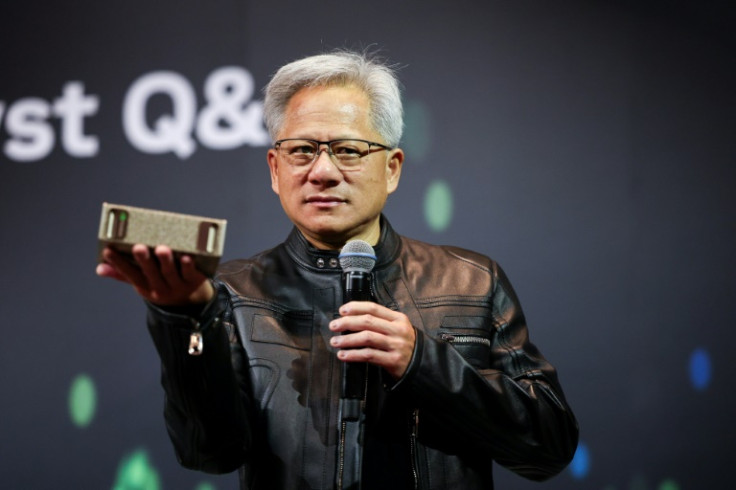
CEO Jensen Huang's recent comments added intrigue. He described a $30 billion investment in OpenAI as potentially NVIDIA's "last" major equity commitment in the startup, ahead of its anticipated IPO. The remark tempered speculation about further large-scale strategic bets but underscored confidence in organic growth drivers.
Upcoming catalysts loom large. NVIDIA's GTC conference, scheduled for March 16-19, 2026, features a keynote from Huang and promises updates on Blackwell Ultra ramp, Rubin launch timing in 2026, Rubin CPX late in the year, Rubin Ultra in 2027, and Feynman in 2028. The event typically showcases breakthroughs in robotics, AI agents, and accelerated computing, often sparking rallies.
Competitive dynamics drew attention as well. Broadcom issued bullish AI chip sales forecasts, positioning itself as a challenger in custom accelerators and networking. Yet NVIDIA's ecosystem moat—spanning CUDA software, full-stack offerings, and market share leadership—continues to insulate it, with analysts viewing competition as healthy validation of the AI opportunity rather than an immediate threat.
The stock's technical picture shows consolidation after peaking at a 52-week high of $212.19 in late October 2025. The 52-week low remains $86.62 from April 2025. Year-to-date in calendar 2026, shares are down modestly despite underlying strength, trading at a forward P/E around 36 based on consensus estimates.
Market capitalization hovers near $4.4 trillion, cementing NVIDIA's status as one of the world's most valuable companies. Its low debt-to-equity ratio of 0.05, quick ratio above 3, and return on equity near 97% highlight financial resilience.
A modest quarterly dividend of $0.01 per share was declared, payable April 1, 2026, to shareholders of record March 11, with an ex-date of March 11. While the yield is negligible at 0.02%, it signals confidence in cash flow generation.
Longer-term, the AI market's projected expansion beyond $2 trillion by the early 2030s positions NVIDIA favorably. Enterprise deployments, inference workloads, sovereign AI projects, and emerging applications in robotics and physical AI fuel optimism.
Near-term risks include regulatory tightening, supply chain constraints in photonics and advanced packaging, and macroeconomic sensitivity to energy costs and interest rates. Yet most observers view recent dips as healthy corrections within a secular uptrend.
As trading wrapped March 6, attention shifted toward next week's economic data, Fed commentary, and any fresh geopolitical developments. For NVIDIA, the path ahead hinges on execution against ambitious roadmaps and sustained AI spending momentum.
Investors in Seoul and global markets watched closely, recognizing NVIDIA's role as a bellwether for technology's transformative potential amid an uncertain macro backdrop.
© Copyright 2026 IBTimes AU. All rights reserved.
- MOST POPULAR IN News