Iran Adds Nuclear Inspections to Hormuz Reopening Offer, But Strait Remains Closed on Crisis Day 208
Tehran's latest concession comes as commercial shipping remains severely disrupted, violence continues and Washington has yet to formally respond to the proposal.

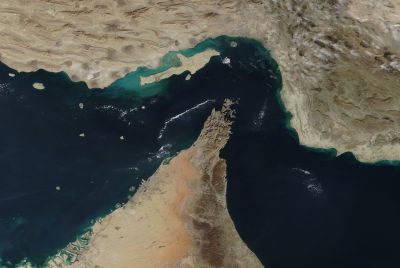
DUBAI — Iran has added a new concession to its proposal for reopening the Strait of Hormuz, offering to allow nuclear inspectors into the country as part of a seven-day plan to end the monthslong crisis, even as the critical waterway remained effectively closed to commercial shipping and violence continued along the strait heading into the crisis's 208th day.
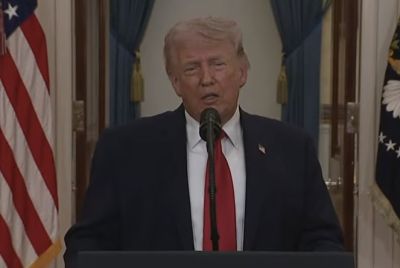
Iranian President Masoud Pezeshkian said Iran would permit nuclear inspectors to enter the country as part of its proposal to reopen the strait within seven days, according to CBS News. The concession represents a significant addition to the reopening plan Iran had previously floated, which had centered primarily on the United States easing military pressure and lifting its naval blockade on Iranian ports. Separately, the BBC reported that Iran's foreign minister had offered the United States a deal to reopen the strait within the same seven-day window.
Despite the expanded offer, the proposal remains just that, an offer rather than a finalized agreement. Iran's security chief said separately that the strait would remain closed until Tehran's full set of conditions are met, and no formal response from Washington had been reported as of the latest update. Notably, just a day before Pezeshkian's nuclear inspection offer became public, Iran's president had rejected a separate reopening proposal at the United Nations, illustrating the volatile, back-and-forth nature of the diplomatic track even as both sides continue signaling some openness to a negotiated resolution.
Reports have indicated that a phased U.S.-Iran deal to reopen the strait is being explored through Qatar, which has served as a mediator in the negotiations. Bloomberg has reported on the discussions, while Fox Business has separately reported that skepticism remains about whether the rumored arrangement will ultimately come together.
On the ground, the Strait of Hormuz has remained almost entirely closed to normal commercial traffic. According to IMF PortWatch data, just a single vessel transited the strait on September 20, compared with a pre-crisis daily baseline of approximately 85 transits, underscoring how severely the crisis has disrupted one of the world's most critical oil shipping corridors. Independent tanker-tracking estimates from Tankertrackers.com and Bloomberg, drawing on AIS ship-tracking data and satellite imagery, have put current daily oil flows through the strait at roughly 3.7 million to 8 million barrels per day, representing about half of pre-war volumes or less, figures that stand in sharp contrast to the U.S. Central Command's own claim implying flows closer to 16.4 million barrels per day.
Violence along the strait has continued even as diplomatic talks proceed. A cargo vessel identified as the bulk carrier Cape Dao was struck by projectiles off the coast of Oman on September 23, catching fire and resulting in the death of one seafarer, according to tracking data. Separately, a 94-kilometer oil slick was detected roughly 10 kilometers off eastern Musandam on September 22, drifting north into the strait, with modeling suggesting between 10% and 15% of the slick could reach shore by September 25, threatening reef systems and fishing harbors in the Lima and Ras Musandam areas. Houthi forces in Yemen also fired six missiles at the Taif and Yanbu area on Saudi Arabia's Red Sea coast, a key terminal along the kingdom's overland pipeline route that serves as an alternative to shipping oil through Hormuz.
Oil prices have continued reflecting the ongoing uncertainty, with Brent crude settling at $106.60 a barrel on September 24, up 3.4%, before easing to around $104.37 by early September 26, a decline of roughly 2.2% over 24 hours as markets weighed the competing signals from Iran's expanded diplomatic offer against the continued absence of any confirmed agreement. As of the latest available tracking, 422 AIS-visible vessels were holding position away from berth within the Strait of Hormuz and broader Gulf watch box, a count that does not include ships already within 25 kilometers of a working port.
Specialized risk-tracking services monitoring the crisis have continued to characterize the overall situation as highly volatile. One tracker's Crisis Pressure index, a composite measure based on physical transit deviation from normal levels, remained in its most extreme classification band as of the latest update, while a separate Escalation Forecast measure sat in an elevated risk category, with both metrics showing little change over the preceding 24 hours.
The current crisis traces back to February 28, when Iran effectively closed the strait in response to a joint U.S.-Israeli military campaign against Iranian targets. The United States subsequently launched its own aerial campaign in March aimed at reopening the waterway, followed by a naval blockade imposed in April, a brief attempted reopening effort in May known as Project Freedom, renewed strikes in July, and a reinstated naval blockade that has remained in place since, alongside repeated rounds of diplomatic talks that have raised and then dashed hopes of resolution at various points throughout the year.
With Iran's expanded offer now on the table and Qatari-mediated talks reportedly continuing, market participants and regional observers are likely to watch closely in the coming days for any formal response from Washington, even as the strait's continued closure to normal commercial traffic and the persistence of violent incidents along its waters underscore how far the crisis remains from an actual, verified resolution more than seven months after it first began.
© Copyright 2026 IBTimes AU. All rights reserved.
- Recommended For You