Strait of Hormuz Status Today: Still Effectively Closed as Iran and Oman Near a Navigation Deal, for Now
Iran-U.S. Conflict Keeps Strait of Hormuz Closed, Impacting Global Energy Markets

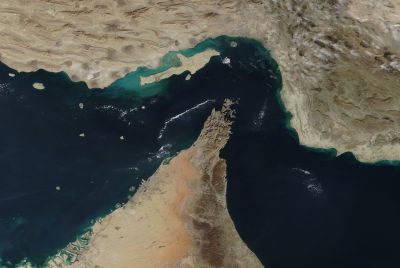
The Strait of Hormuz remains effectively closed to commercial shipping as of Sunday, five months into a crisis that has cut off one of the world's most critical energy chokepoints, even as Iran and Oman signal they are nearing an agreement on how to manage traffic through the waterway.
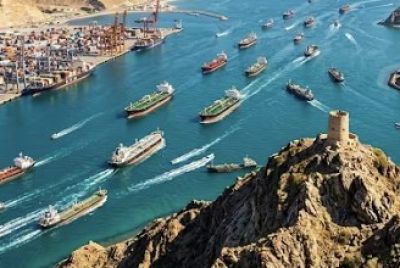
According to tracking data from the monitoring site straits.live, only two ships transited the strait on Aug. 2, compared with a pre-crisis baseline of roughly 73 transits per day — a stark illustration of how thoroughly the waterway has been shut down since the crisis began. The site's independent assessment currently classifies the strait's status as closed to commercial shipping.
A crisis now in its sixth month
The closure traces back to Feb. 28, 2026, when the United States and Israel conducted airstrikes on Iranian military targets, including the assassination of Iran's Supreme Leader, Ali Khamenei, according to Wikipedia's documented timeline of the conflict. In response, Iran closed the strait to all foreign shipping, with the Islamic Revolutionary Guard Corps transmitting warnings over VHF radio declaring that no ship would be allowed to pass. Britain's Royal Navy said at the time that the closure was not legally binding, though it acknowledged that safety could not be guaranteed for vessels attempting to transit.
By early March 2026, the IRGC confirmed the strait was closed specifically to "unfriendly nations," while continuing to allow Iran-approved vessels — largely petroleum shipments bound for China and India — to pass, sometimes under military escort.
The toll on shipping has been substantial. According to Wikipedia's tally, the crisis has resulted in one tugboat sunk, at least 17 merchant ships damaged, two merchant ships captured, and 12 seafarers killed or missing, along with one port worker killed and two wounded in a related incident in Bahrain.
New Iranian demands complicate the path forward
Iran issued a fresh round of demands Saturday for what it would take to fully reopen the strait, according to reporting from NBC News based on Associated Press coverage. Iran's Supreme National Security Council, in a statement delivered by council secretary Mohammad Bagher Zolghadr, said the waterway would not reopen until the United States "corrects its behavior" — a list of conditions that includes lifting the U.S. naval blockade of Iran, ending sanctions, withdrawing American military forces from the region, paying war reparations and unfreezing Iranian assets.
The statement came the same day the United Arab Emirates said one of its oil tankers, affiliated with the Abu Dhabi National Oil Company, was targeted by a missile while transiting the strait — an incident that underscored the continued danger facing commercial vessels even amid active diplomatic talks.
Progress with Oman, but caveats attached
Despite the hardened rhetoric aimed at Washington, Iran has signaled more constructive engagement with Oman, the Gulf Arab nation that has served as a mediator in the broader conflict and shares a border along the strait. Iranian Foreign Minister Abbas Araghchi said Saturday that talks with Oman over how to manage navigation through the waterway were "approaching the final stages," according to CBS News.
However, Araghchi was careful to separate that progress from any broader reopening of the strait to international traffic. "This is not a sign of the reopening of the Strait of Hormuz," he said, adding that full reopening remains "subject to other conditions and compensation for the violations" Iran attributes to the United States and its allies.
A U.S. military leadership seeking an exit
Behind the scenes, there are signs that top U.S. military officials are growing wary of further escalation. According to sources cited by CNN, the chairman of the Joint Chiefs of Staff has privately made clear that the United States needs to find an "off-ramp" from the broader war with Iran, warning that available military options to further escalate the conflict could backfire.
Separately, Israeli Prime Minister Benjamin Netanyahu vowed Sunday to prevent Iran from acquiring nuclear weapons, reiterating a long-standing goal regardless of how diplomatic talks between Tehran and Washington ultimately unfold, according to CBS News' live coverage of the situation.
Economic fallout continues to mount
The prolonged closure has driven global energy costs sharply higher. According to tracking site Global Energy Flow, Brent crude settled up 9.59% on a recent Monday at $83.30 a barrel — its largest single-day gain in more than six years — and has traded as high as roughly $86 a barrel intraday since, putting prices about 19% above pre-war levels.
A Congressional Research Service report published by the Library of Congress noted that periodic Iranian attacks on shipping, combined with retaliatory U.S. strikes against Iran, have severely disrupted traffic through the strait for most of the past five months. The report also cautioned that even with Iran's military capabilities diminished, the mere threat of future attacks could continue producing closure-like conditions if shipping companies conclude the risk of transiting the strait outweighs the potential benefit.
What would it take to fully reopen the strait
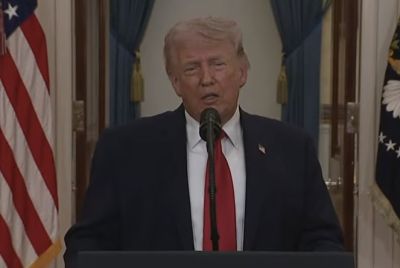
Based on Iran's stated conditions, a full reopening appears contingent on a broader resolution to the underlying U.S.-Iran conflict rather than a standalone navigation agreement with Oman. Prior diplomatic efforts have repeatedly stalled: an April 7 ceasefire agreement between the U.S. and Iran, which President Trump said at the time was contingent on the "complete, immediate, and safe opening of the Strait of Hormuz," broke down after Iran halted shipping traffic in response to separate Israeli attacks in Lebanon, according to the Congressional Research Service report.
For now, with roughly 20% of the world's oil trade and a significant share of global liquefied natural gas normally passing through the strait before the crisis, the waterway's continued closure remains a central pressure point shaping both regional diplomacy and global energy markets — with no clear timeline yet for when normal shipping traffic might resume.
© Copyright 2026 IBTimes AU. All rights reserved.
- Recommended For You